Ever clicked on an article about a historical figure or a scientific process and felt a twinge of doubt? You aren't alone. In an era where information is infinite but trust is scarce, knowing fact-checking methods behind the scenes has become a critical skill for researchers, students, and curious minds alike. But how do the major online encyclopedias actually verify their content? The answer isn't as simple as "one editor checks it all." It’s a complex ecosystem of community governance, algorithmic verification, and varying degrees of editorial control that differs significantly from platform to platform.
Understanding these differences helps you navigate the digital landscape with greater confidence. Whether you are citing sources for a university paper or just satisfying your curiosity, knowing which platform uses which verification method allows you to assess reliability in real-time. Let's break down how the giants of the knowledge-sharing world handle accuracy, transparency, and error correction.
The Core Mechanisms of Verification
At its heart, a Content Audit is a systematic review of digital assets to ensure accuracy, consistency, and compliance with standards. In the context of online encyclopedias, this translates into two primary models: the open-peer-review model and the professional-editorial model. Each has distinct strengths and weaknesses when it comes to catching errors before they reach your screen.
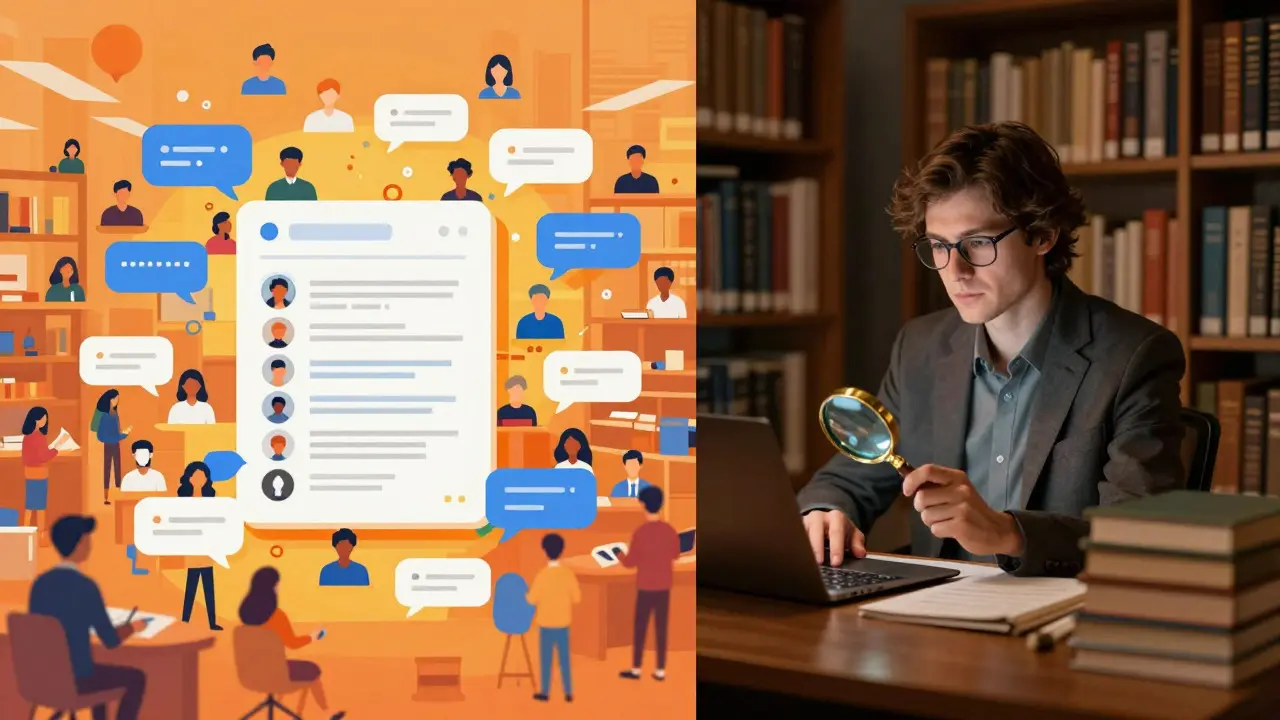
The open-peer-review model relies on collective intelligence. Think of it like a massive, global proofreading session where anyone can edit, but changes are tracked, discussed, and often reverted if controversial. This approach prioritizes speed and breadth over deep, individual accountability. On the other hand, the professional-editorial model assigns specific responsibility to vetted experts. Here, accuracy is a job requirement, not a hobby. The trade-off? Speed versus depth. Open platforms update in seconds; professional ones might take weeks to publish a new entry.
Wikipedia: The Power of Community Vigilance
Wikipedia is a free, web-based collaborative project that aims to compile all human knowledge into one website, launched in 2001 by Jimmy Wales and Larry Sanger. It remains the most visited reference site in the world. Its fact-checking mechanism is famously decentralized. There is no central gatekeeper deciding what is true. Instead, truth emerges through consensus among thousands of editors who monitor changes via the "Recent Changes" page.
How does this work in practice? If someone edits an article about the population of Tokyo, another editor with access to reliable sources (like census data) will likely notice the discrepancy within hours. They either correct it or leave a talk page comment requesting a source. This constant churn means Wikipedia is incredibly resilient to vandalism but can suffer from "edit wars" where two groups disagree on a nuanced topic. For high-profile topics like politics or science, this system works well because there are many eyes watching. For obscure local history, however, the risk of unchallenged errors increases.
- Strengths: Rapid updates, transparent edit history, vast coverage.
- Weaknesses: Reliance on volunteer goodwill, potential for bias in under-watched articles.
- Key Feature: Citation templates that force editors to link claims to external sources.
Britannica: The Editorial Gatekeeper
In contrast, Encyclopedia Britannica is a comprehensive English-language general encyclopedia that has been published continuously since 1768. While it now operates primarily online, it retains its legacy of professional editing. Every article is reviewed by subject-matter experts-historians, scientists, doctors-who sign off on the content before publication. This isn't just a suggestion box; it's a quality control pipeline.
The fact-checking process here is hierarchical. A writer drafts an entry, an editor reviews it for style and factual accuracy, and then a senior subject expert gives final approval. This ensures a higher baseline of accuracy for core topics. However, this model struggles with timeliness. If a new discovery is made in astrophysics, it might take months for Britannica to reflect that change, whereas Wikipedia would update it almost instantly. For stable, established knowledge, Britannica offers a safer harbor. For breaking news or rapidly evolving fields, it may lag behind.
Wikidata: Structured Data and Machine Readability
Often overlooked by casual readers is Wikidata, a free, open knowledge base that provides structured data to Wikipedia and other Wikimedia projects. Launched in 2012, Wikidata doesn't have articles. It has statements. For example, instead of writing "Albert Einstein was born in Ulm," Wikidata stores: Subject: Albert Einstein | Property: Place of Birth | Value: Ulm | Reference: [Source Link].
This structure enables automated fact-checking. Bots can scan millions of entries to find contradictions. If one source says Einstein was born in Ulm and another says Stuttgart, the system flags the conflict for human review. This is a powerful tool for consistency. It also powers the infoboxes you see on Wikipedia pages. When you see a sidebar with facts like "Born: March 14, 1879," that data is pulled directly from Wikidata. This separation of structured data from narrative text allows for more precise auditing than traditional prose-based encyclopedias.
National Geographic and Specialized Databases
Beyond the generalists, specialized platforms offer different levels of scrutiny. National Geographic is a magazine and media brand known for its focus on geography, archaeology, and the natural world. Their online content undergoes rigorous editorial review, often involving field experts. Because their scope is narrower, their fact-checking depth is generally higher per article than broad encyclopedias. Similarly, databases like PubMed for medicine or JSTOR for academic journals rely on peer-reviewed sources, making them gold standards for their specific verticals.
The key takeaway here is context. If you are researching a medical condition, a general encyclopedia is rarely sufficient. You need a platform that aggregates peer-reviewed studies. The "best" fact-checking method depends entirely on the type of information you seek. General knowledge benefits from breadth; specialized knowledge demands depth and expertise.
Comparing the Platforms: A Practical Overview
To visualize these differences, let's look at how each platform handles a hypothetical scenario: A new study is published claiming a breakthrough in renewable energy storage. How quickly and accurately does each platform reflect this?
| Platform | Verification Model | Update Speed | Error Correction Method | Ideal Use Case |
|---|---|---|---|---|
| Wikipedia | Open Peer Review | Minutes to Hours | Community Revert/Talk Pages | General Knowledge, Current Events |
| Britannica | Professional Editorial | Weeks to Months | Editorial Revision Cycle | Stable Historical/Scientific Facts |
| Wikidata | Structured Data + Bots | Real-Time (Data Entry) | Conflict Flagging & Human Review | Data Extraction, Cross-Referencing |
| National Geographic | Expert Editorial | Days to Weeks | Editorial Correction Notice | Natural Science, Geography |
Notice the trade-offs. Wikipedia wins on speed but requires user vigilance. Britannica wins on stability but loses on currency. Wikidata wins on precision for data points but lacks narrative context. No single platform is superior in all dimensions. The savvy researcher knows how to triangulate information across these systems.

How to Conduct Your Own Mini-Audit
You don't need to be a professional auditor to apply these principles. Here is a simple checklist you can use when consuming information from any online encyclopedia:
- Check the Source Citations: Does the claim link to a primary source? A secondary source? Or is it unsourced? Unsourced claims should be treated with caution.
- Look at the Edit History: On platforms like Wikipedia, click "View History." Is the article constantly changing? Are there long debates in the Talk section? High volatility suggests uncertainty.
- Cross-Reference: Compare the same fact across two different platforms. If Wikipedia and Britannica agree, your confidence should increase. If they differ, dig deeper.
- Assess the Author/Editor: On professional platforms, check who wrote the piece. Do they have credentials relevant to the topic? A physicist writing about physics carries more weight than a generalist.
- Verify Dates: Ensure the information isn't outdated. A fact from 2020 might be wrong in 2026, especially in fast-moving fields like technology or medicine.
The Role of AI in Future Audits
As we move further into the 2020s, artificial intelligence is beginning to play a larger role in content auditing. Large Language Models (LLMs) can scan entire encyclopedias to detect inconsistencies, flag missing citations, and even suggest corrections based on newer data. However, AI introduces its own set of challenges. Hallucinations-where AI generates plausible but false facts-can contaminate datasets if not carefully managed.
Platforms are experimenting with AI-assisted review tools. For instance, bots on Wikipedia already use machine learning to predict which edits are likely to be problematic, allowing human editors to prioritize their time. This hybrid model-AI for scale, humans for judgment-is likely the future of fact-checking. It combines the speed of algorithms with the nuance of human expertise.
Frequently Asked Questions
Is Wikipedia more accurate than Britannica?
It depends on the topic. For current events and rapidly changing fields, Wikipedia is often more up-to-date. For stable, established historical or scientific facts, Britannica may offer a more polished and consistent presentation due to its professional editorial oversight. Neither is universally "more accurate"; they serve different needs regarding timeliness and depth.
What is Wikidata used for?
Wikidata is a structured knowledge base that stores facts as data points rather than sentences. It powers the infoboxes on Wikipedia and allows machines to read and cross-reference information. It is particularly useful for researchers who need to extract large datasets or verify consistency across multiple sources.
How can I tell if a Wikipedia article is reliable?
Look for several indicators: a long list of citations from reputable sources, a stable edit history without frequent reverts, and a calm Talk page with minimal controversy. Articles labeled as "Featured Article" or "Good Article" have undergone additional community review and are generally considered high-quality.
Do professional encyclopedias ever make mistakes?
Yes, human error is inevitable. However, professional platforms typically have formal processes for correcting errors, such as issuing errata or updating the article with a note. The key difference is that errors in professional encyclopedias are usually caught by internal reviewers before publication, whereas open platforms rely on the public to catch them after the fact.
Should I use AI summaries for research?
Use them as a starting point, not a final source. AI summaries can provide quick overviews but may miss nuances or contain hallucinated details. Always verify key facts against primary sources or trusted encyclopedic entries before citing them in academic or professional work.