When a celebrity, politician, or company makes a public statement contradicting what’s written on Wikipedia, people notice. Suddenly, headlines scream, "They’re lying on Wikipedia!" But here’s the truth: off-wiki statements don’t override on-wiki evidence. They just add noise.
Why Off-Wiki Statements Feel More Powerful
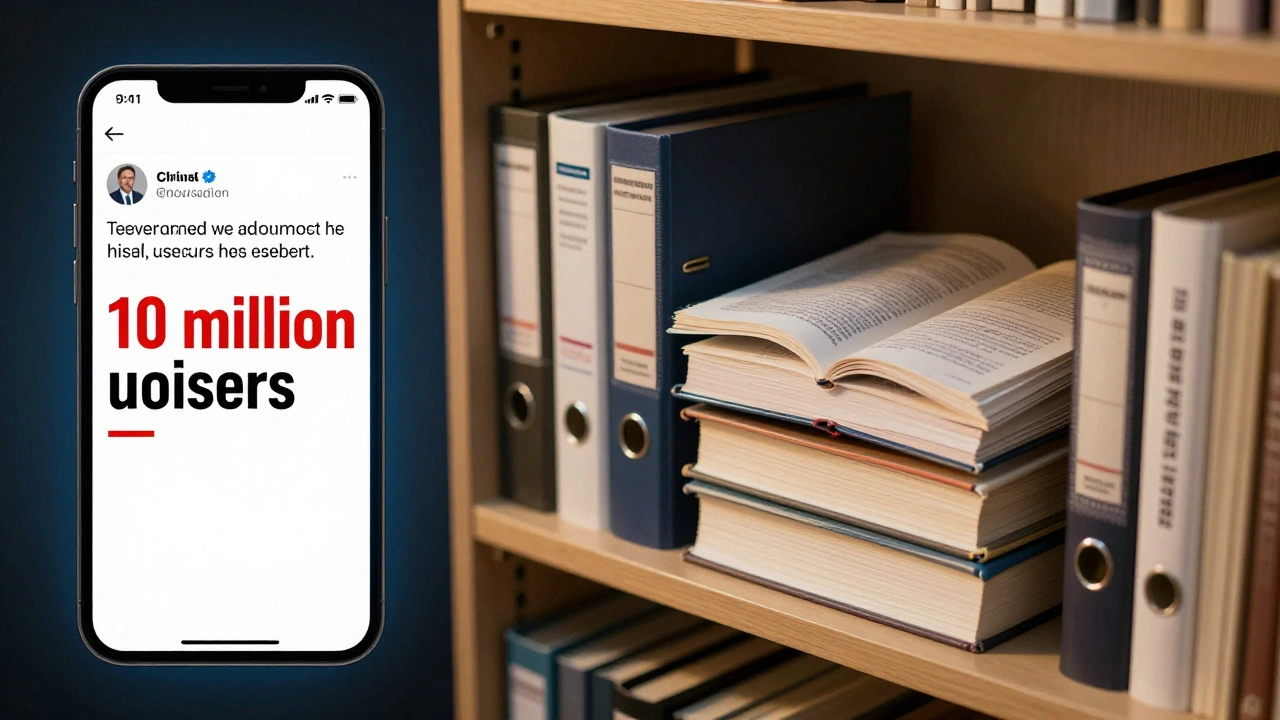
People trust voices they hear directly. A tweet from a CEO, a press release from a corporation, a live interview with a politician-they feel immediate, personal, real. When someone says, "That Wikipedia page is wrong," it’s easy to believe them. Especially if they’re famous or powerful. But here’s the catch: saying something doesn’t make it true. Wikipedia doesn’t exist to reflect what people claim. It exists to document what’s been verified by independent, reliable sources. Take the case of a major tech company in 2024. Their PR team tweeted that their product had been used by "over 10 million users"-a number that didn’t match the 7.3 million cited in Wikipedia. The tweet went viral. News sites picked it up. Within hours, hundreds of people edited the Wikipedia page to reflect the new number. Within two days, the edit was reverted. Why? Because the 10 million figure came from a single internal memo, unpublished and unverified. The 7.3 million came from three independent financial reports, two public user surveys, and a government data release. The tweet was louder. The evidence was stronger.How Wikipedia Decides What’s True
Wikipedia’s rules are simple: no original research. Every claim must be backed by a reliable, published source. That means books, peer-reviewed journals, major newspapers, official government or institutional reports. Not blogs. Not social media. Not press releases. When someone says, "Wikipedia is wrong," they’re usually saying, "I don’t like what’s written here." Or, "I want you to believe me instead of the sources." But Wikipedia doesn’t care about your opinion. It cares about what’s been documented by others. Consider the 2023 controversy around a U.S. senator’s voting record. A campaign ad claimed they had voted "against climate funding 90% of the time." Wikipedia listed the actual vote count: 17 out of 42, or 40%. The campaign’s number was rounded, cherry-picked, and misleading. But the Wikipedia entry cited the Senate’s official voting log, archived by the Library of Congress. The ad was emotional. The log was factual.Why On-Wiki Evidence Lasts
Off-wiki statements fade. They’re deleted, retracted, or forgotten. On-wiki evidence doesn’t. In 2022, a popular influencer claimed a nonprofit had misused $2 million in donations. The claim spread quickly. Dozens of news sites ran stories. Wikipedia updated the page to reflect the allegation, with a clear note: "This claim is under investigation and lacks independent verification." A year later, an audit by the Better Business Bureau found no evidence of misuse. The influencer deleted their post. The news sites buried the follow-up. But the Wikipedia page remained. It now reads: "Initial allegations were unsubstantiated; an independent audit in 2023 found no financial misconduct." The story didn’t disappear. It evolved. And Wikipedia didn’t just echo the latest headline-it tracked the full arc of evidence.
What Happens When People Try to "Fix" Wikipedia
Many people edit Wikipedia because they think it’s broken. They add their own experience: "I worked there. This is wrong." Or, "My cousin knows someone who says this isn’t true." These edits get reverted. Fast. Why? Because Wikipedia is not a forum. It’s not a personal blog. It’s a reference work built on documented truth, not personal testimony. In 2025, a former employee of a major pharmaceutical company tried to remove a line stating their employer had been fined for misleading marketing. They cited their own employment records and internal emails. The edit was blocked within minutes. Why? Because internal emails aren’t public, independent sources. The fine was documented by the Federal Trade Commission. That’s what mattered. Wikipedia editors don’t distrust people. They distrust unverifiable claims.When Off-Wiki Statements Actually Change Wikipedia
There are exceptions. Sometimes, off-wiki statements do lead to on-wiki updates. But only if they become on-wiki evidence. In early 2024, a whistleblower leaked internal documents from a tech startup. The documents showed the company had inflated its user growth numbers. The whistleblower posted them on a secure platform. No one noticed-until The New York Times published an investigative report based on the documents. Within 48 hours, Wikipedia updated the company’s page. The new version cited the Times article, the leaked documents (now publicly archived), and a follow-up statement from the company’s CEO admitting the error. The off-wiki statement (the leak) didn’t change Wikipedia. The published, verified report did.
How to Spot the Difference
If you’re confused about what to believe, ask yourself:- Is this claim backed by a source you can check? (Not a tweet, not a press release, not a comment on Reddit.)
- Has the source been published independently? (Not just on the company’s website.)
- Is the source credible? (Government, academic journal, major news outlet, established nonprofit.)
- Has the claim been repeated across multiple independent sources?
The Bigger Problem: Trust in Information
The real issue isn’t Wikipedia. It’s that people don’t know how to judge truth anymore. We’ve been trained to believe the loudest voice. We trust the person who speaks with confidence, even if they’re wrong. We dismiss long-form, documented evidence because it’s slow, dry, or complex. Wikipedia doesn’t fix that. But it doesn’t lie either. It just sits there, quietly, with its citations, its footnotes, its verifiable facts. When you see a headline that says, "Wikipedia got it wrong," pause. Check the sources. Look at the edit history. See what evidence was used. You might find the real problem isn’t Wikipedia-it’s the claim you were told to believe.What You Can Do
You don’t need to edit Wikipedia to help. You just need to stop treating off-wiki statements like facts.- When someone says, "That’s not true," ask: "What’s your source?"
- If they point to a tweet, a blog, or a press release, don’t accept it as proof.
- Look for the same claim in a reputable publication.
- If you find a mistake on Wikipedia, don’t edit it yourself-find a reliable source and cite it in the talk page.
Why can’t I just edit Wikipedia to fix a false statement?
You can, but only if you back it up with a reliable, published source. Wikipedia doesn’t allow personal opinions, unpublished documents, or unverified claims-even if they’re true. If you know something’s wrong, find a credible source that confirms it, then cite that source in the article’s talk page. Editors will review it and update the page if the evidence is solid.
Are press releases ever accepted on Wikipedia?
Press releases are rarely accepted as primary sources. They’re considered self-published material. Wikipedia requires independent verification. If a press release contains a claim, it must be confirmed by a third-party source like a news article, government report, or academic study. Otherwise, it’s ignored.
Can social media posts ever be used on Wikipedia?
Only in very limited cases. For example, if a public figure makes a widely reported statement on Twitter that’s later covered by multiple reputable news outlets, the tweet might be cited as the origin. But the Wikipedia entry will still rely on the news reports, not the tweet itself. Social media alone is never enough.
Why do some Wikipedia pages get updated quickly while others don’t?
Speed depends on the availability of reliable sources. If a major news outlet publishes a verified report, the change can happen in hours. If the information is obscure, controversial, or only available in a niche publication, it may take weeks or months. Wikipedia moves at the pace of evidence, not hype.
Is Wikipedia more accurate than traditional media?
Studies show Wikipedia’s accuracy on factual topics is comparable to or better than traditional encyclopedias like Britannica. Unlike traditional media, which often reports breaking news before verification, Wikipedia waits for consensus and evidence. It’s slower, but more reliable for settled facts.