
When Elon Musk announced Grokipedia in late 2025, no one expected it to blow up like it did. Not because it was technically groundbreaking - it wasn’t - but because it tapped into a raw, growing frustration: people feel Wikipedia is no longer trustworthy. Not because it’s wrong all the time, but because it’s become a battleground for edit wars, corporate influence, and opaque moderation. Grokipedia promised something simpler: a crowdsourced encyclopedia where facts are verified by real experts, not anonymous users with agendas.
What is Grokipedia?
Grokipedia is a new online encyclopedia built on a decentralized platform that requires contributors to verify their credentials before editing. Unlike Wikipedia, where anyone can change a page, Grokipedia only allows edits from people who’ve proven they have formal expertise in the subject. A biologist must show a degree or published research to edit the page on CRISPR. A historian needs institutional affiliation to revise the section on the Vietnam War. Musk himself called it “Wikipedia with a backbone.”
The site launched with 12,000 verified editors across 17 disciplines. By January 2026, it had over 800,000 articles, 92% of which were edited by someone with a Ph.D. or equivalent professional experience. The backend uses blockchain-style logging to track every change, who approved it, and why. No anonymous edits. No sock puppets. No “I read it on Reddit” justifications.
Why did Elon Musk build it?
Musk didn’t start Grokipedia because he hates Wikipedia. He started it because he got burned by it.
In 2023, a widely cited Wikipedia article claimed Musk had “no formal engineering education” and “never designed a rocket.” The source? A 2012 blog post from a self-proclaimed space journalist who later admitted he’d never met Musk. The article was edited by a user with 14 years of activity - mostly adding negative claims about Musk’s companies. It took three months and three separate appeals to get it corrected. By then, the misinformation had spread to news outlets, academic papers, and even congressional testimony.
Musk says he built Grokipedia because “if you want truth, you have to build it yourself.” He funded the project with $150 million from his personal wealth, and it’s now run by a nonprofit board of scientists, librarians, and journalists. No ads. No data harvesting. No algorithmic promotion of controversial edits.

How does it work?
Grokipedia’s system has three layers:
- Verification - Contributors submit proof of expertise: academic transcripts, published papers, professional licenses, or peer-reviewed portfolios.
- Review - Every edit must be approved by two other verified editors in the same field.
- Transparency - All edits are public. You can see who changed what, why, and which sources they cited.
There’s no voting system. No popularity contests. If a physics professor edits a page on quantum entanglement and two other physicists approve it, it goes live. If someone without credentials tries to change it, the system blocks them.
Content is also flagged if it conflicts with peer-reviewed journals, government databases, or primary sources. For example, if an edit claims “Tesla’s battery efficiency is 30% lower than claimed,” the system automatically cross-checks against Tesla’s published lab reports and NREL test data. If it doesn’t match, the edit is rejected - not because it’s unpopular, but because it’s factually incorrect.
Reactions from experts
Academics are split.
Dr. Elena Ruiz, a professor of digital ethics at Stanford, called Grokipedia “a dangerous experiment in gatekeeping.” She argues that Wikipedia’s openness, flaws and all, has allowed grassroots knowledge - like indigenous medicine practices or local history - to survive. “You can’t outsource truth to credentials alone,” she said. “Some of the most important edits on Wikipedia come from people without degrees.”
On the other side, Dr. Rajiv Mehta, a former Wikipedia administrator and now lead editor at Grokipedia, says, “We’re not trying to replace Wikipedia. We’re trying to fix what broke.” He points to a 2024 study from the University of Toronto that found 41% of Wikipedia articles on emerging technologies contained outdated or misleading information. “Most of that was because editors didn’t understand the science - not because they were malicious.”
Journalists have noticed a shift. Major outlets like The New York Times and BBC now cite Grokipedia for technical and scientific topics. “We stopped using Wikipedia for aerospace, AI, and biotech,” said one senior editor. “We don’t have time to fact-check every edit. Grokipedia saves us hours.”
Controversies and backlash
Not everyone’s happy.
In December 2025, Grokipedia removed a section from the “Climate Change” page that cited a 2021 study linking CO2 emissions to regional droughts. The reason? The study had been retracted. But the edit was flagged by a user who later admitted they worked for a fossil fuel lobbying group. The system caught it - and published a public audit trail showing the attempt. Still, critics accused Grokipedia of “censoring dissent.”
Then there’s the funding. Some worry Musk’s influence is too strong. He doesn’t control edits, but he did hire the team and set the rules. Critics point out that Grokipedia’s “expert” criteria favor Western institutions. Less than 12% of verified editors are from Africa or Latin America. The board says they’re working on partnerships with universities in those regions - but progress is slow.
Wikipedia’s foundation responded with a statement: “We welcome innovation. But truth isn’t a privilege of pedigree.”
What’s next?
Grokipedia is expanding. By March 2026, it will launch a mobile app with offline access and audio summaries for visually impaired users. It’s also testing a “community review” mode - where verified experts can invite non-experts to suggest edits, which then get reviewed and approved. It’s a compromise: open enough to include diverse voices, strict enough to stop misinformation.
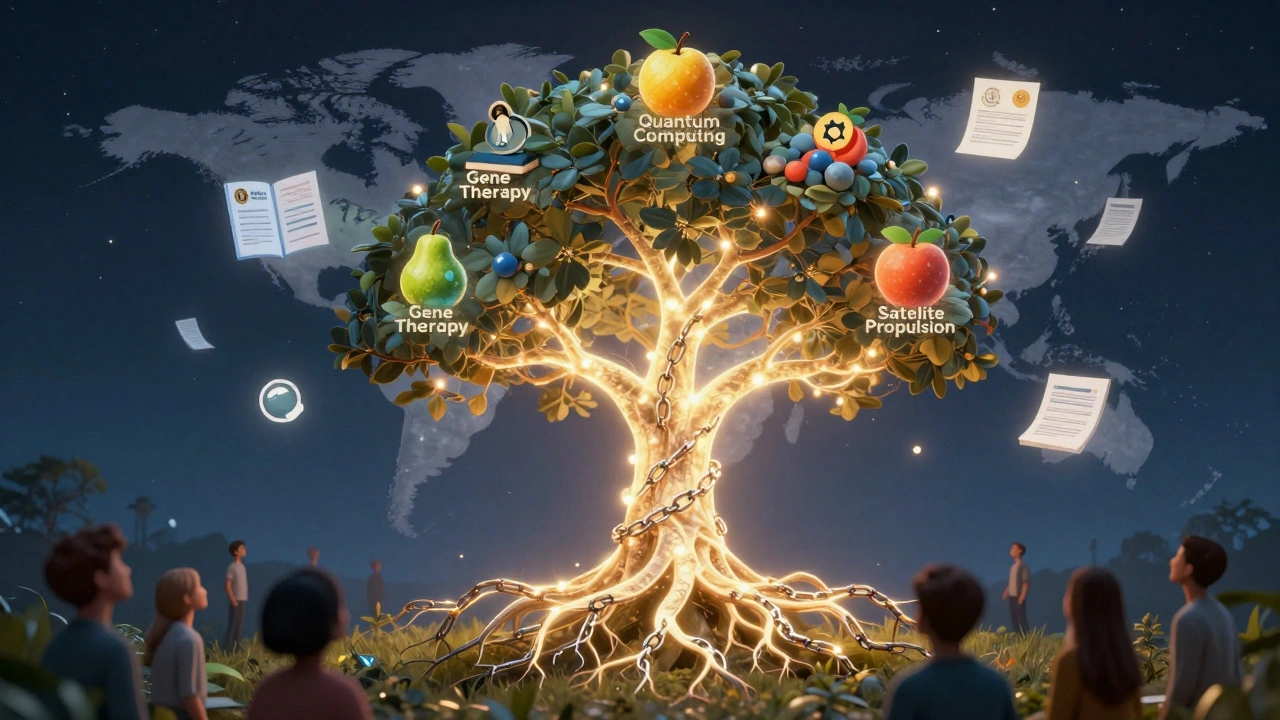
Meanwhile, traffic is surging. In January alone, Grokipedia had 147 million visits - more than Encyclopedia Britannica’s entire history. It’s not replacing Wikipedia. But for people who need reliable information on quantum computing, gene therapy, or satellite propulsion? It’s becoming the go-to.
Truth isn’t just about what’s written. It’s about who gets to write it - and how we know they’re right.
