For years, the golden rule of high school and college writing was simple: Do not cite Wikipedia. It was treated like junk food-tasty, easy to consume, but ultimately bad for your intellectual health. But something shifted in the last decade. Today, if you search through major academic databases, you will find thousands of peer-reviewed papers that don't just reference Wikipedia; they treat it as a primary source of data, a case study in collaboration, or a mirror reflecting societal biases. The encyclopedia has moved from being a forbidden fruit to a legitimate object of scientific inquiry.
This shift isn't accidental. As Wikipedia grew into the largest repository of human knowledge, researchers realized they couldn't ignore it. They started asking hard questions: Who writes these articles? How do conflicts get resolved? Does the platform actually improve literacy, or does it degrade our ability to think critically? If you are a student, researcher, or librarian trying to navigate this landscape, understanding how academia views Wikipedia is crucial for using it effectively-or critiquing it fairly.
The Evolution from Forbidden Source to Data Mine
In the early 2000s, academic journals were hostile toward user-generated content. Critics argued that anonymous editing led to vandalism and inaccuracies. However, by the mid-2010s, the tone changed. Researchers began mining Wikipedia’s massive archives to study everything from stock market predictions to disease outbreaks. This transition happened because scholars stopped viewing Wikipedia merely as an encyclopedia and started seeing it as a complex social network with rich behavioral data.
Consider the field of epidemiology. During the 2009 H1N1 flu pandemic, researchers at Harvard and other institutions analyzed search queries and Wikipedia page views to track the spread of the virus faster than traditional CDC reports could. Here, Wikipedia wasn't cited for its facts about the flu symptoms; it was cited as a sensor. The volume of traffic to specific pages provided real-time metrics on public concern and geographic spread. This utility forced academics to acknowledge the platform's value, even if they still disagreed with its editorial policies.
Another area where this shift is visible is in the history of science. Historians now use Wikipedia edit histories to trace how scientific consensus changes over time. By analyzing when certain terms appeared or disappeared in article revisions, scholars can map the rise and fall of theories without relying solely on published journal articles, which often lag behind current debates. This approach treats the Wikimedia Foundation's database as a living archive of collective memory.
Studying Bias and Representation
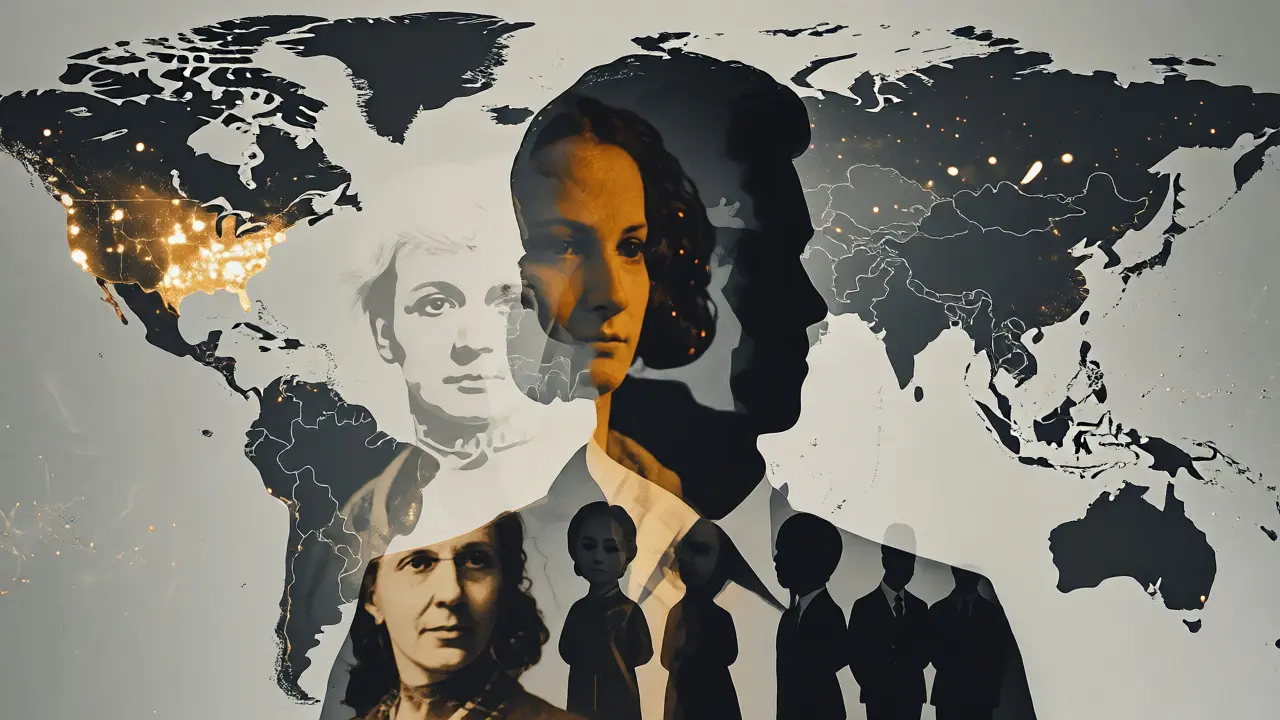
If there is one dominant theme in recent academic literature, it is the critique of systemic bias. Scholars have long noted that Wikipedia reflects the demographics of its editors, who are predominantly male, Western, and tech-savvy. This demographic skew leads to significant gaps in coverage. For instance, studies consistently show that biographies of women and people of color are shorter, less detailed, and more likely to be deleted than those of white men.
A landmark study published in PLOS ONE quantified this disparity. Researchers analyzed millions of biographical articles and found that while women made up half the world's population, they accounted for only about 15-17% of all biography entries on the English-language edition. More troublingly, when women did appear, their descriptions focused disproportionately on personal relationships rather than professional achievements. This isn't just a social justice issue; it affects how users perceive historical importance. If an event or person isn't on Wikipedia, many assume it lacks significance.
| Critique Area | Academic Finding | Implication for Users |
|---|---|---|
| Gender Gap | Women comprise ~16% of biographies; focus on domestic roles vs. professional. | Users may underestimate female contributions to science and politics. |
| Geographic Bias | English Wikipedia heavily favors US/EU topics; Global South underrepresented. | Non-Western perspectives are often missing or framed through a colonial lens. |
| Source Reliability | Citations often lead to dead links or non-academic blogs. | Fact-checking requires verifying sources independently. |
| Edit Wars | Controversial topics see rapid reversions, leading to instability. | Information on hot-button issues (e.g., climate change) can fluctuate. |
Beyond gender, researchers examine "epistemic injustice"-the idea that certain ways of knowing are marginalized. Indigenous knowledge systems, oral histories, and non-Western philosophical traditions often struggle to fit into Wikipedia's citation-heavy, text-based format. Academics argue that the platform's strict requirement for verifiable secondary sources disadvantages cultures that prioritize oral tradition over written record. This structural barrier means that even well-intentioned editors cannot easily add valid cultural knowledge if it doesn't exist in a citable book or journal.
Wikipedia as a Pedagogical Tool
While some professors ban Wikipedia, others have embraced it as a teaching assistant. The concept of "Wiki Education" involves assigning students to improve existing articles or create new ones. Instead of writing a paper that only the professor reads, students contribute to the public domain. This method aims to teach information literacy, collaborative writing, and digital citizenship.
Research supports the efficacy of this approach. Studies comparing classrooms that used Wiki assignments versus traditional essays found that students in the former group showed greater improvement in critical thinking and source evaluation skills. Why? Because editing Wikipedia forces you to engage with the community. You must defend your edits, understand style guidelines, and negotiate with other editors. This friction teaches students that knowledge is constructed, not just received.
However, educators face challenges. Students often fear retaliation from experienced editors or feel overwhelmed by the platform's bureaucracy. To mitigate this, many universities now employ Scholars-in-Residence-librarians or faculty members dedicated to helping students navigate the editing process. These intermediaries ensure that student contributions are constructive and help prevent the common pitfall of adding unsourced opinions.
The Role of Bots and Automation
You might assume humans write every sentence on Wikipedia. In reality, a significant portion of maintenance work is done by automated bots. These scripts fix formatting errors, update statistics, and revert obvious vandalism within seconds. Academic interest in this phenomenon focuses on the balance between human judgment and algorithmic efficiency.
Sociologists of technology study how bots shape the norms of the community. For example, if a bot automatically reverts an edit because it lacks a citation, it reinforces the community's value system: "No source, no stay." This automation standardizes quality but can also stifle nuance. A bot cannot judge whether a niche blog post is a reliable source for a local historical event; it only checks for the presence of a link. Scholars warn that over-reliance on automation risks creating a homogenized version of knowledge that fits machine-readable criteria but loses contextual depth.
Furthermore, the rise of AI-generated text poses new questions. As large language models become capable of drafting coherent paragraphs, researchers are investigating how much of Wikipedia's future content will be synthetic. Early studies suggest that while AI can handle factual summaries well, it struggles with controversial or emerging topics where consensus hasn't formed. This creates a potential feedback loop: AI trains on Wikipedia, then generates content for Wikipedia, potentially amplifying existing biases without introducing new insights.

Citation Practices and Scholarly Legitimacy
Despite the critiques, citing Wikipedia in academic papers is becoming more acceptable, though with caveats. Most style guides, including APA and MLA, advise against citing Wikipedia directly for factual claims. Instead, they recommend using it to find the original sources listed in the references section. This practice turns Wikipedia into a gateway rather than a destination.
Yet, some fields have begun citing Wikipedia explicitly. In computer science and open-source software documentation, Wikipedia is often the most up-to-date source available. When a new programming framework launches, official docs might be sparse, but a Wikipedia entry will provide a comprehensive overview immediately. Academics in these fields recognize that waiting for peer-reviewed analysis of a tool that changes weekly is impractical. Here, timeliness outweighs the prestige of the source.
Additionally, there is a growing trend of "reverse citation," where academic papers are cited on Wikipedia. Editors increasingly look for high-quality, open-access journals to back up claims. This symbiosis benefits both parties: scholars gain visibility and impact metrics, while Wikipedia gains credibility. Initiatives like the WikiCite project aim to bridge this gap further by linking Wikidata items directly to scholarly articles, creating a seamless web of evidence.
Future Directions in Research
As we move deeper into the 2020s, academic attention is shifting toward the sustainability of the project. Who will edit Wikipedia in ten years? With younger generations turning to TikTok and YouTube for quick answers, will the core editor base shrink? Researchers are tracking engagement metrics closely, looking for signs of decline in active contributors.
Another frontier is multilingual equity. While English Wikipedia dominates global traffic, projects in languages like Spanish, Arabic, and Chinese have distinct communities and governance structures. Comparative studies are emerging that analyze how different cultural contexts influence editorial decisions. For instance, how does conflict resolution differ between the German-speaking Wikipedia community, known for its strict hierarchy, and the French-speaking community, which emphasizes consensus?
Ultimately, the academic community has come to terms with Wikipedia not as a perfect encyclopedia, but as a fascinating social experiment. It reveals how humans organize knowledge, negotiate truth, and exclude voices. For researchers, ignoring it means missing out on a vast dataset of human behavior. For students, learning to read it critically is a vital skill in the modern information ecosystem.
Is it ever okay to cite Wikipedia in a research paper?
Generally, no. Standard academic advice is to use Wikipedia to find primary or secondary sources, then cite those original works. However, in fields like computer science or when discussing the platform itself as a subject, direct citation may be appropriate if justified.
Why do academics criticize Wikipedia's gender gap?
Studies show women make up only about 15-17% of biographical subjects. Critics argue this reflects the demographic makeup of editors (mostly men) and results in biased narratives that undervalue women's professional achievements compared to their personal lives.
How do professors use Wikipedia in the classroom?
Many use "Wiki Education" programs where students edit articles instead of writing term papers. This teaches collaboration, sourcing, and digital literacy. Librarians often assist students to ensure edits meet community standards.
Do bots play a role in Wikipedia's accuracy?
Yes, bots perform routine maintenance like fixing links and reverting vandalism. While efficient, they lack human judgment for nuance, which can sometimes lead to the removal of valid but poorly formatted contributions.
What is the "epistemic injustice" argument regarding Wikipedia?
This theory suggests that Wikipedia's reliance on written, citable sources marginalizes cultures with strong oral traditions. Knowledge that isn't documented in books or journals is harder to include, leading to a Western-centric view of history and culture.