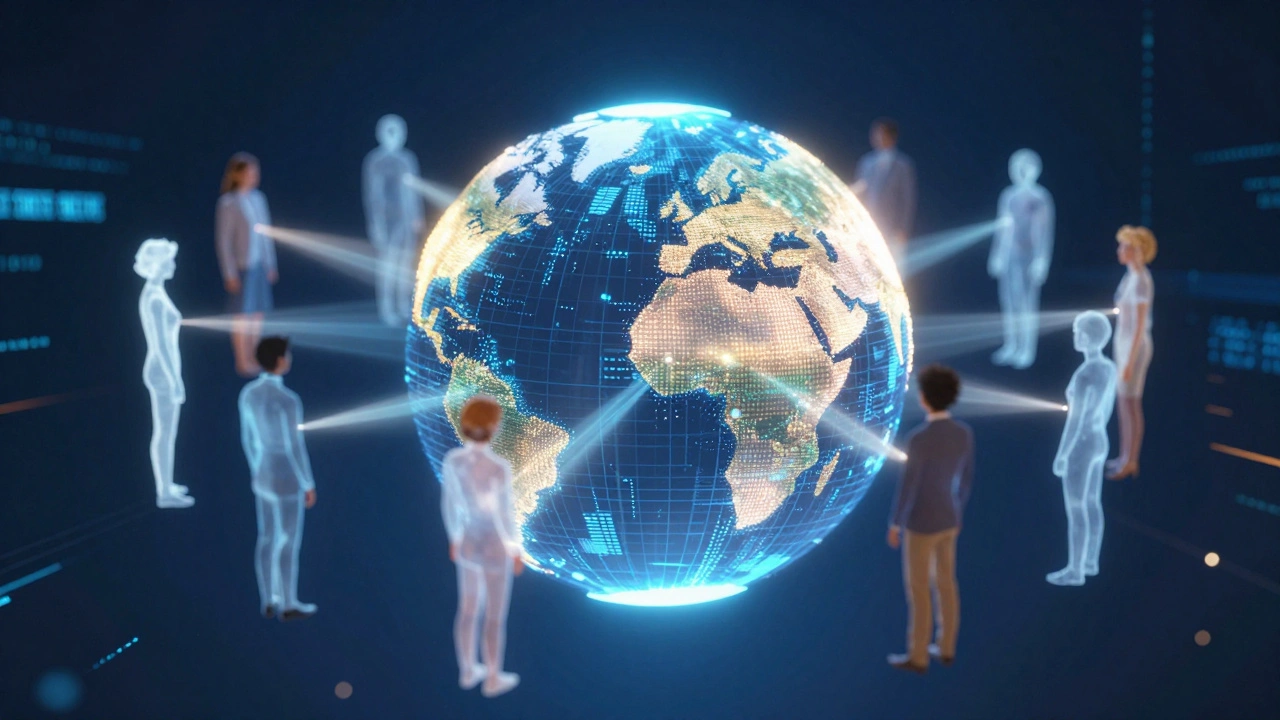
The core struggle with modern news is the gap between what happens on the ground and what makes it to the evening broadcast. By the time a professional crew arrives at a scene, the most critical moments are often over. Citizen journalism flips this. It puts the reporting power in the hands of the people already there. On Wikinews, this takes the form of a distributed network where a user in Tokyo might start a report on a tech launch, and a user in London might polish the grammar and add a source link ten minutes later.
The Mechanics of Collaborative Reporting
To understand how this works in practice, you have to look at the tools. Wikinews uses a system very similar to Wikipedia, which means every single change is tracked. If a user adds a claim that looks suspicious, other editors can instantly revert the change or flag it for discussion. This creates a self-correcting loop that is actually faster than a traditional editorial board.
The process usually follows a specific flow. A user notices a breaking event-say, a sudden policy change in a local government. They create a page, write a lead paragraph, and most importantly, cite a source. In the world of citizen journalism, a claim without a source is essentially invisible. The community then steps in to expand the story, adding context, related links, and updating the status as the situation evolves. Have you ever wondered why some news sites update their stories every five minutes? This is that same urgency, but driven by passion rather than profit.
| Feature | Traditional News | Wikinews Model |
|---|---|---|
| Gatekeeping | Editors decide what is "news" | Community decides via interest |
| Writing Process | Single author/reporter | Multi-author collaboration |
| Correction Speed | Retractions/Errata blocks | Instant community edits |
| Funding | Ads, Subscriptions, Corporate | Donations, Volunteer time |
The Battle Against Bias and Misinformation
One big question people always ask is: "If anyone can write, how do we trust it?" The answer lies in the Neutral Point of View (NPOV) policy. Unlike a blog where the goal is to persuade the reader, a Wikinews article is supposed to be a dry account of facts. If you write "The governor made a disastrous mistake," you will likely see that sentence changed to "The governor's decision was criticized by opposition leaders" within minutes.
This shift from subjective adjectives to objective evidence is where the real work of citizen journalism happens. It requires a high level of media literacy. Contributors must be able to distinguish between a press release (which is a marketing tool) and a primary source (like a court transcript or an official government document). When the community finds a source that is biased, they don't just delete it; they discuss it on the talk page, debating the reliability of the source before deciding if it belongs in the article.

Navigating the Technical Side of Wiki-News
For a beginner, the interface can look a bit intimidating. It uses a specific markup language, but the real logic is in the categories. Stories are tagged by geography and topic, which allows the site to aggregate news. For example, if you are tracking a climate summit, you can follow the "Climate Change" category and see a stream of collaborative reports from different contributors worldwide.
A pro tip for those starting out is to focus on the "stub" articles. A stub is a short, basic report that has the core facts but lacks depth. Helping a stub grow into a full article is the fastest way to learn the community norms. You aren't just writing; you are participating in a peer-review process that happens in real-time. If you make a mistake, you'll get a polite note on your talk page. It's a learning curve, but it's one that teaches you how to write with precision and fairness.
The Role of the Community and Governance
Wikinews isn't an anarchy; it's a meritocracy. While anyone can edit, the users who consistently provide high-quality, sourced information gain a level of trust within the community. This is similar to how Open Source software is developed. The best code (or in this case, the best reporting) wins out.
Governance happens through consensus. If there is a disagreement about whether a specific event qualifies as "news," the community holds a vote or a discussion. This prevents the site from becoming a billboard for niche hobbies or personal vendettas. The goal is always to maintain a professional standard of journalism without the professional hierarchy. This means the "power" is distributed among the people who actually do the work, not those who hold a title.

Practical Challenges in the Field
It isn't all smooth sailing. Citizen journalists on Wikinews face a few recurring hurdles. First is the "event gap." Most people contribute to big, global stories, meaning a massive earthquake in Asia gets a hundred editors, while a critical local election in a small town might get zero. This creates a skewed version of world news where only the most viral events are documented.
Second is the risk of "edit wars." This happens when two people with opposing political views keep changing a sentence back and forth. To solve this, Wikinews uses a locking mechanism and administrator intervention. However, the ultimate solution is always more sources. When you have three different primary documents confirming a fact, the argument usually ends because the evidence outweighs the opinion.
Why This Matters for the Future of Information
We are living in an era where trust in centralized institutions is at an all-time low. When a single corporate entity controls the narrative, there is always a risk of filtered truth. The Wikinews model suggests a different path: trust the process, not the person. By making the editing process transparent and the sources public, the truth emerges from the collective effort.
This approach doesn't replace professional journalists-who are essential for deep investigative work and boots-on-the-ground danger-but it complements them. It provides a layer of rapid, community-driven documentation that keeps the record honest. It turns the reader from a passive consumer of news into an active participant in the historical record.
Do I need a journalism degree to contribute to Wikinews?
No, you don't need any formal qualifications. The only requirement is the ability to write neutrally and provide reliable sources for your claims. The community provides guidance and edits your work as you go.
How does Wikinews verify information?
Verification is done through peer review. Every single fact must be backed by a citation. Other editors check these citations for accuracy and reliability. If a source is found to be unreliable, the information is removed.
Can I get paid for writing on Wikinews?
No, Wikinews is a volunteer-run project. Contributors donate their time and effort to ensure that free, neutral news is available to everyone. It is not a commercial venture.
What happens if someone posts fake news?
Because of the wiki format, fake news is usually spotted and reverted very quickly by other users. The history page allows anyone to see who added the false information and when, making it easy to clean up the article.
Is Wikinews different from a blog?
Yes, significantly. A blog is typically one person's perspective or opinion. Wikinews is a collaborative effort aimed at producing neutral, factual reports that follow a strict set of journalistic standards.