There is a persistent myth in academia that Wikipedia is a free online encyclopedia written by volunteers that serves as a starting point for general knowledge but is often discouraged as a primary source for formal citations. Teachers have told students for decades to "never use Wikipedia." But the reality is far more nuanced. In 2026, most university librarians and academic experts agree on one thing: you should absolutely use Wikipedia, but not in the way you might think.
The problem isn't the tool; it's how we use it. When used correctly, Wikipedia is arguably the most efficient research accelerator available to students today. When used incorrectly, it leads to plagiarism, factual errors, and lower grades. The difference lies in understanding the distinction between a source of information and a source of evidence.
The Real Problem with Citing Wikipedia
Why do professors ban Wikipedia? It comes down to two core concepts: verifiability and the principle that content must be supported by reliable published sources versus original research and new analysis or synthesis that has not been published elsewhere. Wikipedia allows anyone to edit articles, which means the content can change at any moment. If you cite a URL from Wikipedia in a paper submitted in May 2026, that page could look completely different by June 2026 when your professor reads it.
More importantly, Wikipedia articles are secondary sources. They summarize existing knowledge rather than presenting new findings. Academic writing requires you to engage with primary sources (raw data, historical documents) and authoritative secondary sources (peer-reviewed journals, scholarly books). Citing Wikipedia is like citing a summary of a book instead of the book itself. You miss the nuance, the methodology, and the specific arguments that give weight to your own thesis.
However, banning it entirely throws the baby out with the bathwater. The real issue is citation integrity and the reliability of referencing systems in academic work. If you cannot verify the original claim, you cannot trust the conclusion. That is why experts recommend using Wikipedia as a map, not the destination.
How Experts Actually Use Wikipedia
If you ask a historian, a scientist, or a journalist where they start their research, many will admit to checking Wikipedia first. Why? Because it provides immediate context. Before diving into complex academic literature, you need a baseline understanding of terminology, timelines, and key figures.
Consider this scenario: You are writing a paper on the Industrial Revolution and the transition to new manufacturing processes in Europe and America during the late 18th and early 19th centuries. Jumping straight into peer-reviewed journals about textile machinery economics might leave you confused by jargon and specific debates. A quick read of the Wikipedia entry gives you the broad strokes: dates, major inventors, social impacts, and geographic centers. This contextual grounding helps you ask better questions when you search library databases.
Experts also use Wikipedia to identify gaps in their knowledge. If an article mentions a concept briefly without a link, that is a signal that the topic is either too niche or poorly documented. Conversely, heavily linked terms indicate areas with rich scholarly backing. This meta-analysis of structure helps researchers prioritize which subtopics deserve deep investigation.
The Golden Rule: Follow the Citations
This is the single most important strategy for student researchers. Every reputable Wikipedia article has a "References" section at the bottom. These references are gold mines. They are the actual books, journal articles, and news reports that the Wikipedia editors used to write the summary.
- Read the Wikipedia article to get an overview of the topic.
- Scroll to the References section. Look for links to .edu domains, DOI numbers (Digital Object Identifiers), or well-known publishers like Oxford University Press or JSTOR.
- Click those links. Take the title, author, and publication date from the original source.
- Search for that source in your school's library database. You now have a credible, citable source that supports the information you found on Wikipedia.
By doing this, you are not citing Wikipedia. You are citing the expert work that Wikipedia summarized. This method saves hours of searching and ensures you are reading materials vetted by the academic community. It transforms Wikipedia from a forbidden fruit into a powerful discovery engine.
Navigating Bias and Reliability
Not all Wikipedia pages are created equal. Some topics, like popular culture or recent political events, may have biased editing or incomplete coverage. To assess reliability, look at the Talk Page and a public discussion forum attached to each Wikipedia article where editors debate content changes. If the Talk Page shows heated disputes over neutrality or missing citations, treat the article with caution.
Also, check the Article Rating and a quality assessment given by Wikipedia's WikiProject teams to gauge completeness and accuracy. Articles rated "Good Article" or "Featured Article" have undergone rigorous review by volunteer editors. These are significantly more reliable than stubs or unreviewed entries. For critical academic work, always cross-reference Wikipedia claims with at least two other independent scholarly sources.
Remember that systemic bias and patterns of inequality in representation due to demographic imbalances among contributors exists. Historically, Wikipedia has had fewer female editors, leading to less coverage of women's contributions. As a researcher, you must be aware that the narrative presented might reflect these gaps. Using Wikipedia to find sources helps mitigate this because the underlying academic literature often provides a more balanced perspective than the summary.
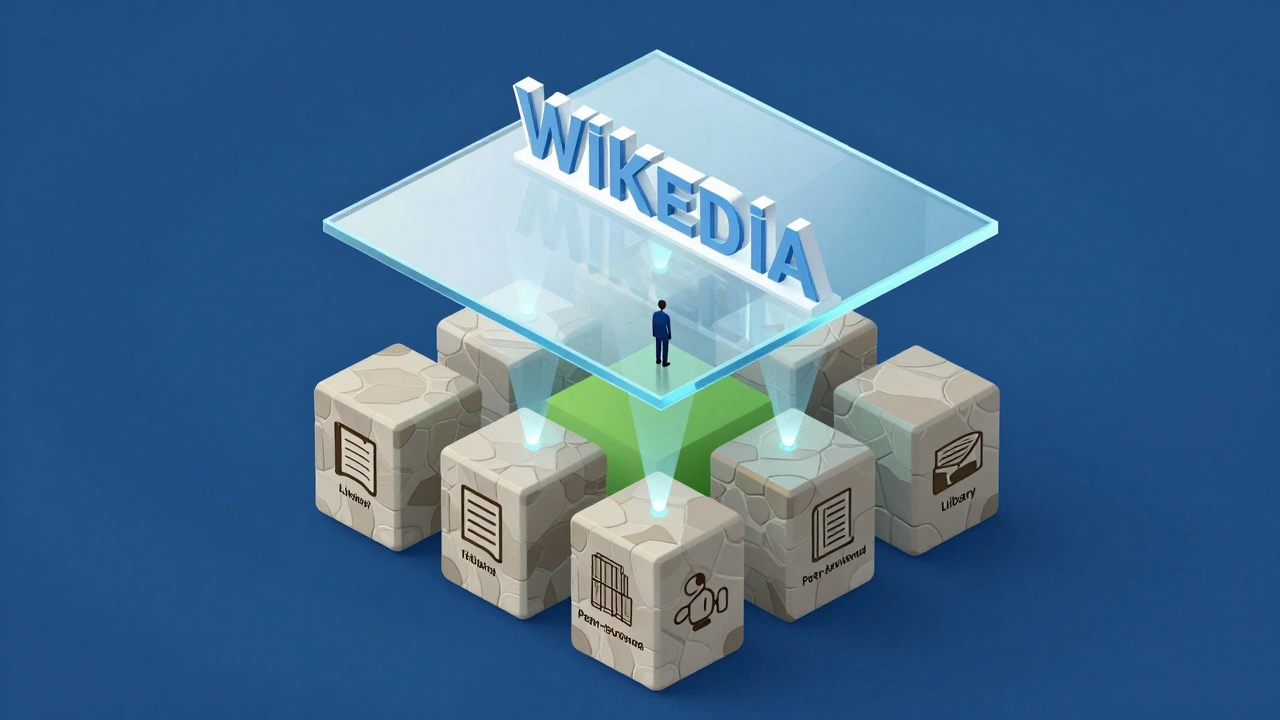
Better Alternatives for Deep Research
While Wikipedia is great for starting, you need robust tools for finishing your research. Here is how different resources compare:
| Resource Type | Best For | Reliability Level | Citation Acceptance |
|---|---|---|---|
| Wikipedia | Context, definitions, finding sources | Variable (check references) | No (as primary source) |
| JSTOR | Peer-reviewed articles, historical documents | High | Yes |
| Google Scholar | Finding academic papers across disciplines | Medium-High (verify publisher) | Yes |
| Library Databases | Subject-specific journals, magazines | Very High | Yes |
| News Archives | Current events, contemporary perspectives | Medium (depends on outlet) | Sometimes |
Use JSTOR and a digital library providing access to thousands of academic journals, books, and primary sources or your university's library portal for the heavy lifting. These platforms offer peer review and evaluation of scholarly work by experts in the same field to ensure quality and validity, which is the gold standard for academic credibility. Google Scholar is excellent for discovering citations, but always check if the full text is available through your institution to avoid paywalls.
Practical Tips for Student Researchers
To maximize your efficiency and maintain academic integrity, follow these practical steps:
- Create a bibliography early. As you find good sources via Wikipedia's references, save them immediately in a citation manager like Zotero or Mendeley.
- Avoid copy-pasting. Even if you cite the original source, copying phrasing from Wikipedia can lead to accidental plagiarism. Read the source, understand it, and write in your own voice.
- Check the date. Wikipedia articles can be outdated. Always verify the publication date of the cited sources. Recent developments require recent sources.
- Use the "View History" tab. This shows you who edited the article and when. Sudden massive edits by anonymous users might indicate vandalism or bias.
- Ask a librarian. Most universities offer research consultations. Librarians are trained to help you navigate databases and evaluate sources effectively.
Ultimately, the goal of academic research is to contribute to the conversation, not just repeat summaries. Wikipedia gets you into the room; scholarly sources let you speak.
Can I cite Wikipedia in my high school essay?
Generally, no. High school teachers usually expect you to demonstrate basic research skills by finding original sources. However, you can use Wikipedia to find those sources. Check your teacher's specific guidelines, as some may allow it for informal projects.
Is Wikipedia biased?
Yes, like any human-created content, Wikipedia can have biases. Systemic bias affects coverage of certain groups and topics. Always cross-check controversial claims with multiple independent, reputable sources to ensure a balanced view.
How do I know if a Wikipedia article is reliable?
Look for citations in the text. Check the Talk Page for disputes. See if the article has a "Good Article" or "Featured Article" rating. Reliable articles have extensive references from academic journals, books, and reputable news outlets.
What is the difference between a primary and secondary source?
A primary source is original material, such as a diary, photograph, or scientific dataset. A secondary source analyzes or interprets primary sources, like a biography or a textbook. Wikipedia is a tertiary source, summarizing secondary and primary works.
Why do professors hate Wikipedia?
Professors don't necessarily hate it; they dislike its misuse. Students often cite Wikipedia because it is easy, not because it is authoritative. Professors want students to engage deeply with original scholarship, which requires more effort than reading a summary.