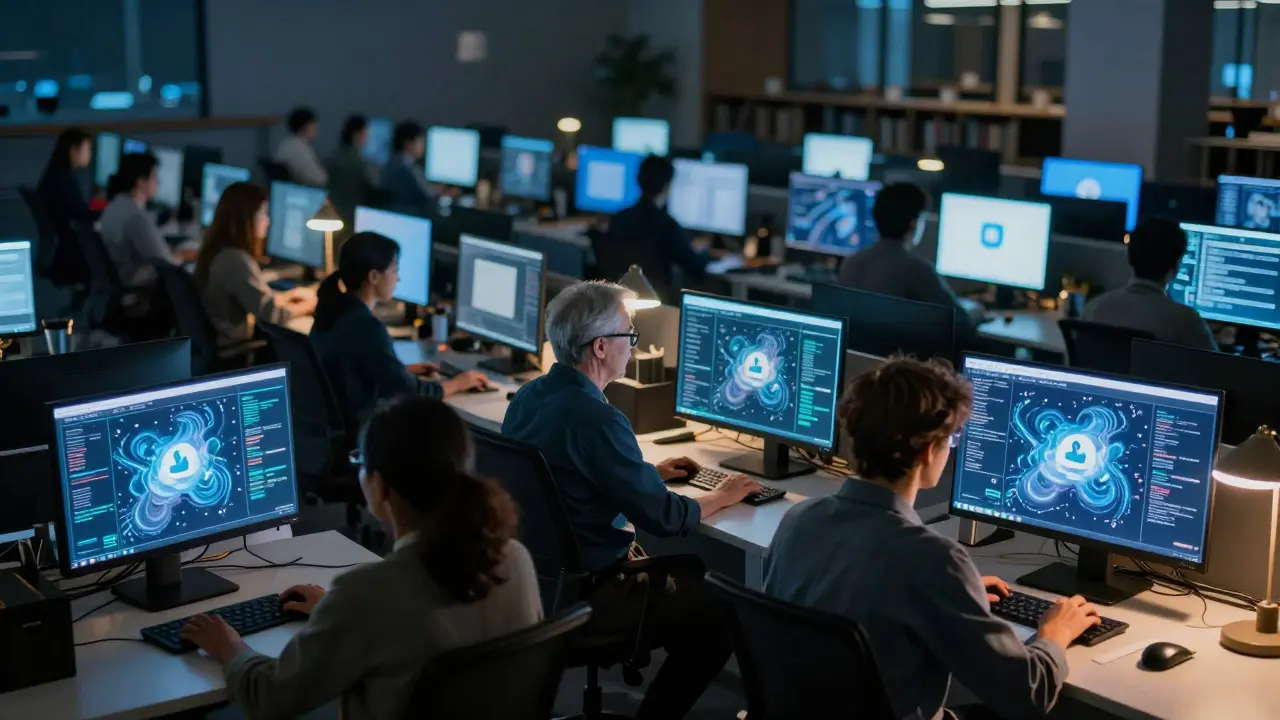
Every time a new user opens an edit box on Wikipedia is a free, web-based collaborative project that aims to compile all knowledge in the form of an encyclopedia. It has been operating since 2001 and currently hosts over 65 million articles in more than 300 languages., they are stepping into one of the largest open-source communities on the internet. But for many, especially women, people of color, and non-native English speakers, this entry point is also a minefield. The central issue isn't just about bad behavior; it's about how harassment systematically filters who stays and who leaves, creating a feedback loop that skews the encyclopedia's voice and coverage.
The Scale of the Problem: Data Over Anecdotes
You might think harassment is rare, but the data tells a different story. A comprehensive study by the Wikimedia Foundation found that while only 18% of editors reported being harassed, nearly 40% of those who left cited "community issues" or "conflict" as a primary reason. More strikingly, women editors were three times more likely to report experiencing gendered harassment compared to men. This isn't just noise; it's a structural leak. When specific groups face higher friction costs to participate, the resulting demographic shift is inevitable.
The impact extends beyond individual frustration. Research published in the *Journal of Participatory Politics and Policy* highlighted that pages edited primarily by female editors often receive more aggressive talk page comments and revert rates. This creates a chilling effect. If you're editing a biography of a female scientist and get your work reverted five times with vague accusations of "bias," do you keep going? For many, the answer is no. They don't quit because they hate writing; they quit because the environment feels hostile to their perspective.
Who Gets Left Behind: The Demographic Ripple Effect
Harassment doesn't affect all editors equally. It acts as a filter, disproportionately removing underrepresented voices. Here’s how the ripple effect works in practice:
- Gender Gap Widening: While Wikipedia started with a 90/10 male/female split, recent efforts have nudged this slightly. However, harassment remains a key barrier to closing the gap. Women who join often find themselves in "cabinets of silence"-small, supportive subgroups that protect them from the broader community's toxicity.
- Linguistic Homogeneity: Non-English speakers often face language-based gatekeeping. Comments like "Your English is poor" can be disguised as quality control but often serve as social exclusion. This keeps the encyclopedia centered around native English speakers' cultural contexts.
- Geographic Bias: Editors from the Global South frequently report feeling their topics are "not notable enough." This bias, often enforced through harsh reverts, discourages contributors from adding global perspectives, keeping the encyclopedia skewed toward Western, Anglo-centric viewpoints.
The result is a self-reinforcing cycle. Fewer diverse editors mean fewer diverse topics. Fewer diverse topics mean less interest from diverse new users. And fewer new users mean less critical mass to dilute the influence of a small, entrenched group of long-time editors who may hold outdated views on what belongs in an encyclopedia.
Beyond the Talk Page: Systemic Barriers to Participation
It’s easy to blame individual trolls, but the problem is systemic. Wikipedia’s culture values consensus, but achieving consensus requires navigating complex social dynamics. For newcomers, these dynamics are opaque. You have to learn unwritten rules about tone, citation styles, and notability standards. If you make a mistake, a veteran editor might correct you with blunt efficiency. For a confident male engineer, this is mentorship. For a nervous woman editing her first article, it can feel like intimidation.
This is where Community Norms is the set of unwritten and written rules that govern behavior and interaction within a group. plays a crucial role. On Wikipedia, norms are enforced socially. There is no HR department. There is no manager. There is only the community itself. If the community decides that a certain type of behavior is acceptable, it will persist. Changing participation rates requires changing these norms, not just banning a few bad actors.
What Works: Strategies That Actually Retain Editors
So, what does effective intervention look like? It’s not just about stricter bans. It’s about lowering the cost of participation for vulnerable groups. Here are strategies that have shown measurable success in pilot programs:
- Mentorship Programs: Pairing new editors with experienced mentors reduces anxiety. When a newcomer knows someone has their back, they are less likely to quit after a single negative interaction. The WikiProject Women in Red initiative, for example, saw a 25% increase in retention among participants due to structured support.
- Clearer Dispute Resolution: Simplifying the process for reporting harassment makes it less daunting. If the process takes 10 steps and requires legalistic language, most people give up. Streamlining this path empowers victims to seek help before they leave.
- Topic-Specific Communities: Creating safe spaces for specific topics (e.g., LGBTQ+ history, Indigenous cultures) allows editors to build confidence in smaller, more welcoming environments before engaging with the broader community.
These approaches work because they address the root cause: isolation. Harassment thrives when the victim feels alone. Mentorship and clear processes break that isolation.

Comparing Intervention Models
Not all solutions are created equal. Some communities try to solve harassment through top-down enforcement, while others focus on bottom-up cultural change. Which approach yields better results for long-term participation?
| Strategy | Primary Mechanism | Impact on Retention | Limitations |
|---|---|---|---|
| Strict Banning | Removes bad actors | Low to Moderate | Doesn't fix toxic culture; can create martyr narratives |
| Mentorship Programs | Provides social support | High | Requires volunteer resources; hard to scale globally |
| Simplified Reporting | Lowers barrier to justice | Moderate | Depends on speed of resolution |
| Cultural Training | Changes norm expectations | Long-term High | Slow to implement; resistance from entrenched members |
The table reveals a clear trade-off. Banning is fast but shallow. Cultural change is slow but deep. The most successful projects combine both: they remove immediate threats while investing in long-term infrastructure for inclusion.
The Future of Inclusive Editing
As we move deeper into 2026, the stakes are higher. Artificial intelligence tools are making it easier to generate content, but they aren't fixing the human element. If Wikipedia wants to remain a credible source of global knowledge, it must reflect the world it describes. That means addressing harassment not as a PR crisis, but as a core operational challenge.
For individual editors, the advice is simple: find your tribe. Join a WikiProject that aligns with your interests. Seek out mentors. Don’t let one bad comment define your experience. For the community at large, the message is clearer still: diversity isn't a checkbox. It's a quality metric. The more diverse the editors, the more accurate the encyclopedia. And the best way to attract diverse editors is to stop driving them away.
Is Wikipedia harassment worse than on other platforms?
Studies suggest that while harassment exists everywhere, Wikipedia's lack of anonymous accounts and its focus on factual accuracy can make conflicts more intense. Because edits are public and permanent until changed, disputes often escalate on talk pages rather than disappearing like in social media feeds. This permanence raises the stakes for every interaction.
How can I report harassment without getting banned myself?
Always stick to the facts. Use the "Report" link on the user's profile or the specific talk page. Avoid emotional language in your report. Cite specific examples of behavior, dates, and links to the offending comments. The goal is to provide evidence, not to argue your case emotionally. This increases the likelihood of a swift, fair resolution.
Do women-only editing sessions actually help?
Yes. Events like WikiWomen Edit-a-thons have shown high retention rates because they reduce the fear of immediate judgment. Participants learn the mechanics of editing in a supportive environment. Once they gain confidence, they are more likely to return to the main site and contribute independently, bringing fresh perspectives with them.
What is the biggest barrier for non-English speakers?
Language barriers are obvious, but the bigger issue is cultural context. Many non-English speakers feel their topics are undervalued or dismissed as "niche." This leads to lower motivation. Improving cross-language collaboration tools and recognizing local notability standards can help bridge this gap.
Can AI tools solve the harassment problem?
AI can help by flagging potential insults or biased language in real-time, giving editors a chance to soften their tone before posting. However, AI cannot replace human empathy. It can assist, but the ultimate solution lies in community culture and leadership. Technology is a tool, not a cure.