You’ve been staring at a blank document for twenty minutes. The cursor blinks, mocking you. You need a quick definition or a broad overview of a complex topic, and your finger hovers over the Wikipedia tab. But then panic sets in. Your professor’s voice echoes in your head: "Don't cite Wikipedia." So what do you do? Do you ignore the most accessible knowledge base on the planet? Or do you risk losing points for using an "unreliable" source?
The truth is more nuanced than "never cite it." In fact, avoiding Wikipedia entirely can sometimes hinder your research efficiency. The key isn’t whether you reference it, but how and why you do it. Let’s break down exactly when it’s safe to drop that link into your bibliography and when you should keep it strictly as a starting point.
Why Professors Hate Citing Wikipedia (And Why They’re Half Right)
First, let’s address the elephant in the room. Why does citing a free online encyclopedia often result in a red pen mark? It comes down to authority and stability. Traditional academic standards prioritize primary sources-original documents, raw data, peer-reviewed journals-and secondary sources that offer expert analysis. Wikipedia is neither. It is a tertiary source.
A tertiary source summarizes other sources. It doesn’t generate new knowledge; it aggregates existing knowledge. This creates two main issues:
- Instability: Content changes constantly. A page you read today might be edited tomorrow, potentially altering facts or removing citations. If you cite a specific version without noting the date, your reference becomes ambiguous.
- Lack of Authorship: Who wrote it? Usually, it’s a collective effort by anonymous or pseudonymous editors. While many are experts, the lack of individual accountability makes it hard to verify bias or expertise compared to a signed article by a credentialed scholar.
However, calling it "bad" is lazy. Calling it "tertiary" is accurate. And tertiary sources have their place in the research ecosystem.
The Golden Rule: Use Wikipedia to Find Sources, Not As a Source
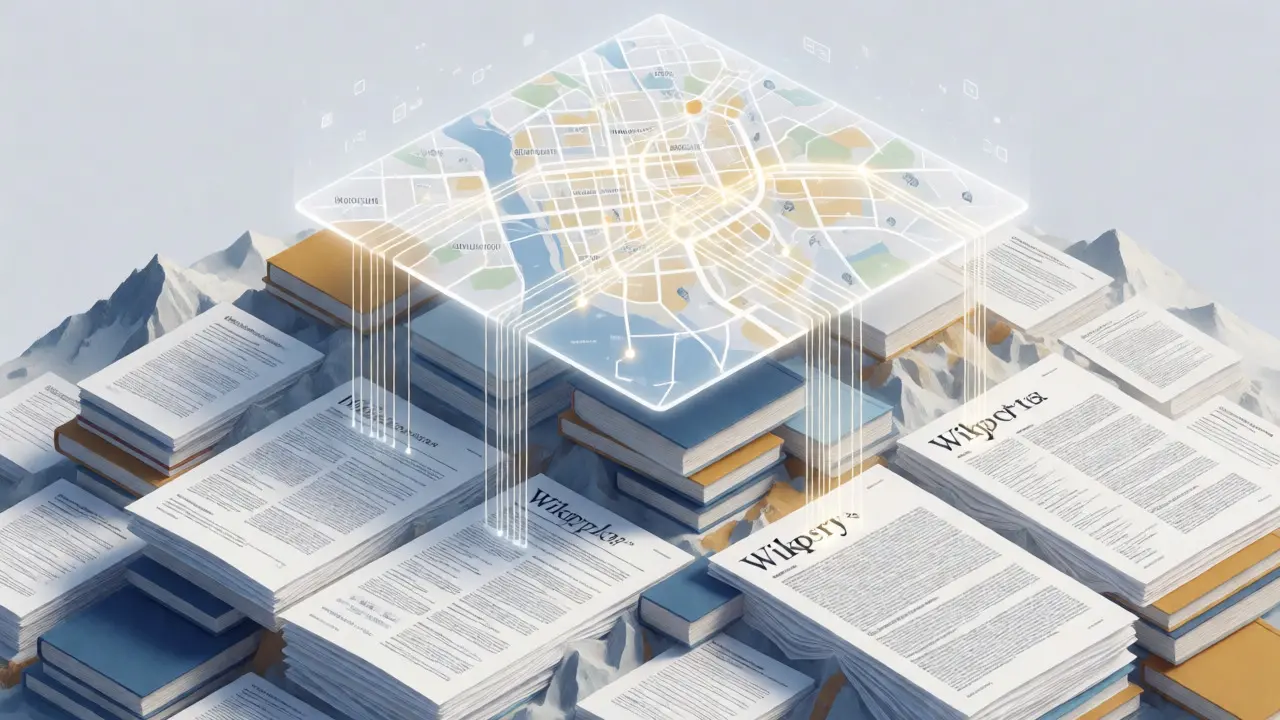
Here is the single most important tip for students and researchers: Treat Wikipedia as a map, not the territory. The value of a Wikipedia article lies less in its text and more in its references section. At the bottom of almost every well-maintained page, you’ll find a list of footnotes linking to news articles, academic papers, books, and official reports.
Imagine you’re writing a paper on the history of the internet. You don’t know where to start. You search "History of the Internet" on Wikipedia. Instead of quoting the summary paragraph, you scroll to the "References" section. You see a link to a 1995 paper by Vint Cerf and Robert Kahn. Now you have a credible, primary-adjacent source to cite. You used Wikipedia to locate the gold, but you cited the gold itself.
| Source Type | Definition | Best For | Citation Status |
|---|---|---|---|
| Primary | Original evidence (diaries, datasets, interviews) | Proving specific claims, original analysis | Always acceptable |
| Secondary | Analysis or interpretation of primary sources (journals, textbooks) | Contextualizing arguments, theoretical frameworks | Always acceptable |
| Tertiary | Summaries of primary and secondary sources (encyclopedias, dictionaries) | Background info, finding leads, quick definitions | Depends on context |
When Is It Actually Okay to Cite Wikipedia?
There are specific scenarios where citing Wikipedia directly is not just acceptable, but recommended. Here is when you can confidently include it in your works cited page.
1. Defining Common Knowledge or Basic Concepts
If you are defining a term that has no single authoritative owner, Wikipedia can serve as a neutral aggregator. For example, if you need a standard definition of "photosynthesis" for a general science report, Wikipedia’s entry is likely accurate, updated, and widely accepted. Just ensure you check the references to confirm consensus among scientific bodies like NASA or major universities.
2. Documenting Public Perception or Media Coverage
Sometimes, you aren’t interested in the objective truth of an event, but in how the public understood it. If you are analyzing how a political scandal was perceived in the early days, Wikipedia’s article history (the "View History" tab) can show how the narrative shifted day by day. In this case, Wikipedia itself becomes the object of study, not just the source of information.
3. Pop Culture and Non-Academic Topics
In fields like film studies, gaming, or pop culture analysis, traditional academic journals may lag behind current trends. Wikipedia often has comprehensive, well-sourced entries on recent movies, video games, or viral phenomena. If you are writing about the cultural impact of a 2024 release, Wikipedia might be the most thorough secondary source available before academic critiques are published.
4. Quick Fact-Checking During Drafts
While drafting, you might need a quick date or statistic to structure your argument. Using Wikipedia here is fine for your internal workflow. However, before final submission, trace that fact back to its original source. If you can’t, and the fact is trivial, some lenient instructors allow the Wikipedia citation with a note.
How to Properly Format a Wikipedia Citation
If you decide to cite it, you must do so correctly. Most style guides (APA, MLA, Chicago) treat Wikipedia as an edited website or an encyclopedia entry. The critical element is the retrieval date because the content is dynamic.
For example, in APA format, you would typically list:
- Author (if known, otherwise title of article)
- Date of last update (found in the footer of the page)
- Title of the article
- Site name (Wikipedia)
- URL
- Retrieval date
Ignoring the retrieval date is the fastest way to get flagged. Without it, you haven’t actually cited anything specific-you’ve cited a moving target.
Beyond Wikipedia: Alternatives for Tertiary Sources
If your professor is strict, they might reject Wikipedia even in the acceptable cases mentioned above. That’s okay. There are other tertiary sources that carry more weight in academia. Consider these alternatives when you need background info but want to avoid the "Wikipedia stigma.":
- Encyclopedia Britannica Online: Still highly respected for historical and general knowledge. It offers signed articles by experts.
- Oxford Reference Online: Often accessible through university libraries, providing concise, authoritative definitions.
- Stanford Encyclopedia of Philosophy: Excellent for humanities and social sciences, written by credentialed scholars.
- ScienceDirect or JSTOR Reviews: Look for review articles which summarize the state of a field.
Using these shows you understand the hierarchy of sources. It demonstrates academic rigor without sacrificing the convenience of an encyclopedia-style overview.

The Hidden Value: Checking for Bias and Consensus
One underrated skill is using Wikipedia to identify controversy. If an article has a large "Controversy" section or multiple competing viewpoints cited, that tells you something important: there is no academic consensus on this topic. This insight is valuable. It prompts you to dig deeper into the conflicting sources rather than accepting a simplified narrative.
Conversely, if an article is short, poorly cited, or has a banner saying "This article needs additional citations," that’s a red flag. It suggests the topic is niche, emerging, or poorly documented in reliable literature. In such cases, relying solely on Wikipedia is risky. You need to hunt for primary data.
Practical Checklist Before You Hit Submit
Before you finalize your bibliography, run through this quick audit for any Wikipedia links you included:
- Is it essential? Could I replace this with a journal article or book found via the references?
- Is the tone appropriate? Am I using it for deep analysis or just basic context?
- Did I check the history? Was the information stable during my research period?
- Did I follow style guide rules? Did I include the retrieval date and correct formatting?
- What does my assignment sheet say? Some professors explicitly ban tertiary sources. Always check the syllabus first.
Remember, academic integrity isn’t about avoiding tools; it’s about using them transparently. If you use Wikipedia, own it. Explain why it’s relevant. Show that you understand its limitations. That level of awareness impresses graders far more than blindly avoiding a useful resource.
Can I cite Wikipedia in a high school essay?
Generally, yes, but it depends on the teacher. High school assignments often focus on teaching proper citation mechanics and basic research skills. Since Wikipedia is easy to navigate, teachers may allow it for introductory topics, provided you format it correctly and perhaps use it alongside one stronger source. Always ask your instructor.
Why is Wikipedia considered a tertiary source?
It is called a tertiary source because it summarizes and compiles information from primary and secondary sources. It does not present original research or new interpretations. Instead, it provides an overview of existing knowledge, making it ideal for getting oriented in a new subject but insufficient for proving specific academic claims.
Does citing Wikipedia lower my grade automatically?
Not automatically. Many modern educators recognize that banning Wikipedia outright ignores how people actually research. If you use it appropriately-for background info or to find better sources-and demonstrate critical thinking about its reliability, it won’t hurt your grade. Problems arise only when you rely on it exclusively for deep analytical arguments.
How do I find the author of a Wikipedia article?
There usually isn't a single author. Wikipedia articles are collaboratively edited. In citations, you typically omit the author field and start with the article title. If a specific editor made a significant contribution, you generally still cite the organization (Wikipedia) rather than the individual user, unless the user is a notable expert who signed their contribution.
Is Wikipedia reliable for medical information?
It is surprisingly good for general medical overviews due to strict sourcing requirements and community monitoring. However, for clinical decisions or specific treatment protocols, always defer to primary medical journals, guidelines from organizations like the CDC or WHO, or textbooks. Use Wikipedia to understand terms, not to diagnose or prescribe.