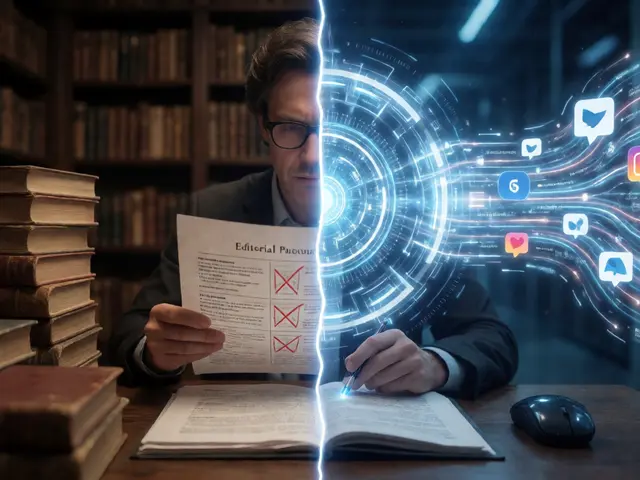
When a major event breaks - a plane crash, a political scandal, a natural disaster - newsrooms don’t wait for official statements. They turn to Wikipedia. Not because it’s perfect, but because it’s fast, detailed, and often ahead of the news cycle. In the race to inform the public, news desks have quietly built systems to track Wikipedia edits in real time. It’s not about copying articles. It’s about using them as a live sensor for what’s happening, who’s involved, and what the public already knows.
Why Wikipedia, Not Official Sources?
Official sources move slowly. Government press releases take hours. Corporate statements get reviewed by legal teams. But Wikipedia? It updates in minutes. When a fire breaks out in a high-rise building in Toronto, someone in the building - maybe a resident, maybe a firefighter - edits the Wikipedia page for that building. Within 10 minutes, the page includes the address, the number of floors, the building’s history, and even photos. A journalist in New York, watching the Wikipedia edit stream, sees it before the local fire department issues a statement.
It’s not just about location details. It’s about context. Who owns the company? What’s the person’s past? What controversies surround the event? Wikipedia pulls together public records, past news reports, and community knowledge. A news desk doesn’t need to dig through 10 archives. They just check the Wikipedia page - and its edit history.
How It Actually Works
Most major newsrooms use a mix of tools and manual checks. They don’t just refresh the page. They subscribe to Wikipedia’s recent changes feed - a real-time stream of every edit made across all language versions. Editors set up filters: keywords like "plane crash," "arrest," "resignation," or names of public figures. When an edit matches, an alert pops up in Slack or email.
Some newsrooms use custom bots. One at Reuters scans English and Spanish Wikipedia for edits to pages about politicians in Latin America. When someone adds a new accusation or updates a biography with a recent conviction, the bot flags it. A reporter then checks the edit’s sources - a court document, a tweet, a local news article - before deciding whether to report on it.
It’s not automation alone. Human judgment matters. Not every edit is accurate. Someone might add false information. A prankster might edit a page about a celebrity to say they died. News desks have learned to look for patterns: Is this edit made by a new user? Is it backed by a reliable source? Are multiple editors making similar changes? If three different users all add the same detail with citations, it’s likely real.
Real Examples From the Field
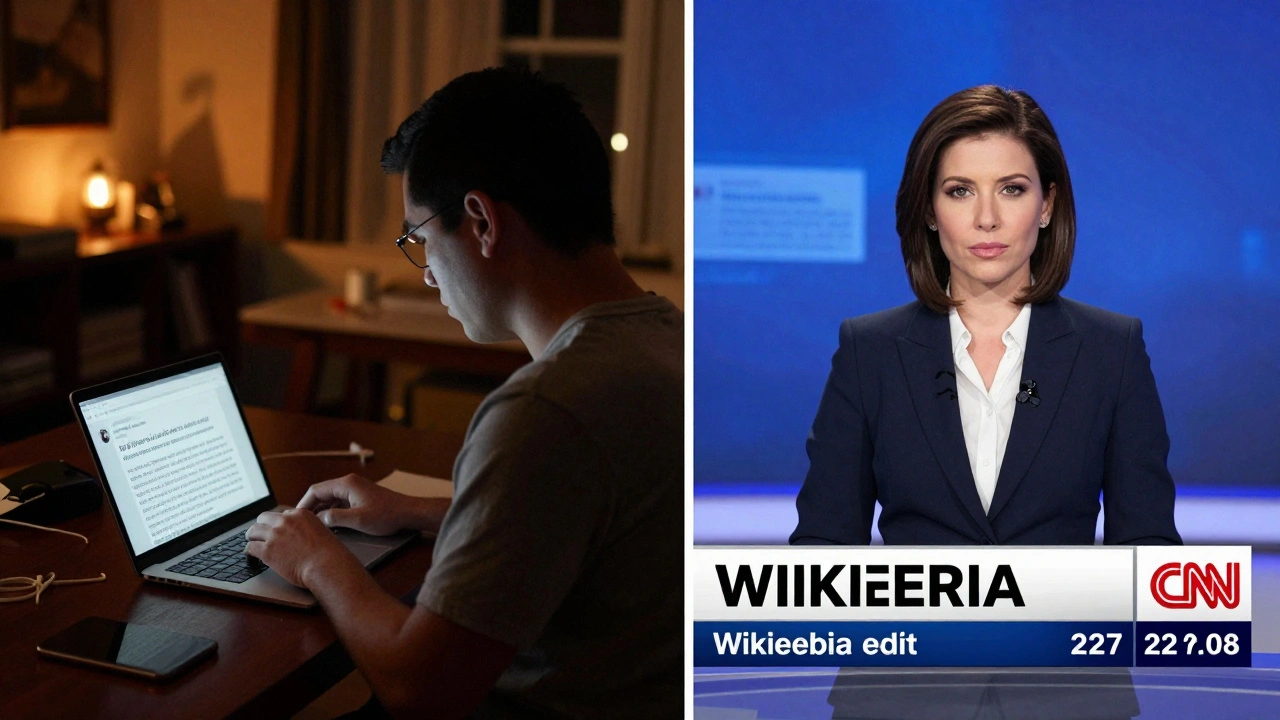
In January 2024, a wildfire broke out near Los Angeles. The Wikipedia page for the community of Malibu Hills was edited within minutes. The edit included the fire’s name - "Cone Fire" - which hadn’t been officially announced yet. The edit cited a tweet from a local firefighter’s union account. A CNN news desk picked up the alert, verified the tweet, and broke the fire’s name on air 22 minutes before the California Department of Forestry did.
Another case: In 2023, a U.S. senator’s Wikipedia page was edited to include a previously undisclosed federal investigation. The edit came from a user who linked to a court filing. The New York Times news desk saw the alert, pulled the filing, confirmed its authenticity, and published a story within 90 minutes. The senator’s office hadn’t commented yet.
These aren’t rare. They happen daily. In 2025, a study by the Tow Center for Digital Journalism found that 68% of major U.S. newsrooms now monitor Wikipedia for breaking news. The most active ones - AP, Reuters, The Guardian, NPR - track 50 to 100 Wikipedia pages daily.
The Rules They Follow
Newsrooms don’t treat Wikipedia like a source. They treat it like a tip line. Here’s how they use it responsibly:
- Never cite Wikipedia directly. They use it to find leads - then track down the original source.
- Check edit history. Who made the change? When? Did others confirm it?
- Look for consensus. If three independent editors add the same fact with citations, it’s more reliable.
- Watch for vandalism. Fake edits often come from new accounts with no history. Real edits usually come from experienced users.
- Corroborate before publishing. Even if the edit looks solid, they verify with a second source - a document, a call, a public record.
One newsroom in Chicago has a simple rule: "If Wikipedia says it, we check it. If we can’t verify it, we don’t run it. But if we can, we’re often first."
What They’re Watching
News desks don’t just monitor big events. They watch for subtle shifts:
- Biography updates. Changes to a politician’s education, job history, or past legal issues.
- Company pages. New CEOs, mergers, scandals - often appear on Wikipedia before corporate press releases.
- Location pages. Infrastructure changes, closures, disasters - especially for bridges, airports, power plants.
- Event pages. Concerts, protests, sports events - crowd estimates, cancellations, arrests.
- Language versions. A story might break first on the German or Japanese Wikipedia before appearing in English.
One editor at the BBC told me they monitor 200+ Wikipedia pages daily. "It’s like having a 24/7 intelligence unit made of volunteers," they said. "They’re not journalists, but they’re often the first to document what’s happening."
Limitations and Risks
Wikipedia isn’t flawless. False edits happen. Sometimes, bad actors plant misinformation to mislead reporters. In 2023, a coordinated effort edited Wikipedia pages of three judges to falsely claim they had been suspended. A Canadian news outlet almost ran with it - until a fact-checker noticed the edits were all made from the same IP address and lacked any supporting documents.
Another risk: Wikipedia’s coverage is uneven. Rural towns, small businesses, or non-English communities are often under-documented. A news desk might miss a breaking story because no one has edited the page yet.
That’s why no newsroom relies on Wikipedia alone. It’s a tool - not a source. It’s a way to find what’s happening before the official channels catch up.
The Bigger Picture
Wikipedia is now part of the news infrastructure. It’s not a replacement for reporting - it’s a force multiplier. Journalists use it to find leads, verify facts, and move faster. The people who edit Wikipedia - students, librarians, retired engineers, activists - are unknowingly helping shape the news.
For the public, this means stories break faster. For journalists, it means less time digging through archives and more time verifying what matters. And for Wikipedia? It’s no longer just a reference. It’s a live news ticker - written by millions, monitored by thousands, and trusted by newsrooms around the world.
Do newsrooms cite Wikipedia in their articles?
No. Newsrooms never cite Wikipedia directly. They use it to find leads - like a new detail about a person or event - then track down the original source: a government document, a court filing, a press release, or an interview. Wikipedia is a starting point, not a source.
Can Wikipedia be trusted for breaking news?
It can be, but only after verification. Wikipedia edits are often the first public record of an event, but they’re not always accurate. News desks look for patterns: multiple edits from different users, citations to reliable sources, and edit history. If three independent editors add the same fact with solid references, it’s likely true. But they still verify before publishing.
How do journalists know if a Wikipedia edit is real or fake?
They check the editor’s history. A new user with no past edits is suspicious. An experienced editor with a long history of adding citations is more reliable. They also look at the edit summary - real edits usually include links to sources. Fake edits often lack citations, use vague language, or come from known vandalism accounts. Many newsrooms use bots to flag edits from suspicious IP addresses.
Which newsrooms use this method?
Major outlets like Reuters, AP, The Guardian, NPR, and the BBC actively monitor Wikipedia. A 2025 study found 68% of major U.S. newsrooms use some form of Wikipedia monitoring. Smaller outlets are starting to adopt it too, especially for local events where official sources are slow to respond.
Is Wikipedia faster than official sources?
Yes, often by hours. Government agencies, corporations, and even police departments take time to release official statements. Wikipedia updates in minutes - sometimes seconds - after someone with firsthand knowledge edits the page. In 2024, CNN broke the name of a wildfire 22 minutes before California’s fire agency did, thanks to a Wikipedia edit.