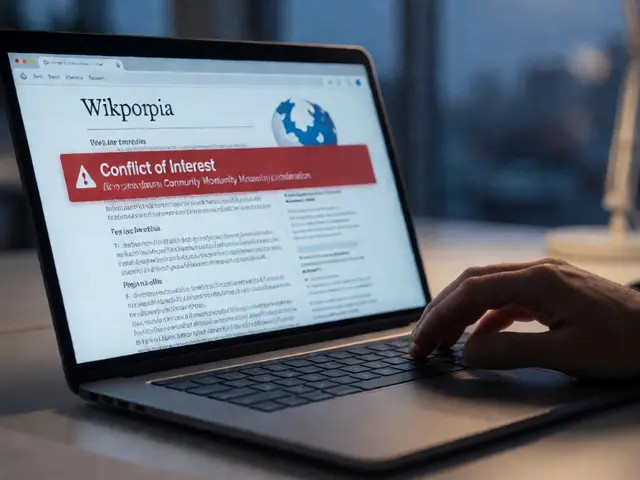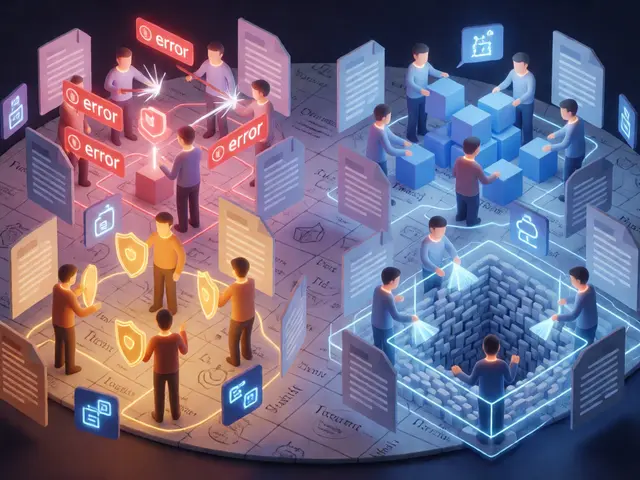
Imagine a library where every book is free to read, copy, and remix, yet it still outperforms paid encyclopedias that lock their content behind paywalls. That is the paradox of Wikipedia is a free online encyclopedia that relies on open licensing to sustain its massive growth and global reach. Unlike traditional publishers who profit from scarcity, Wikipedia thrives by removing barriers to reuse. This strategy allows it to outcompete closed content platforms not by having better writers, but by leveraging the network effects of open access.
The core engine driving this success is the Creative Commons Attribution-ShareAlike license. By choosing this specific legal framework, the project ensures that any derivative work must remain free. This creates a self-reinforcing cycle where contributions are built upon other contributions without legal friction. For readers, this means instant access. For editors, it means freedom to improve articles without fearing copyright lawsuits. The result is a platform that scales faster than any proprietary competitor because the cost of entry for contributors is effectively zero.
The Legal Backbone: CC BY-SA
To understand why Wikipedia wins, you have to look at the license itself. The Creative Commons Attribution-ShareAlike (CC BY-SA) is a copyleft license that requires users to credit the original author and share new works under the same terms. This might sound restrictive to some, but for an encyclopedia, it is perfect. It prevents corporations from taking Wikipedia’s content, adding minor changes, and selling it back to the public as a premium product. Instead, it forces all value added to flow back into the commons.
This legal structure solves the "free rider problem" in a unique way. In many open-source projects, companies can take code, modify it, and keep those modifications private. On Wikipedia, if you edit an article, your edits become part of the shared pool. This transparency builds trust. Readers know that the information isn't being filtered through a corporate editorial board with a hidden agenda. They are looking at a collaborative effort governed by clear, open rules. This transparency is a competitive advantage that closed platforms struggle to replicate because their business models rely on controlling the narrative.
Network Effects vs. Paywalls
Closed platforms like Britannica or specialized industry databases operate on a subscription model. Their value proposition is exclusivity. If you don't pay, you don't get in. But human curiosity doesn't stop at paywalls. When a student needs quick facts, they go to the open source. When a journalist needs background context, they check the free resource first. Because Wikipedia is always available, it captures the initial attention. Once that habit is formed, users rarely switch to paid alternatives unless they need highly specialized, peer-reviewed data that Wikipedia lacks.
Open licensing amplifies these network effects. Every time someone cites a Wikipedia article in a blog post, a school assignment, or a news story, they drive traffic back to the source. Since the link is stable and the content is free, the referral value is high. Closed platforms often block hotlinking or require subscriptions for full text, which breaks the chain of discovery. Wikipedia’s open nature makes it the default starting point for research across the web. This constant influx of new users brings new editors, who bring more content, creating a flywheel that closed competitors find hard to match.
Global Reach Through Translation
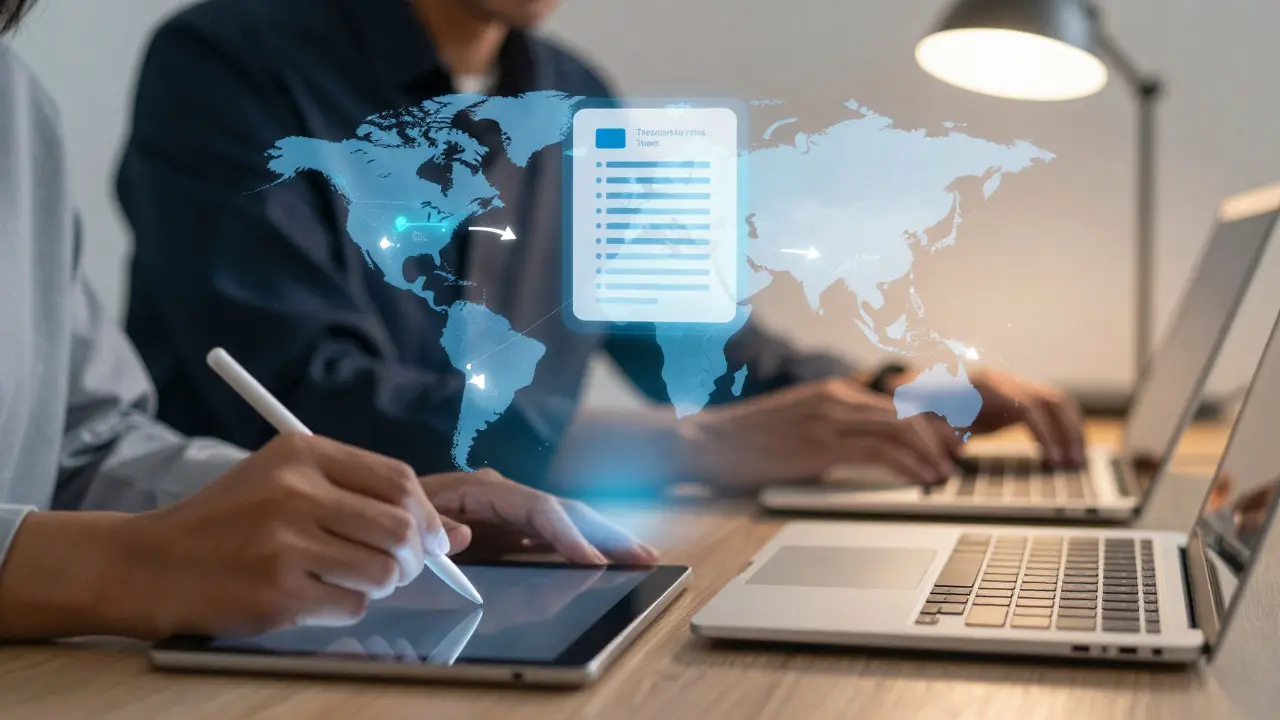
One of the most underrated advantages of open licensing is its role in translation. Wikipedia exists in over 300 languages. How does a single volunteer team manage that? They don’t. The community does. Because the content is licensed under CC BY-SA, translators in any country can legally copy, adapt, and publish versions of articles in their local language. There are no licensing fees to negotiate, no permission slips to sign, and no revenue sharing to calculate.
Compare this to a closed encyclopedia. To expand into Spanish or Mandarin, the publisher must hire translators, negotiate rights, and manage distribution. It is expensive and slow. On Wikipedia, a group of volunteers in Brazil can translate Portuguese articles into Spanish overnight. The next day, those articles are live. This speed of localization allows Wikipedia to dominate search results in non-English speaking countries. For a user in Tokyo, the Japanese Wikipedia is often the first stop for factual queries, simply because it is comprehensive, up-to-date, and free. Closed platforms rarely achieve this level of linguistic coverage because the economic incentive is low compared to the cost of production.
Trust and Verification Mechanisms
Critics often argue that open platforms lack quality control. But Wikipedia has developed robust verification mechanisms that actually enhance trust. Because anyone can edit, there is also anyone watching. Changes are tracked in version history, allowing users to see exactly who changed what and when. If an error is found, it can be corrected immediately. In closed platforms, fixing an error might take weeks, depending on the editorial calendar. On Wikipedia, the fix happens in minutes.
This rapid correction cycle is a direct result of open access. The barrier to reporting an error is low. You don’t need to write a formal letter to the editor; you just click "Edit." This democratization of fact-checking means that Wikipedia stays current with breaking news and scientific discoveries faster than traditional encyclopedias. While not perfect, the system is resilient. It leverages the crowd to maintain accuracy, a feat that centralized, closed systems struggle to achieve due to bureaucratic inertia.
Comparison: Open vs. Closed Models
| Feature | Open Model (Wikipedia) | Closed Model (Traditional Encyclopedias) |
|---|---|---|
| Licensing | CC BY-SA (Copyleft) | All Rights Reserved / Proprietary |
| Cost to User | Free | Subscription / Purchase |
| Update Speed | Real-time / Minutes | Monthly / Quarterly Editions |
| Language Coverage | 300+ Languages | Typically 5-10 Major Languages |
| Error Correction | Community-driven, Immediate | Editorial Board, Slow |
| Derivative Works | Allowed if same license used | Restricted / Prohibited |
Sustainability Without Subscriptions
A common question is how Wikipedia stays alive without charging users. The answer lies in its funding model, which is separate from its content model. Wikipedia is run by the Wikimedia Foundation, a non-profit organization. It relies on donations from users who value the service. Because the content is free, the donation appeal is strong. People donate to support the infrastructure, not to unlock content. This decoupling of content access from payment removes the psychological barrier of "paying for knowledge."
Closed platforms face a different challenge. They must constantly prove their worth to justify recurring fees. If a user feels they can get 90% of the value for free elsewhere, they cancel. Wikipedia avoids this churn by offering 100% of its core value for free. The open license ensures that no one can easily clone the entire site and sell it, protecting the foundation's unique position. This sustainable model allows Wikipedia to focus on technical improvements and community management rather than sales and marketing.
The Future of Knowledge Commons
As artificial intelligence and automated editing tools evolve, the importance of open licensing will only grow. AI models need vast amounts of clean, structured data to train. Openly licensed content provides this without legal ambiguity. Companies building AI assistants prefer to use data that is clearly marked as reusable. Wikipedia’s CC BY-SA license makes it a safe harbor for data extraction. This positions Wikipedia not just as a reference tool, but as a foundational dataset for the future of digital knowledge.
Closed platforms may try to compete by offering curated, expert-verified content. And they will succeed in niche areas where deep expertise is required. But for general knowledge, the combination of open access, global collaboration, and rapid updates gives Wikipedia a structural advantage that is difficult to overcome. The lesson here is clear: in the digital age, openness is not just a moral choice; it is a competitive strategy. By lowering barriers to entry and encouraging reuse, Wikipedia has created a platform that grows faster and reaches further than any closed alternative could hope to achieve.
Why does Wikipedia use CC BY-SA instead of a simpler license?
The ShareAlike clause ensures that any new content added to Wikipedia remains free. Without it, a company could take Wikipedia articles, add their own branding, and sell them as a premium product. CC BY-SA protects the integrity of the free encyclopedia by forcing derivatives to stay open.
Is Wikipedia content always accurate?
While not infallible, Wikipedia is generally accurate for mainstream topics due to its large community of editors and transparent version history. Errors are often corrected quickly. For specialized or controversial topics, checking multiple sources is recommended, as with any reference material.
Can I use Wikipedia images in my commercial project?
Many images on Wikipedia are freely licensed, but you must check the specific license for each file. Some are Public Domain, while others are CC BY-SA. Always verify the license status and provide attribution as required by the specific image's terms.
How does open licensing help with translations?
Open licenses allow anyone to legally copy and translate content without paying royalties or seeking permission. This enables volunteer communities worldwide to create localized versions of Wikipedia articles rapidly and at low cost, expanding the platform's global reach significantly.
What is the main difference between Wikipedia and a closed encyclopedia?
The main difference is the business model and access. Wikipedia is free, open-licensed, and community-edited. Closed encyclopedias are usually subscription-based, proprietary, and edited by professional staff. This leads to differences in update speed, language coverage, and cost to the user.