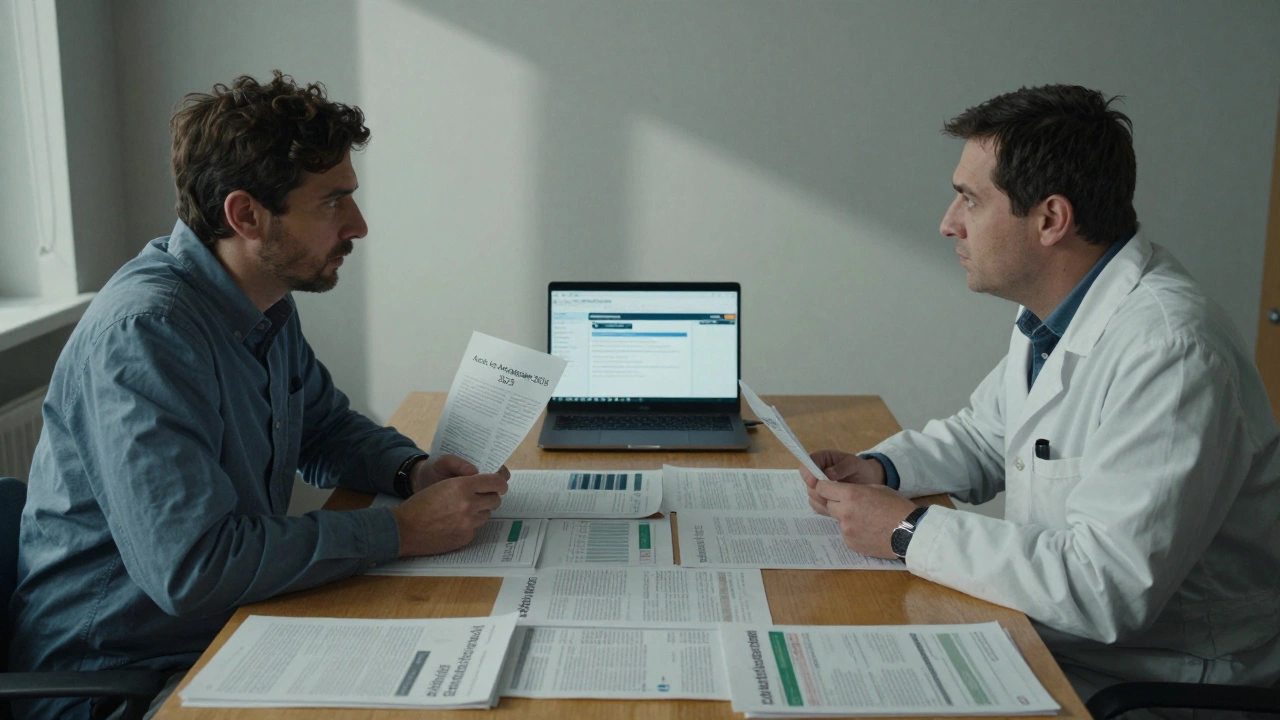
Wikipedia is built on sources. Not opinions, not memories, not blog posts - actual, verifiable, published material. But what happens when two credible sources say completely different things? You’re editing a page about climate change, and one peer-reviewed journal says Arctic ice loss is accelerating, while another from a different institution claims the trend has stabilized. Both are cited. Both look legit. Now what?
Understand Why Conflicts Happen
Conflicting citations aren’t mistakes. They’re signs that science, history, or public discourse is still evolving. A 2023 study in Scientific Communication found that over 37% of contentious Wikipedia articles in the sciences had at least two high-quality sources contradicting each other. That’s normal. The problem isn’t the conflict - it’s how you handle it. Sources clash for real reasons: different methodologies, sampling periods, political biases, funding sources, or even simple human error. A study from 2022 tracked 1,200 disputed citations across Wikipedia and found that 62% of the disagreements came from studies published within five years of each other - meaning the field was still settling on a consensus.Check the Source Quality First
Not all sources are equal. Wikipedia’s policy on reliable sources isn’t optional - it’s the foundation. Start by asking: Is this source actually reliable? - Academic journals? Check if they’re peer-reviewed and indexed in PubMed, Scopus, or Web of Science. Avoid predatory journals - those that charge authors to publish without proper review. - News outlets? Prefer major, established ones like The New York Times, BBC, or Reuters. Avoid hyperpartisan blogs or sites with no editorial oversight. - Books? Look for university presses (Oxford, Cambridge, MIT Press) or well-known publishers. Self-published books rarely meet reliability standards unless they’ve been widely cited by other experts. If one source is clearly weaker - say, a blog post from a retired engineer with no peer review - remove it. But if both are strong, you can’t just pick one. You need to show the conflict.Use Neutral Language to Present Both Sides
Wikipedia doesn’t take sides. It reports what reliable sources say. So when two sources disagree, you don’t pick the one you like. You present both. Instead of writing: “Global temperatures have risen 1.2°C since 1900,” you write: “According to the Intergovernmental Panel on Climate Change, global temperatures have risen 1.2°C since 1900. However, a 2023 study by the Center for Climate Analysis suggests a slower rate of increase, citing revised satellite data.” This isn’t wishy-washy - it’s accurate. Readers need to know there’s debate. The goal isn’t to resolve the science - it’s to reflect what the published record says.Look for Consensus or Meta-Analyses
Sometimes the conflict isn’t between two sources - it’s between dozens. That’s when you look for synthesis. Meta-analyses, systematic reviews, and major assessments (like those from the IPCC, WHO, or National Academies of Science) pull together hundreds of studies and weigh the evidence. If a meta-analysis from 2024 concludes that 95% of recent studies support a particular trend, you can say: “A 2024 meta-analysis of 187 peer-reviewed studies found consistent evidence of…” These aren’t original sources, but they’re trusted summaries. Citing them often resolves disputes without needing to pick sides.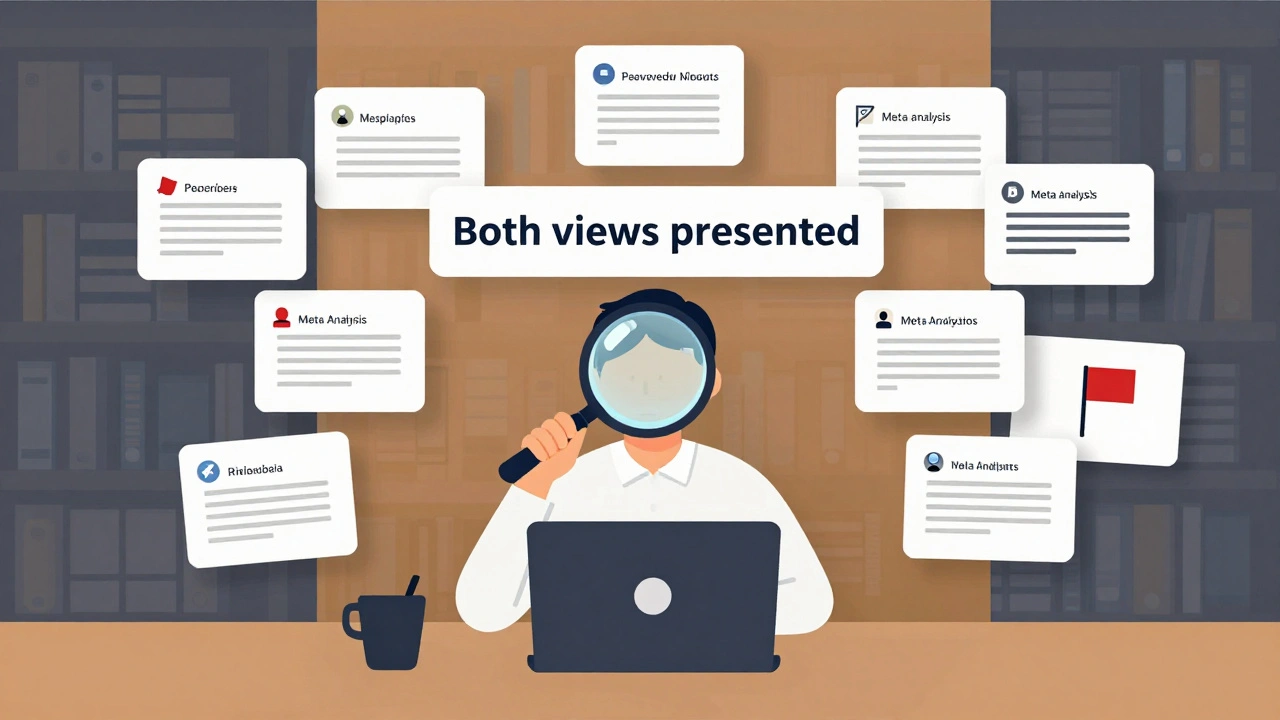
Check Dates and Context
A 2018 study might say one thing. A 2025 study might say another. That doesn’t mean the older one is wrong - it might be outdated. Always check: - When was the source published? - Has it been superseded by newer research? - Was it retracted or corrected? A 2021 paper on vaccine efficacy might be cited in a Wikipedia article, but if a 2024 CDC report with 500,000 more participants found different results, the 2021 paper should be downplayed or flagged as outdated. Use phrases like “earlier studies suggested” or “more recent data indicates.” Context matters more than just having a citation.Use Talk Pages to Discuss Disputes
If you’re unsure, don’t just edit and walk away. Go to the article’s talk page. That’s where editors debate sources, not the article itself. Say: “I’ve found two conflicting studies: one from Smith et al. (2023) and another from Lee et al. (2024). Both are peer-reviewed. Smith uses survey data from urban areas; Lee uses satellite data. Should we mention both, or is one clearly outdated?” Other editors will help. You might get a response like: “Lee’s study was cited in the 2025 WHO technical report - it’s now the dominant view.” That’s how consensus forms. Don’t fear edit wars. Fear silence. If no one discusses the conflict, the article becomes misleading.When in Doubt, Cite the Most Specific and Recent Source
There’s no magic rule, but here’s a practical guideline: if two sources conflict and both are reliable, pick the one that’s: - More specific to the claim you’re making - More recent (unless the older one is a landmark study) - From a more authoritative publisher For example: If one source says “35% of Americans support policy X” (a 2023 Pew Research poll), and another says “42% support policy X” (a 2022 local university survey with 200 respondents), go with Pew. It’s larger, more rigorous, and nationally representative. You can still mention the other source on the talk page, but the article should reflect the strongest, most relevant evidence.
Don’t Hide Disagreements - Flag Them
Wikipedia has tools for this. Use {{disputedA template used to flag content where sources conflict}} or {{citation neededA template requesting a reliable source for a claim}} when you’re unsure. If you’re editing a section with conflicting sources, add: {{disputed|date=January 2026}} at the top of the paragraph. That tells other editors: “This needs attention.” It doesn’t remove the content - it invites collaboration. This is how Wikipedia stays honest. It doesn’t pretend to have all the answers. It shows where the answers are still being debated.What Not to Do
Avoid these common mistakes:- Don’t delete a source just because you disagree with it.
- Don’t cite Wikipedia itself as a source - it’s not reliable for facts, only for finding references.
- Don’t use press releases or corporate white papers as primary sources unless they’re independently verified.
- Don’t assume the most cited source is the correct one - popularity doesn’t equal accuracy.
Final Rule: Be the Editor, Not the Advocate
Your job isn’t to prove your point. It’s to show what the world’s published knowledge says - even when it’s messy. Wikipedia thrives on transparency, not certainty. If you can’t resolve a conflict, document it. Cite both sides. Note the dates. Point to meta-analyses. Use the talk page. Let others weigh in. The article doesn’t need to be perfect. It just needs to be honest about what’s known - and what’s still up for debate.What should I do if two peer-reviewed journals contradict each other on Wikipedia?
Present both views clearly and neutrally. Use phrases like “according to” and “however” to show the disagreement. Avoid picking one as right or wrong. Check if a meta-analysis or major review has weighed the evidence - those often resolve conflicts. If not, add a {{disputed}} template to flag the issue for other editors.
Can I use a blog or personal website as a source on Wikipedia?
No. Blogs, personal websites, and social media posts are not considered reliable sources unless they are published by recognized experts in a field and have been independently verified by reputable media or academic institutions. Even then, they’re rarely acceptable as primary sources for factual claims.
How do I know if a journal is predatory?
Predatory journals charge authors to publish without proper peer review. Check if the journal is listed on DOAJ (Directory of Open Access Journals) or indexed in Scopus/Web of Science. Look for transparent editorial boards, real contact info, and no pressure to pay upfront. Be wary of journals with names that sound like reputable ones but have slight misspellings.
Is it okay to cite a source that’s older than five years?
Yes, if it’s a landmark study or foundational work. But if newer research contradicts it, mention that. For example: “A 2018 study first proposed this theory, but a 2024 meta-analysis found conflicting results.” Older sources can provide context, but recent evidence should dominate unless the older one is still widely accepted.
Why does Wikipedia allow conflicting sources instead of picking one?
Because Wikipedia’s goal is to report what reliable sources say, not to determine truth. Science and history are often uncertain. If two credible sources disagree, Wikipedia reflects that uncertainty. Choosing one side would make the article biased, not accurate. The platform trusts its community to weigh evidence over time.