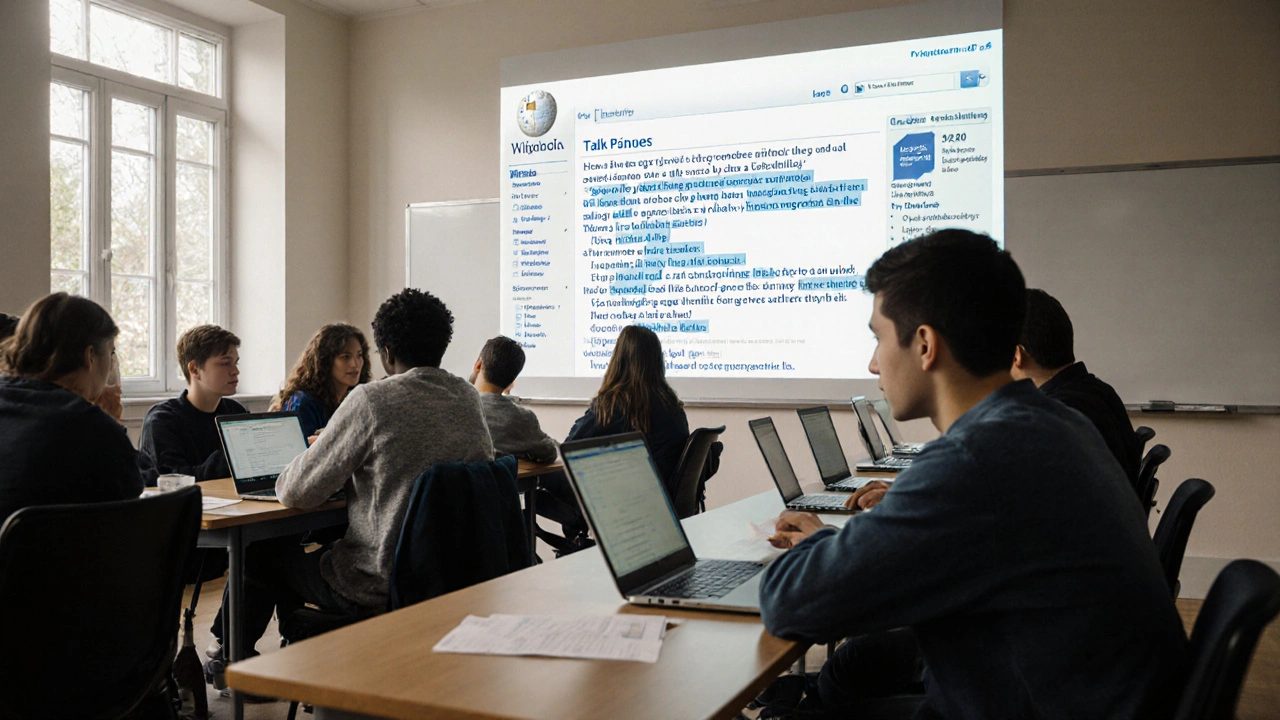
Wikipedia isn’t just a place to look up facts-it’s one of the most active public forums for intellectual disagreement in the world. Every day, hundreds of editors argue over word choices, source reliability, neutrality, and even the inclusion of entire topics. These conversations happen on Wikipedia talk pages, and they’re some of the most authentic examples of scholarly debate you’ll find outside a university seminar.
Why Wikipedia Talk Pages Are Perfect for Teaching Debate
Most students think academic debate means writing formal essays or participating in structured classroom discussions. But real scholarship doesn’t happen in isolation. It happens when people challenge each other’s assumptions, cite evidence, and revise their positions based on new information. That’s exactly what happens on Wikipedia talk pages.
Unlike peer-reviewed journals, where feedback can take months or years, Wikipedia edits are immediate. A student can post a claim about the causes of the 1918 flu pandemic, and within hours, another editor might respond with a citation from the Journal of Infectious Diseases, question the reliability of a blog post they used, or suggest a more balanced phrasing. The feedback loop is fast, public, and grounded in verifiable sources.
There’s no grade, no professor watching-but there’s accountability. If you cite a fringe source or misrepresent a study, someone will call you out. And if you’re right, you’ll get a thank-you note from a stranger who’s spent hours fact-checking the same topic.
How Talk Pages Mirror Academic Discourse
Wikipedia talk pages follow the same logic as scholarly peer review, even if they don’t look like it. Here’s how:
- Claims require evidence - No one accepts “I think” or “everyone knows.” You need citations from reliable sources.
- Disagreements are resolved through dialogue - Editors don’t just delete each other’s edits. They leave comments, ask for clarification, and propose compromises.
- Neutrality is enforced - If one side dominates the article, others will push back to include minority perspectives, as long as they’re supported by sources.
- Revision is expected - No edit is final. Articles change constantly as new research emerges or better sources are found.
Compare that to a student paper: it’s written once, graded once, and then buried. On a Wikipedia talk page, the same idea can be refined over weeks, months, or even years. That’s how real knowledge grows.
Classroom Activities Using Wikipedia Talk Pages
Here’s how to bring this into your course, whether you teach history, biology, sociology, or political science.
- Assign a Wikipedia article to analyze - Pick a moderately contested article, like “Climate Change Denial” or “The Role of Women in the French Revolution.” Have students read the talk page history. What arguments keep coming up? Who are the most active editors? What sources do they cite?
- Simulate an edit - Ask students to propose a change to the article, then write a draft comment they’d post on the talk page to justify it. They must cite at least two reliable sources. Other students then respond as if they’re fellow editors.
- Role-play opposing views - Divide the class into two teams. One defends the current version of the article. The other proposes a revision. They must use only evidence from published sources to support their position.
- Track a dispute over time - Choose a talk page with a long-running debate. Map out how the conversation evolved. Did it become more civil? Did new sources change the outcome? Did consensus emerge?
One professor at the University of Michigan had students edit the article on “Structural Racism in U.S. Housing Policy.” By the end of the semester, they didn’t just learn about redlining-they learned how to argue with evidence, how to respond to criticism without taking it personally, and how to recognize when a source is credible.
What Students Learn Beyond the Subject Matter
When students engage with Wikipedia talk pages, they don’t just learn history or science-they learn how knowledge is made.
They see that:
- Expertise isn’t about titles-it’s about citing sources and engaging respectfully.
- Disagreement isn’t failure; it’s the engine of improvement.
- Being wrong isn’t shameful-it’s an opportunity to learn.
- Writing for a public audience forces clarity and precision.
These are the same skills universities claim to want: critical thinking, evidence-based reasoning, intellectual humility, and collaborative problem-solving. But most courses teach them in abstract terms. Wikipedia makes them concrete.
Common Pitfalls and How to Avoid Them
Not every talk page is a model of civility. Some are chaotic, hostile, or dominated by activists with agendas. That’s why you need to guide students carefully.
- Don’t pick highly controversial articles - Avoid topics like “Abortion,” “Gun Control,” or “Gender Identity” unless you’re prepared to manage strong emotions. Start with less polarized topics like “History of Vaccines” or “Development of the Periodic Table.”
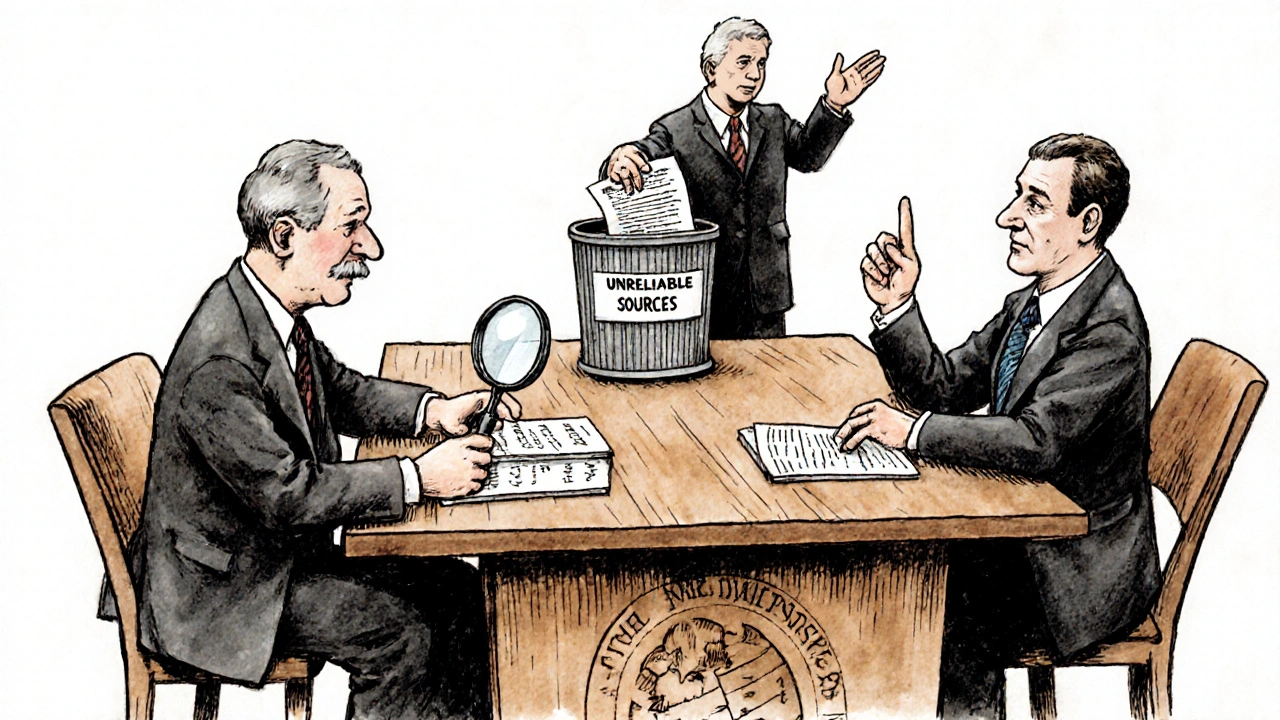
- Teach source evaluation - Wikipedia requires reliable sources: peer-reviewed journals, books from academic presses, major newspapers. Blogs, YouTube videos, and personal websites don’t count. Show students how to spot a predatory journal or a biased think tank report.
- Emphasize tone - Wikipedia editors value politeness. “You’re wrong” gets deleted. “I’ve found a different source that suggests…” gets a response.
- Use the “draft” space first - Students should test their edits in a sandbox before posting on live talk pages. This reduces the fear of public rejection.
One student at the University of Toronto wrote a detailed comment arguing that a historical figure’s role in a social movement was overstated. Her edit was reverted. Instead of giving up, she revised her argument, added three new citations from university press books, and posted again. Three days later, the editor who reverted her replied: “You’re right. I didn’t know about these sources. Let’s update the article.” That’s the moment learning clicks.
Why This Matters More Than Ever
In an age of misinformation, deepfakes, and algorithmic echo chambers, the ability to engage in evidence-based debate isn’t a nice-to-have-it’s essential. Wikipedia talk pages are one of the few remaining public spaces where people still argue about facts, not feelings.
Teaching students to navigate these spaces prepares them not just for academic work, but for civic life. They learn to question authority without dismissing it, to challenge ideas without attacking people, and to admit when they’re wrong.
That’s not just good scholarship. That’s good citizenship.
Where to Start
If you’re new to Wikipedia editing:
- Visit Wikipedia:Teaching with Wikipedia for instructor resources.
- Use the Wiki Education Dashboard to track student contributions (free for educators).
- Start small: assign one talk page analysis per week.
- Encourage students to make at least one real edit to a live article by the end of the term.
You don’t need to be a Wikipedia expert. You just need to be willing to let students see how knowledge is built-messy, collaborative, and grounded in evidence.
Can students really make meaningful contributions to Wikipedia?
Yes. Thousands of students edit Wikipedia each semester, and many of their changes stick. A 2023 study of 12,000 student edits found that 78% were retained after 90 days, with no reverts. Students often improve citations, fix outdated statistics, or add missing context from underrepresented perspectives. Their work isn’t just academic-it becomes part of a global reference.
Do I need to know how to edit Wikipedia to use this in class?
No. You don’t need to edit a single page. Your job is to guide students in analyzing talk pages and crafting evidence-based arguments. The Wiki Education Dashboard provides ready-made lesson plans, grading rubrics, and tutorials. Many professors start by just having students read talk pages before they ever edit.
Are Wikipedia editors really experts?
Not always-but they’re required to be. Wikipedia doesn’t care if you have a PhD. It cares if you cite peer-reviewed studies, books from academic publishers, or major news outlets. Many top editors are graduate students, retired professors, or professionals in the field. Others are passionate amateurs who’ve spent years researching one topic. What matters is the source, not the title.
What if a student’s edit gets reverted?
That’s part of the lesson. Reverts aren’t failures-they’re feedback. Teach students to read the reason for the revert, check the source cited by the editor, and respond politely. Many students report that being challenged on Wikipedia made them better researchers than any paper revision ever did.
Is this only for college students?
No. High school teachers have successfully used Wikipedia talk pages to teach argumentation in history and science classes. The key is choosing age-appropriate topics and providing clear guidelines for tone and sourcing. Even middle school students can learn to distinguish between opinion and evidence when guided properly.