Imagine you are a stringer in Lagos covering a sudden power grid failure. The local news agency is silent. Your editor wants facts in ten minutes. You don't have time to call three different ministries or wait for a press release that might never come. You open Wikipedia is a free, multilingual online encyclopedia edited by volunteers worldwide. It gives you the baseline context instantly: who controls the grid, what the history of outages looks like, and which international bodies monitor energy stability. This isn't about copying text; it's about using a living database as a starting point for deeper reporting.
For decades, access to comprehensive background information was a privilege reserved for major newsrooms with expensive subscription databases like Reuters or Bloomberg. Today, the landscape has shifted. Open Access is the practice of providing free public access to scholarly articles and data has trickled down into journalism through platforms like Wikipedia. It levels the playing field between a freelancer with a laptop and a correspondent at a global network. But how do you use it without falling into traps? And why does it matter more now than ever?
The Speed and Scope Advantage
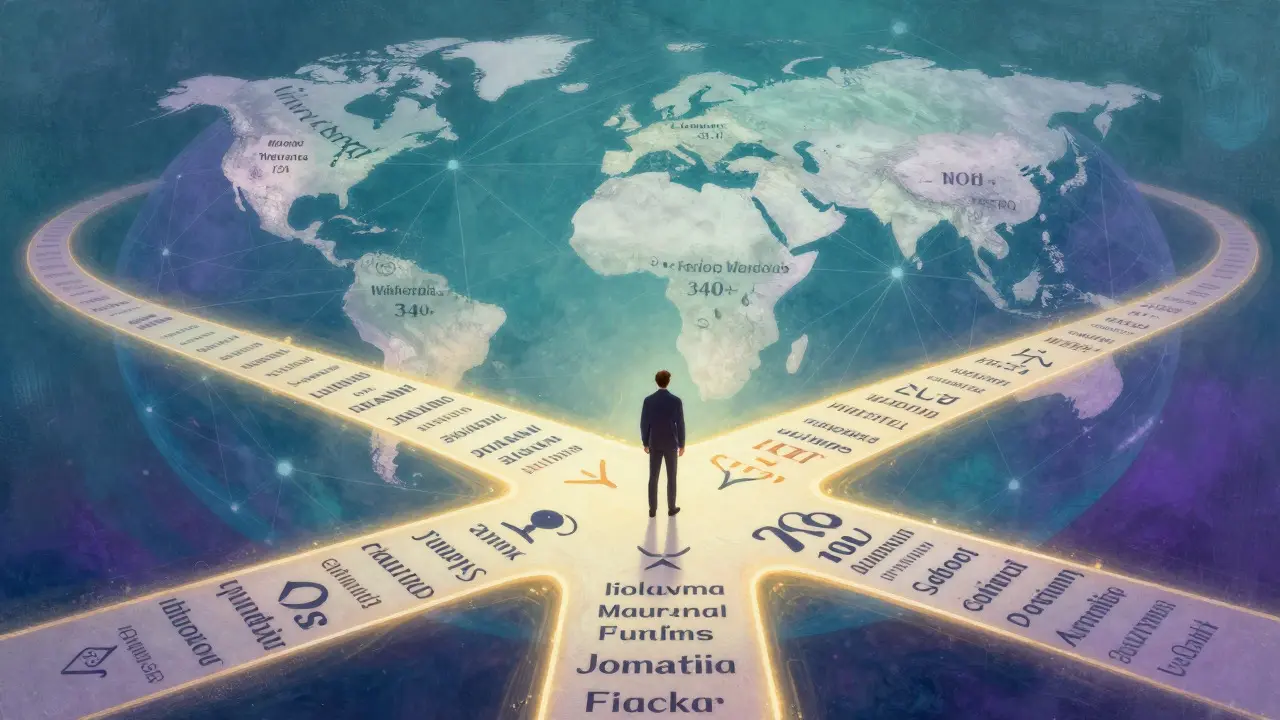
Journalism is a race against the clock. When breaking news hits, context is king. Without context, a headline is just noise. Wikipedia excels here because of its sheer volume and update frequency. As of 2026, the English-language version hosts over 7 million articles, while the entire project spans more than 340 languages. This means a journalist in Nairobi can find detailed biographies of regional political figures in Swahili or English, often updated within hours of an event.
Consider the attribute of Multilingualism is the ability to operate across multiple language versions simultaneously. This allows cross-border verification. If a story involves trade disputes between the EU and Southeast Asia, a reporter can check the German, French, and Vietnamese versions of relevant economic policy pages. Discrepancies between these versions often reveal bias or missing perspectives that a single-language source would hide. This comparative approach turns Wikipedia from a simple reference tool into a diagnostic instrument for understanding narrative gaps.
Navigating Reliability: Citations and Consensus
A common misconception is that Wikipedia is unreliable because anyone can edit it. This view ignores the robust system of checks and balances that governs the platform. The core principle is Notability is the standard used to determine if a subject deserves an article based on significant coverage in reliable sources. For a topic to exist on Wikipedia, it generally needs to be covered by independent, credible outlets. This pre-filter ensures that most entries have a foundation of external validation.
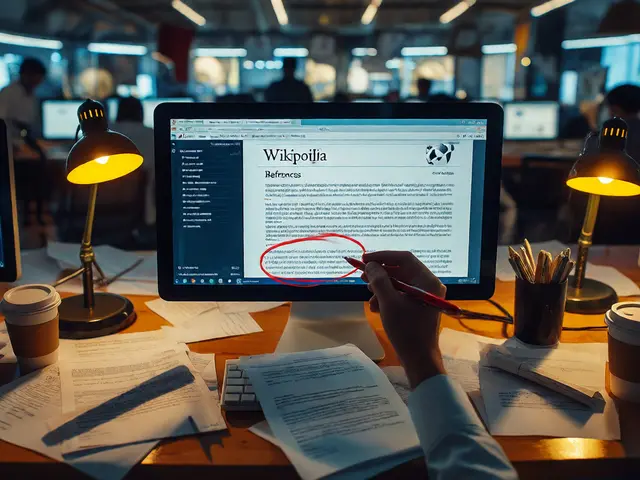
However, the real work happens in the references section. Every factual claim should be backed by a citation. Journalists can use this to their advantage. Instead of treating the summary text as gospel, treat it as a curated bibliography. Click on the citations. Read the primary sources. If a paragraph lacks citations, assume it needs verification. This workflow transforms Wikipedia from a destination into a launchpad. It saves you the initial research phase, allowing you to dive straight into the nuanced analysis that requires original reporting.
| Feature | Subscription Databases (e.g., LexisNexis) | Wikipedia |
|---|---|---|
| Cost | High ($100s-$1000s/month) | Free |
| Update Frequency | Varies by publisher | Real-time (minutes/hours) |
| Language Coverage | Limited to specific regions | 340+ languages |
| Primary Source Links | Included but static | Dynamically linked and editable |
| Bias Risk | Publisher-specific editorial stance | Community-driven, requires active checking |
Using Talk Pages for Story Leads
Most journalists only look at the main article page. This misses half the value. The Talk Page is a forum where editors discuss improvements, disputes, and updates to an article offers a raw look at the current state of knowledge. If you see a heated debate on the talk page about a historical date or a political figure's role in a conflict, that is a signal. It means the consensus is shaky, or new evidence has emerged. These debates often contain links to recent academic papers, court documents, or investigative reports that haven't made it to mainstream headlines yet.
For example, during the 2024 election cycles in various democracies, talk pages became hubs for verifying voter turnout numbers and polling methodologies. Journalists monitoring these discussions found discrepancies in official reports early on, giving them a head start in investigating potential irregularities. The talk page acts as a radar, pinging areas of uncertainty that require deeper journalistic digging.
Cultural Context and Local Nuance
Global journalism often suffers from a Western-centric lens. Wikipedia helps mitigate this by hosting substantial content in non-English languages. The Wikimedia Foundation is the non-profit organization that supports Wikipedia and related projects actively funds translators and local editors to build out these sections. A journalist covering climate change in the Arctic shouldn't rely solely on US or European sources. Checking the Russian, Inuktitut, or Norwegian versions of key environmental terms reveals how local communities define and experience these changes.
This cultural depth adds layers to a story. It prevents misinterpretation of idioms, legal terms, or social structures. By engaging with local-language editions, reporters demonstrate respect for the subjects they cover and avoid the pitfalls of translation errors that can distort meaning. It’s a practical step toward more inclusive and accurate global reporting.
Best Practices for Verification
To get the most out of Wikipedia, adopt a disciplined routine. Here is a simple checklist to ensure accuracy:
- Check the 'References' Section: If there are no citations for a key fact, verify it independently before publishing.
- Look at the History Tab: See when the last significant edit was made. Recent edits might be unverified or biased.
- Compare Versions: Check the same topic in at least two other languages to spot missing perspectives.
- Read the Talk Page: Look for ongoing disputes or requests for comments that indicate controversial topics.
- Verify Notability: Ensure the subject meets notability criteria to confirm it’s a legitimate topic for serious coverage.
These steps take only a few minutes but significantly reduce the risk of propagating errors. They turn passive reading into active investigation.
The Future of Open Knowledge in Media
As artificial intelligence reshapes newsrooms, the need for trusted, verifiable data becomes even more critical. AI models often hallucinate facts, making human-curated sources like Wikipedia essential for grounding algorithms in reality. Journalists will increasingly serve as curators of truth, using open platforms to train and validate AI tools. This symbiosis between human expertise and machine speed defines the next era of journalism.
Wikipedia isn't just a website; it's a collaborative infrastructure for global knowledge. By mastering its use, journalists gain a powerful tool to democratize information, challenge established narratives, and deliver stories that are both fast and deeply informed. The barrier to entry for high-quality context has never been lower. All it takes is the willingness to look beyond the summary and dig into the sources.
Is Wikipedia a reliable source for citing in journalism?
Generally, no. Most style guides prohibit direct citation of Wikipedia because it is a tertiary source. However, it is an excellent secondary tool to find primary sources. Always cite the original study, book, or news report listed in the Wikipedia references section, not Wikipedia itself.
How often is Wikipedia updated?
Wikipedia is updated in real-time. There are millions of edits per day. High-profile articles can be modified within minutes of a major event occurring, making it one of the fastest-updating reference resources available.
What is the difference between a 'Good Article' and a 'Featured Article' on Wikipedia?
A 'Featured Article' represents the highest quality standard on Wikipedia, meeting strict criteria for comprehensiveness, neutrality, and sourcing. A 'Good Article' is also high quality but may lack some of the exhaustive detail required for Featured status. Both are safer bets for quick context than average entries.
Can I trust the images on Wikipedia?
Most images are licensed under Creative Commons, but you must verify the license type and attribution requirements before using them in print or broadcast. Some images are 'Fair Use' only, which restricts their usage. Always check the file description page for licensing details.
How do I find the best language version for my story?
Use the language list on the left sidebar of any Wikipedia page. Look for versions in the country where the event took place. Often, the local language edition has more granular details about local politics, culture, and geography than the English version.