For most of us, Wikipedia is a place for static facts: the date a war ended or the chemical formula for water. But during a live crisis, it transforms into a dynamic organism. The challenge is immense. How do you maintain an academic standard of neutrality and verifiability when the facts are changing every thirty seconds? The answer lies in a mix of strict community guidelines, specialized tools, and a bit of chaotic human energy.
The Core Essentials of Live Documentation
Before we look at the process, we need to understand what Wikipedia actually is in this context. Wikipedia is a multilingual online encyclopedia written collaboratively by volunteers using a wiki-based system. It operates on the principle of "verifiability," meaning every single claim must be backed by a reliable source. In a breaking news scenario, this means a volunteer cannot simply say "the bridge collapsed"; they must provide a link to a reputable news agency confirming it.
To keep the site from descending into chaos during a major event, the community relies on several key mechanisms:
- Reliable Sources: Editors prioritize established news wires like Reuters or Associated Press over social media posts.
- Neutral Point of View (NPOV): This is the gold standard. Editors must describe events without bias, avoiding adjectives like "shocking" or "tragic," even when the event is objectively devastating.
- The "Talk" Page: Every article has a hidden discussion forum where editors argue about whether a specific piece of information is "encyclopedic" enough to be included.
The Lifecycle of a Breaking News Article
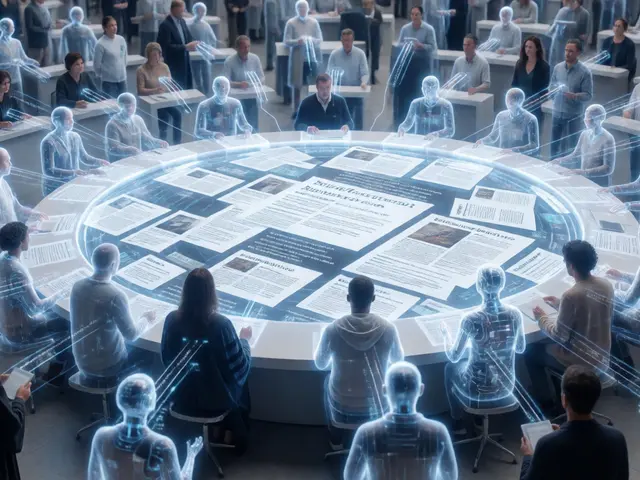
When a live event hits, the documentation process typically follows a specific trajectory. It starts with a "stub"-a very short article with just the basic facts. As the event unfolds, the article enters a high-velocity growth phase. During this time, the Revision History of the page becomes a battleground. If you look at the history of a high-profile page during a crisis, you will see hundreds of edits per hour.
This is where the "Edit War" happens. One editor might add a detail from a local news source, while another, more conservative editor deletes it because the source isn't globally recognized. This friction is actually a feature, not a bug. It acts as a filter, ensuring that only the most verified information survives the pruning process.
| Source Type | Trust Level | Usage in Wikipedia | Primary Risk |
|---|---|---|---|
| Global News Agencies | High | Primary foundation for facts | Slightly slower than social media |
| Official Govt Statements | Medium-High | Used for official tolls/dates | Potential for propaganda/spin |
| Social Media (X/TikTok) | Low | Usually forbidden as sole source | High misinformation rate |
| Local Journalism | Medium | Used for niche regional details | Lack of broad verification |
The Tools That Prevent Total Chaos
You might wonder why the site doesn't just crash or become a wall of lies during a disaster. This is where the Wikimedia Foundation and its technical guardrails come in. When a page receives an abnormal spike in traffic and edits, the community can apply "Protection" levels.
Semi-protection means only registered users who have been around for a while can edit. Full protection means only administrators can make changes. This prevents "vandalism"-the act of people intentionally adding jokes or false information to a trending page. Imagine the chaos if anyone could change the death toll of a disaster to a random number just for a laugh; protection levels stop that from happening in real time.
Additionally, editors use Automated Bots to flag obvious vandalism. These scripts look for common swear words or patterns of mass deletion and revert the changes instantly, alerting a human moderator to step in.
The Psychology of the "Wiki-Reporter"
Who are these people? They aren't paid journalists. They are hobbyists, academics, and professionals who find a strange satisfaction in organizing information. There is a specific rush that comes with being the person who updates the "Current Events" portal on the main page. This crowdsourced model of journalism creates a level of speed that no single newsroom can match because it leverages a global network of native speakers who can translate local reports into English instantly.
However, this speed comes with a psychological toll. The pressure to be first can sometimes lead to "source slippage," where an editor trusts a tweet because it looks official. This is why the community emphasizes the "citation needed" culture. If a fact doesn't have a footnote, it is viewed as a target for deletion.
Challenges in the Modern Era: Deepfakes and AI
As we move further into 2026, the battle for truth on Wikipedia has changed. We are now dealing with Generative AI and sophisticated deepfakes. In the past, a fake photo was easy to spot. Now, a perfectly rendered image of a fake explosion can trick even experienced editors.
The community has responded by becoming even more skeptical. There is a growing movement to require "primary source verification」-meaning editors are encouraged to find multiple independent outlets reporting the same thing before the info hits the page. They are also fighting the rise of AI-generated summaries that can sound authoritative but contain "hallucinations" or false data.
Bridging the Gap Between Live News and Permanent Record
The final stage of a breaking news event is the transition from a "live report" to a "historical record." Once the dust settles, the article undergoes a massive cleanup. The temporary, breathless updates are replaced with a cohesive narrative. The citations are cleaned up, and the timeline is solidified.
This process mirrors how our own memories work. First, we have the fragmented, emotional snapshots of the event. Then, we synthesize those snapshots into a story that makes sense. Wikipedia does this at scale, turning the chaos of the present into the knowledge of the future.
Does Wikipedia allow social media as a source for breaking news?
Generally, no. Social media posts are not considered reliable sources because they lack editorial oversight. An editor can mention that a tweet exists, but they cannot use it to state a fact as true unless that fact is corroborated by a reputable news organization.
What happens if someone intentionally puts false info on a trending page?
This is called vandalism. It is usually caught in minutes by either automated bots or a swarm of watchful editors. Because every edit is tracked in the revision history, the false information can be reverted to the previous correct version with a single click.
How do editors decide which news sources are "reliable"?
They use a set of community-developed guidelines that prioritize sources with a track record of accuracy, professional editing standards, and a clear correction policy. International agencies like the BBC or AP are usually high on the list, while tabloid or highly partisan blogs are avoided.
Can anyone really edit a breaking news page?
In theory, yes. In practice, during major events, administrators often implement "semi-protection." This means you need a confirmed account with a certain number of edits to contribute, which prevents random newcomers from disrupting the page.
Why does the text change while I am reading it?
Because Wikipedia is a live database. When an editor hits "save," the change is pushed to the servers immediately. If you have a dynamic page view or refresh your browser, you are seeing the most recent version of the consensus created by the community.