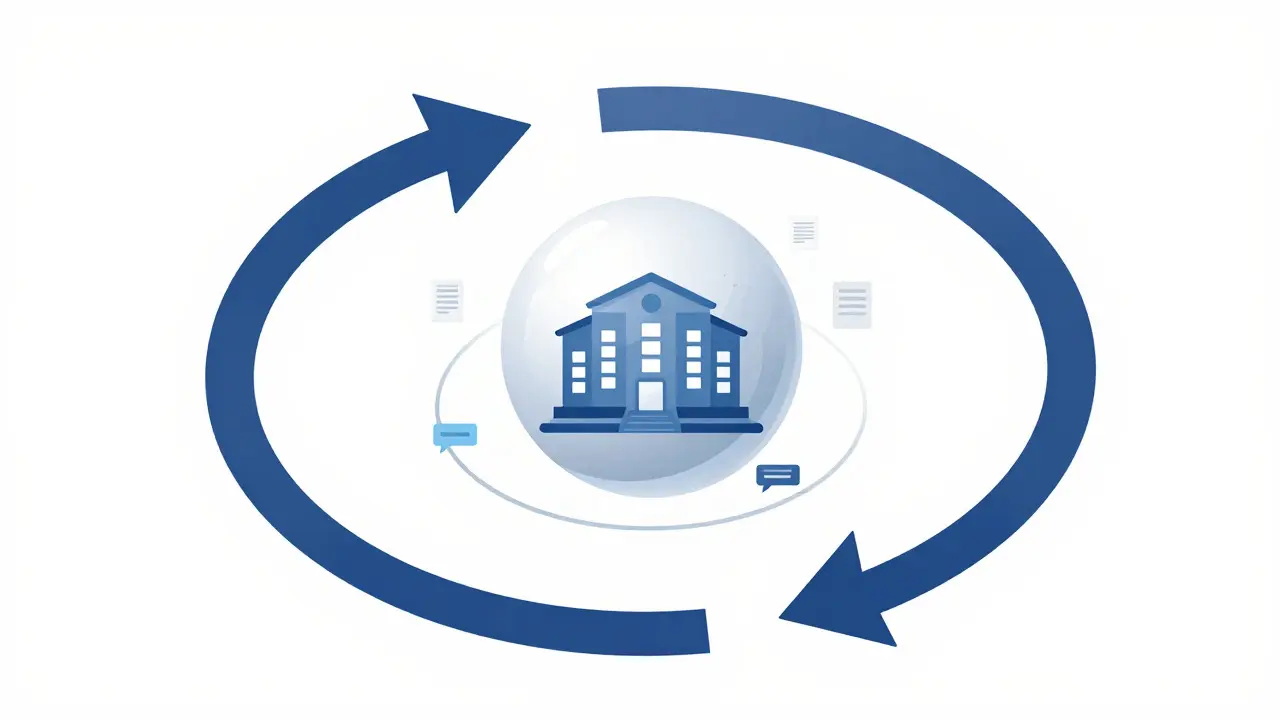
Imagine this: a major tech company announces a new AI model. Within hours, the Wikipedia article is updated with details, specs, and even the CEO's quote from the press conference. But where did that info come from? Often, it’s not from an independent investigation. It’s from the company’s own press release. This creates a fascinating, sometimes messy loop where the encyclopedia documents its own source material in real-time.
This phenomenon isn't just about speed; it’s about how digital information ecosystems interact. When we talk about how Wikipedia news gets covered by Wikipedia itself, we are looking at a specific type of self-referential documentation. It happens when the primary source for a breaking event is the entity being documented, and the platform records that source before secondary verification occurs. For readers, this means the "neutral point of view" you expect might initially reflect the subject's own narrative.
The Mechanics of Self-Referential Updates
So, how does this actually work under the hood? The process usually starts with a press release. Companies, governments, and organizations issue these to announce changes, launches, or reactions to events. These releases are designed to be copy-paste ready for journalists. However, on Wikipedia, they are often used directly as citations if no other immediate source is available.
Consider the case of a celebrity scandal. If a star issues a statement via their publicist, that statement becomes the first reliable text on the record. Wikipedia editors, who are volunteers trying to keep articles current, will cite that statement. Until a newspaper like The New York Times or BBC News publishes an investigative piece, the Wikipedia entry essentially mirrors the subject's own voice. This is known in editorial circles as primary source reliance.
This dynamic is particularly strong in three areas:
- Corporate Announcements: Product launches, earnings reports, and executive changes are often cited directly from investor relations pages.
- Political Statements: Government officials' tweets or official briefings are frequently the first cited sources for policy shifts.
- Cultural Events: Album releases or movie premieres often rely on studio press kits before critical reviews land.
Why Speed Beats Verification
You might wonder why editors don't wait for proper journalism. The answer lies in the nature of crowdsourced knowledge platforms. Wikipedia aims to be a snapshot of current knowledge. If an event is happening *now*, waiting three days for a long-form investigation means the article is outdated during those crucial hours.
There is also a psychological factor called recency bias. Editors tend to prioritize the most recent information. Since press releases are published instantly, they win the race against slower traditional media outlets. This creates a temporary state where the encyclopedia acts less like a reference book and more like a live blog, but with citations.
However, this isn't always malicious. Sometimes, there simply *is* no other source yet. If a small local business is acquired by a large corporation, the only verifiable fact is the acquisition announcement itself. In these cases, citing the announcement is the most accurate thing an editor can do. The problem arises when the source has a clear motive to spin the story.
The Role of Reliable Sources vs. Primary Sources
To understand the friction here, you need to distinguish between two types of sources. A reliable source is typically an independent outlet with a reputation for accuracy, such as a university journal or a major news network. A primary source is the original document or event itself, like a contract, a speech, or a press release.
Wikipedia's guidelines generally prefer reliable sources for interpretive claims (e.g., "the move was seen as controversial") but allow primary sources for factual claims (e.g., "the company announced the merger on Tuesday"). The gray area appears when a primary source contains subtle interpretations. For example, a press release might say, "We are excited to expand our market reach," which is a fact, but it implies success. If Wikipedia repeats this without context, it inadvertently adopts the company's optimistic tone.
| Source Type | Example | Speed of Availability | Risk of Bias | Typical Use Case |
|---|---|---|---|---|
| Press Release | Apple Inc. Newsroom | Instant | High (Self-serving) | Product specs, dates |
| Independent Journal | Nature, Science | Weeks/Months | Low (Peer-reviewed) | Scientific consensus |
| Major Newspaper | Washington Post | Hours/Days | Moderate (Editorial stance) | Context, analysis |
| Social Media | Official Twitter/X account | Instant | Very High (Unfiltered) | Breaking statements |
Case Studies: When the Loop Tightens
Let’s look at a real-world scenario involving the tech industry. In 2024, several major AI companies released new models. Initially, their Wikipedia pages were updated almost exclusively using links to their own blogs. Readers searching for "GPT-5 capabilities" would find a list of features sourced directly from OpenAI. It wasn't until independent researchers published benchmarks that the article began to balance out.
Another example is in politics. During election seasons, candidates’ campaigns issue detailed policy papers. These papers are often cited in Wikipedia bios for the candidates. While technically accurate, this means the candidate's self-description of their policies is presented alongside third-party criticism. The reader must actively check the references to see if a claim comes from the candidate or an opponent. This requires a level of media literacy that many casual readers may not possess.
These examples highlight a key risk: confirmation bias. If you already believe a company is innovative, reading their own press release on Wikipedia reinforces that belief because it looks authoritative due to the citation format.
How Editors Fight the Echo Chamber
It’s not all doom and gloom. The community of Wikipedia editors is vigilant. They use tools like Talk Pages to debate whether a source is sufficient. If an editor adds a press release without context, another editor might flag it as needing better sourcing.
Furthermore, there are specialized projects within Wikipedia dedicated to monitoring corporate influence. Groups like WikiProject Business have guidelines specifically addressing how to handle self-promotion. They encourage editors to look for "secondary coverage"-news articles that discuss the event rather than just reporting the announcement.
Best practices for maintaining neutrality include:
- Wait for Context: Unless the event is extremely time-sensitive, wait 24-48 hours for independent media to pick up the story.
- Attribute Clearly: Use phrases like "According to the company's announcement..." rather than stating the claim as absolute fact.
- Diversify References: Ensure that at least 50% of citations in a section come from independent sources whenever possible.

What This Means for You as a Reader
As a user, how should you navigate this? First, remember that Wikipedia is a starting point, not a final authority. When you read an article about a current event, click on the citation links. Ask yourself: Who wrote this? Is it the subject themselves?
If you see multiple citations pointing to the same company's website, treat that section with a grain of salt. Look for sections that cite newspapers, academic journals, or government records. Those are your anchors for objectivity.
Also, pay attention to the "References" section at the bottom. A healthy article will have a mix of sources. A skewed article will be dominated by one type of source, such as social media posts or corporate blogs. This visual cue helps you gauge the reliability of the content quickly.
The Future of Self-Coverage
As digital communication evolves, this trend is likely to grow. With the rise of direct-to-consumer communication, fewer intermediaries exist between a brand and the public. This makes primary sources even more prominent in the information landscape.
However, technology offers solutions too. Automated fact-checking tools are being developed to cross-reference Wikipedia entries with multiple independent databases. Imagine a system that flags any claim sourced solely from a primary entity. This could help maintain the integrity of the encyclopedia while still allowing for rapid updates.
For now, the interplay between Wikipedia and the news cycle remains a delicate dance. It highlights the tension between immediacy and accuracy, a challenge that defines modern journalism and digital knowledge alike.
Is it okay to cite a press release on Wikipedia?
Yes, but with caution. Press releases are acceptable for verifying basic facts like dates, names, and product specifications. However, they should not be used for interpretive claims or opinions unless corroborated by independent sources. Always attribute the claim clearly to the source.
Why does Wikipedia update so fast compared to newspapers?
Wikipedia relies on volunteer editors who can make changes instantly. Unlike newspapers, which have strict deadlines and editorial review processes, Wikipedia allows for continuous updating. This speed enables real-time documentation but can lead to premature reliance on unverified primary sources.
How can I tell if a Wikipedia article is biased?
Check the references. If most citations link to the subject's own websites, social media, or press releases, the article may lack independent perspective. Look for citations from established news outlets, academic journals, or government publications to ensure a balanced view.
Does Wikipedia ban self-promotion?
Wikipedia discourages paid editing and blatant self-promotion, but it doesn't ban the use of primary sources. The rule is about neutrality. As long as the information is factual and properly attributed, using a company's own data is allowed. The issue arises when the presentation favors the subject's narrative over objective reality.
What is the difference between a primary and secondary source?
A primary source is the original event or document, such as a press release or a court ruling. A secondary source analyzes or reports on the primary source, such as a news article discussing the ruling. Wikipedia prefers secondary sources for context and interpretation, but uses primary sources for raw facts.