Wikipedia doesn’t have a board of directors making top-down decisions. No CEO, no editorial team in a New York office deciding what’s allowed. Instead, its rules are built by volunteers-people like you and me-who spend hours reading, arguing, and rewriting policy on a public wiki page. It’s messy. It’s slow. And it works.
Where Policies Start: Ideas from the Ground Up
Most Wikipedia policies begin as a simple observation. Someone notices a pattern: editors keep reverting each other’s edits on biographies of living people. Or a new type of spam keeps slipping through. Or a dispute over sourcing keeps erupting in the same article categories. That’s when a user creates a draft policy page-often titled something like “Draft: Reliable Sources for Biographies”-and posts it on the Village Pump or a relevant noticeboard.
These drafts aren’t official. They’re proposals. And they live in a quiet corner of the site, visible only to those who know where to look. Over weeks or months, a few regular editors start commenting. They might say, “This is too vague,” or “What about non-English sources?” or “This would break how we handle celebrity profiles.”
There’s no deadline. No manager pushing for a launch. Progress happens when enough people care enough to show up.
The Long Road: Consensus, Not Voting
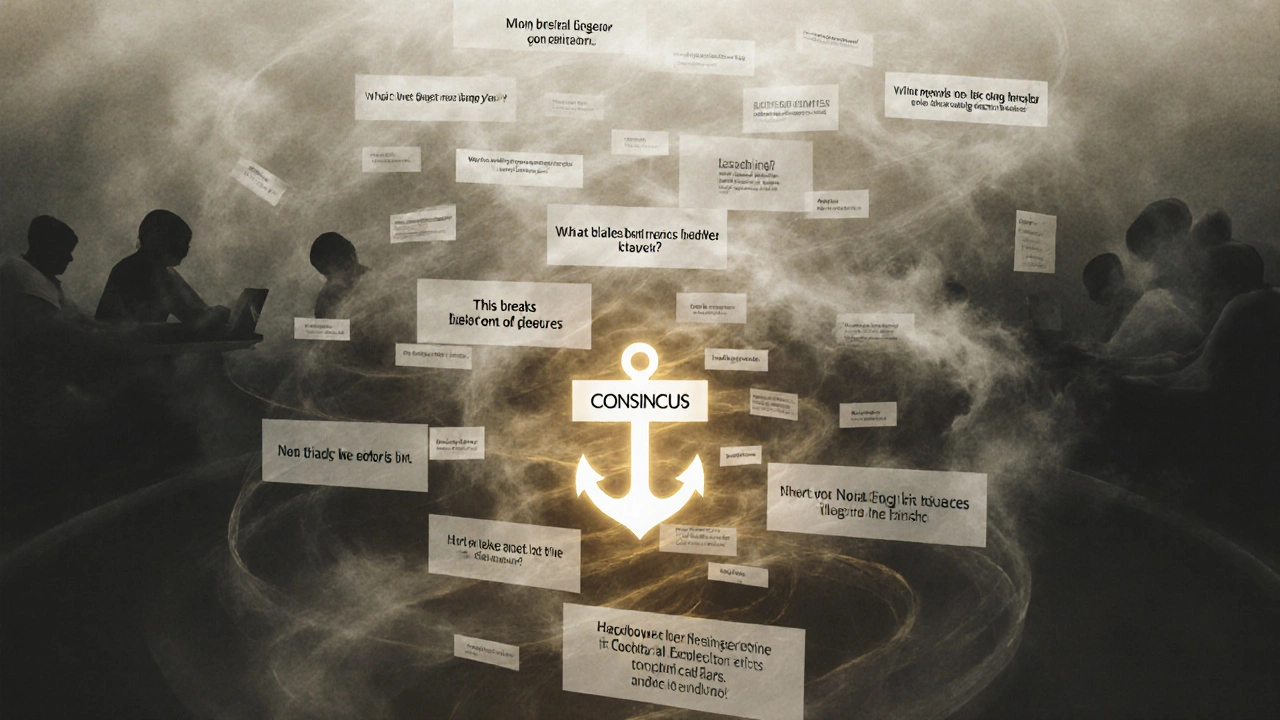
Wikipedia doesn’t vote on policies. Not really. A poll might happen, but it’s not binding. What matters is consensus.
Consensus means that after months of discussion, most active editors agree the rule is fair, clear, and useful. It doesn’t mean everyone agrees. It means no strong, well-reasoned objections remain. If one experienced editor says, “This would hurt our coverage of independent researchers,” and backs it up with examples from past disputes, that objection carries weight-even if 90% of commenters support the change.
Why no voting? Because Wikipedia isn’t a democracy. It’s a community built on merit and experience. A new editor who’s made five edits has the same vote as someone who’s been editing for 12 years. But in practice, the long-term editors are the ones who know the history, the precedents, the failed policies from 2007 that broke everything. Their input isn’t weighted by tenure-it’s weighted by context.
Policy discussions often live on talk pages that have hundreds of comments, archived over years. You can trace the evolution of a rule like “No Original Research” back to 2004, when it was formalized after dozens of heated debates over personal blogs, self-published books, and fringe theories.
How Policies Get Formalized
Once a draft gains traction, it moves from a “draft” to a “proposal.” Then, it’s submitted for review on the Wikipedia:Policy and guidelines page. Here, experienced policy editors-people who’ve spent years studying how rules interact-review it for:
- Clarity: Is it written so a new editor can understand it?
- Consistency: Does it conflict with existing policies like Neutral Point of View or Verifiability?
- Enforceability: Can admins or editors actually apply this without constant confusion?
If it passes this stage, the proposal is announced on the Wikipedia:Administrators’ noticeboard and other high-traffic forums. This is the final call for objections. If no major issues arise after 30 days, the draft becomes an official policy.
Some policies never make it. Others get revised dozens of times. The “Biographies of Living Persons” policy, for example, has been updated over 20 times since 2005. Each change was debated, tested, and refined based on real incidents-like when a celebrity’s false Wikipedia page led to a lawsuit, or when a scientist’s research was misrepresented by an anonymous editor.
The Role of Administrators and Arbitration
Administrators don’t create policies. They enforce them. Their job is to lock pages, block vandals, and mediate disputes-not to decide what the rules should be.
But when policies clash, or when a dispute turns toxic, the Arbitration Committee steps in. This is a small group of 15-20 experienced editors, elected by the community every year. They don’t write policy. But when editors can’t agree on how to apply a rule, the Arbitration Committee can issue binding rulings. These rulings often become de facto policy updates.
For example, in 2018, a long-running conflict over editing rules for political figures led to an arbitration case. The committee didn’t rewrite the policy. But they clarified how “Neutral Point of View” applied to partisan sources, and their decision became the standard used by editors worldwide.
How Policies Are Maintained and Updated
Wikipedia policies aren’t set in stone. They’re living documents. Every policy page has a “history” tab showing every edit. And every policy has a “talk” page where edits are discussed.
Updates happen constantly. A policy might be tweaked to include a new type of source-like a verified Twitter account from a government official-or to clarify how to handle AI-generated content. In 2024, after a surge in AI-written articles, the community added a new guideline under “Verifiability” requiring disclosure of AI-assisted editing.
Changes are usually small. A sentence added. A phrase clarified. Rarely is a policy rewritten from scratch. The goal isn’t perfection-it’s functionality. If a rule helps editors make better articles, it stays. If it causes more confusion than clarity, it gets revised or retired.

Why This System Works
It’s not perfect. Some policies are outdated. Others are contradictory. Some feel overly strict; others too loose. But the system has one huge advantage: it’s transparent.
Every edit, every comment, every decision is public. You can see who proposed a rule, why they proposed it, and how others responded. You can read the arguments from 2012 that led to the current rule on citations.
This transparency builds trust. It also makes Wikipedia resilient. When a controversy erupts-say, a political group tries to manipulate content-the community doesn’t need a CEO to respond. They have the policy pages, the archives, and the process to push back.
There’s no secret handbook. No corporate legal team. Just thousands of people, working quietly, in the open, to make sure Wikipedia stays reliable.
What Happens When a Policy Fails?
Policies fail all the time. Sometimes they’re too vague. Sometimes they’re too rigid. Sometimes they’re ignored because no one enforces them.
When that happens, the community doesn’t throw them out. They adapt. For example, the “No Personal Attacks” policy has been cited in over 10,000 disputes. But it doesn’t say what counts as an attack. So editors developed a set of common interpretations-called “community norms”-that aren’t official policy but are widely accepted.
These norms often become the real rule. A policy might say, “Be civil.” But the norm is: “Don’t call someone a liar unless you can prove it.” That norm, born from experience, guides more behavior than the official text ever did.
Wikipedia’s strength isn’t in its written rules. It’s in its unwritten ones-the shared understanding that emerges when people work together long enough to know what works.