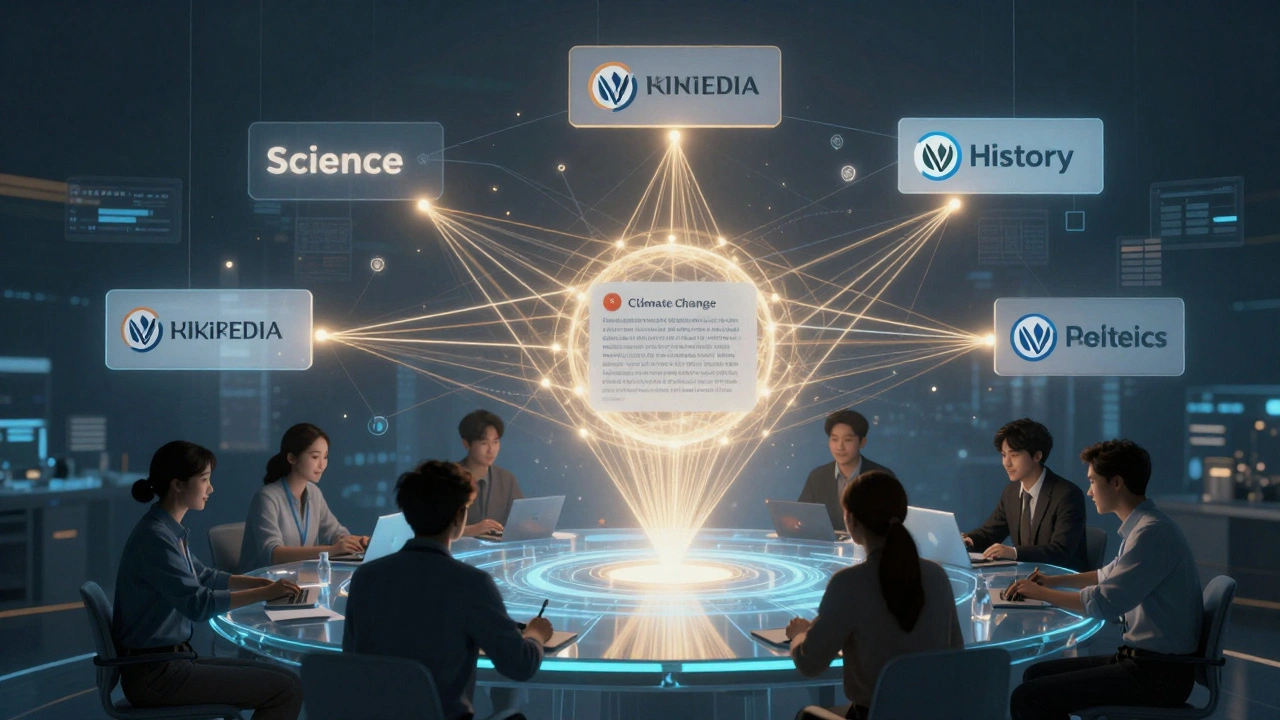
Wikipedia isn’t just one big encyclopedia. It’s a network of hundreds of volunteer-driven teams called WikiProjects, each focused on a specific topic-like medicine, history, or video games. But real-world issues rarely fit neatly into one category. A biography of a scientist might need input from both the Biography WikiProject and the Science WikiProject. A war might involve politics, geography, and military history. That’s where collaboration between WikiProjects becomes essential-and messy.
Why Cross-Topic Collaboration Matters
Wikipedia articles often sit at the intersection of multiple subjects. Take the article on climate change. It’s not just environmental science. It involves economics, politics, history, public health, and even ethics. If only the Environmental Science WikiProject edits it, the article risks being too narrow. Without input from the Politics WikiProject, policy sections may lack context. Without the Economics WikiProject, cost-benefit analyses could be misleading.
Studies of Wikipedia’s editing patterns show that articles with contributions from multiple WikiProjects are more comprehensive and have fewer factual errors. A 2023 analysis of 12,000 high-traffic articles found that those with cross-project collaboration had 37% more citations and 29% fewer disputed tags than articles edited by a single group.
How WikiProjects Talk to Each Other
There’s no central command center. No manager assigns tasks. Collaboration happens through informal, decentralized channels.
- Project talk pages-Each WikiProject has a dedicated discussion page. Editors post requests like, “We’re updating the article on Marie Curie. Could someone from the Women’s History project review the gender bias section?”
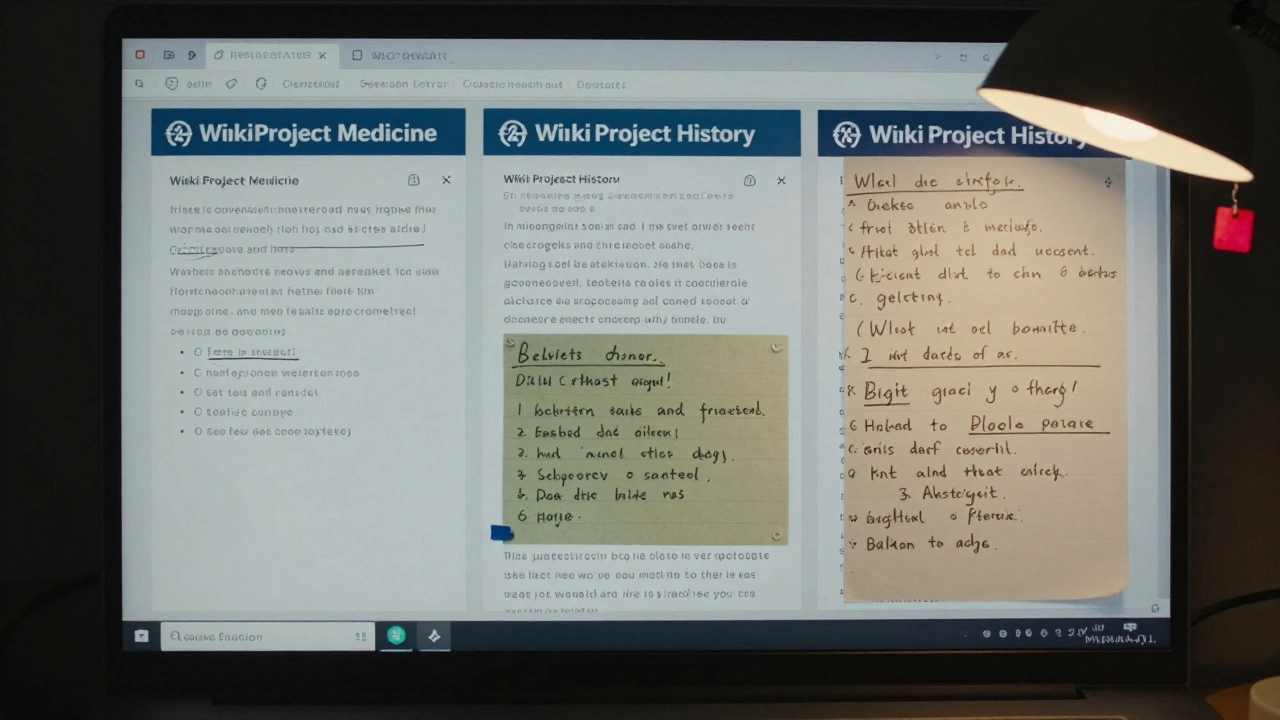
- Inter-project banners-At the bottom of many article talk pages, you’ll see templates like
{{WikiProject Medicine}}and{{WikiProject History}}. These notify editors from both groups that the article is under their shared purview. - Noticeboards-The Cross-Topic Collaboration Noticeboard lets editors flag articles needing input from multiple projects. It’s not always busy, but when it is, it’s where real coordination happens.
- Editor outreach-Active contributors often ping others directly. “Hey, I saw you edited this article on nuclear fusion. Could you help me clarify the reactor design section?”
These methods aren’t perfect. Many editors don’t check noticeboards. Some projects are more active than others. A small WikiProject on medieval textiles might get ignored when a major project like Biography needs help.
Common Problems in Cross-Topic Editing
Collaboration sounds simple. In practice, it’s full of friction.
- Different standards-One project might demand heavy citations; another prioritizes readability. A historian might insist on archival sources, while a science editor wants peer-reviewed journals.
- Conflict over scope-Who owns the article? If the History project adds a 2,000-word section on colonial impacts, but the Politics project thinks it’s off-topic, edits get reverted. Arguments can drag on for weeks.
- Visibility gaps-Editors from smaller projects often don’t know when a topic they care about is being edited elsewhere. A fan of LGBTQ+ history might miss changes to a biography because they’re not subscribed to the Biography project’s watchlist.
- Time zone and language barriers-A contributor in India might fix a reference, but a U.S.-based editor reverts it without understanding the context. Communication delays hurt progress.
One well-known example: the article on the Tuskegee Syphilis Study. For years, edits from the Medical Ethics project clashed with those from the African American History project. The medical team focused on methodology and consent protocols. The history team emphasized systemic racism and community trauma. Neither side was wrong-but the article was fractured until a neutral editor from the History of Science project stepped in to mediate.
Tools That Help (and Those That Don’t)
Wikipedia has built tools to make collaboration easier, but not all of them work well.
Works well:
- Article alerts-Editors can subscribe to receive notifications when an article they care about is edited. Many cross-topic issues get resolved because someone got an alert and jumped in.
- Project banners with priority flags-Some projects tag articles as “High Priority” or “Needs Review.” This helps editors know where to focus.
- Joint edit-a-thons-Organized events where editors from multiple projects come together for a day to improve a set of articles. These often lead to lasting connections and shared norms.
Doesn’t work well:
- Automated bots-Some bots try to assign articles to projects based on keywords. They often mislabel articles, causing confusion.
- Project directories-The list of WikiProjects is huge and poorly organized. Finding the right one for a niche topic can take hours.
What Works: Real Examples of Successful Collaboration
Not all cross-topic work is messy. Some teams have built strong, repeatable systems.
Example 1: The Women in Science Project
This initiative started as a sub-group of the History of Science WikiProject. But it quickly realized it needed help from Biography, Gender Studies, and even the Education project. They created a shared checklist: every article must include birth/death dates, education, major contributions, and barriers faced due to gender. They also created a list of underrepresented scientists to target. Within two years, they improved over 800 articles-and reduced gender bias edits by 62%.
Example 2: The War and Peace Project
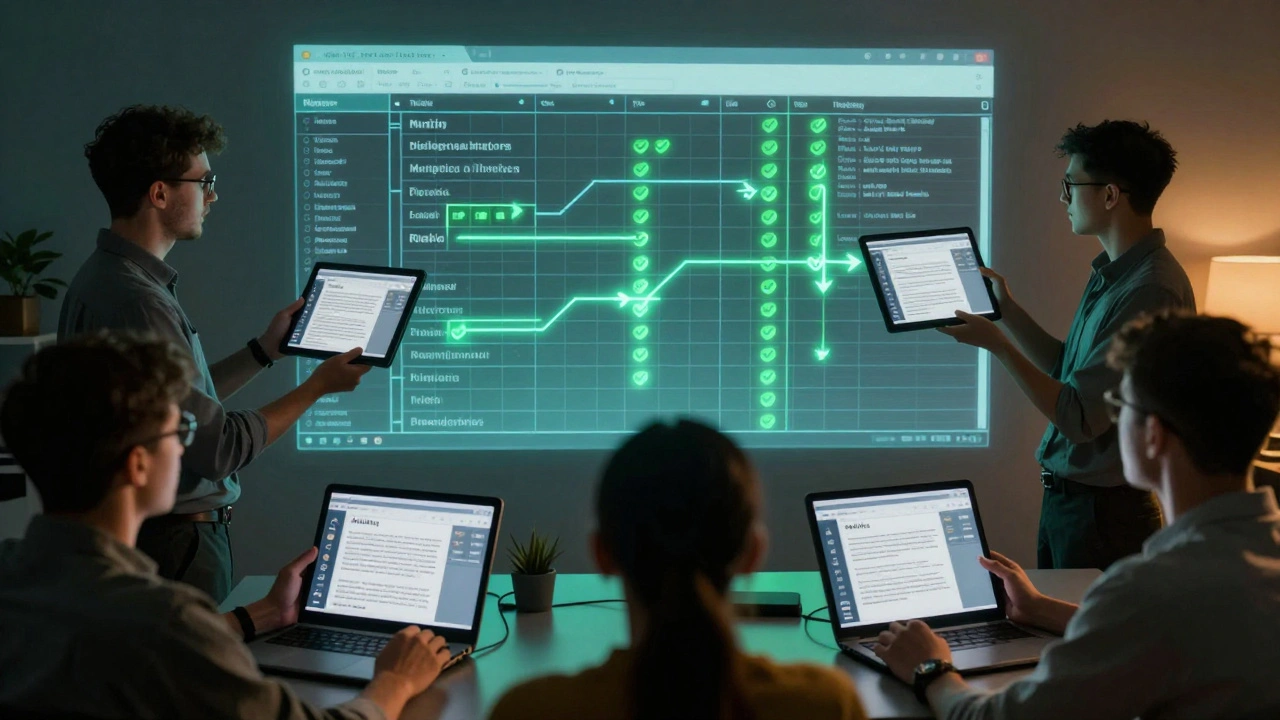
Articles on conflicts like the Vietnam War or the Syrian Civil War involve military, political, humanitarian, and cultural angles. This project created a “collaboration matrix”-a simple spreadsheet listing which WikiProjects should review which sections. The military section? Handled by the Military History project. The refugee crisis part? The Humanitarian project. The media coverage? Journalism project. Editors now know exactly who to tag.
How You Can Help Improve Collaboration
If you edit Wikipedia, you don’t need to be a project leader to make cross-topic collaboration better.
- Check the project banners-When you edit an article, look at the templates at the bottom of the talk page. Are other projects listed? If so, leave a note: “I added this historical context-please review from your perspective.”
- Use the Cross-Topic Noticeboard-If you see an article that needs input from another project, post a request there. Be specific: “Needs review from the LGBTQ+ History project on section about marriage equality in the 1990s.”
- Don’t assume ownership-Just because you started an article doesn’t mean you get final say. Be open to edits from other projects.
- Join a cross-project initiative-Look for events like “Edit-a-thons on Climate Justice” or “Women in STEM Month.” These are low-pressure ways to meet editors from other groups.
- Document what works-If you find a good way to coordinate with another project, write it up on the talk page. Others will learn from you.
What’s Next for WikiProject Collaboration
Wikipedia’s model of decentralized collaboration is unique. No other encyclopedia relies on volunteers from dozens of interest groups to build a single article. But as topics get more complex-AI ethics, climate migration, digital identity-the need for cross-project work will only grow.
Some editors are pushing for a “collaboration score” system: a metric that shows how many projects have reviewed an article. Others want a centralized dashboard that tracks which articles are stuck in editing disputes. For now, progress is slow-but it’s happening.
The truth is, Wikipedia’s strength isn’t just its size. It’s its ability to bring together people with different expertise, different viewpoints, and different goals-and still build something accurate, balanced, and useful. That’s not easy. But when it works, it’s one of the most powerful examples of collective knowledge creation on the planet.
What happens when two WikiProjects disagree on an article?
Disagreements are common and usually resolved through discussion on the article’s talk page. Editors are encouraged to cite policy, like Wikipedia’s neutral point of view or verifiability guidelines. If talks stall, they can request mediation through the Wikipedia Mediation Cabal or post on the Cross-Topic Collaboration Noticeboard. In rare cases, administrators may temporarily protect the article to prevent edit wars.
Can a new editor join a WikiProject?
Absolutely. All WikiProjects welcome new contributors. You don’t need approval to join. Just start editing articles in the project’s scope and leave a note on the project’s talk page saying you’re interested. Many projects have newcomer guides or mentorship programs. The best way to learn is by doing-edit one article, ask for feedback, and keep going.
How do I find the right WikiProject for my topic?
Search Wikipedia for “WikiProject [topic]” or visit the WikiProject Council Directory. If you can’t find one, the topic might be covered by a broader project. For example, a topic on renewable energy might fall under Environment, Science, or Technology. You can also ask on the Help Desk or the Cross-Topic Noticeboard.
Do WikiProjects have official authority over articles?
No. WikiProjects have no formal power. They offer guidance, standards, and peer review-but any editor can edit any article. Their influence comes from reputation and consensus, not control. If a project’s recommendations are well-reasoned and policy-aligned, others will follow them. If not, they’ll be ignored.
Are there any tools to track cross-project edits?
There’s no official tool, but editors use workarounds. Some create custom watchlists in their user preferences. Others use third-party tools like WikiDashboard or EditCounter to monitor activity across projects. The most effective method is still manual: regularly checking the talk pages of articles you care about and following links to related projects.