Wikipedia is the first place most people go to find information. But if you're using it for research-whether for school, work, or personal curiosity-you need to know where the facts actually come from. Not all sources on Wikipedia are created equal. Some are primary sources, others are secondary sources. Mixing them up can lead to mistakes, misunderstandings, or even bad conclusions.
What’s a Primary Source?
A primary source is the original thing you’re studying. It’s raw, unfiltered, and created at the time of the event. Think of it as the first-hand evidence. For example:
- A letter written by Abraham Lincoln in 1863
- A video of the first moon landing in 1969
- Official census data from the U.S. government
- An original scientific paper reporting new experimental results
- A court transcript or police report
These aren’t summaries. They’re not interpretations. They’re the real thing. If you’re researching how people felt during the Civil War, Lincoln’s letters are gold. If you’re studying climate change, raw temperature readings from weather stations are primary sources.
Wikipedia articles often link to primary sources in their references. You’ll see them cited as government documents, archived interviews, original research papers, or digitized historical records. But here’s the catch: Wikipedia doesn’t usually explain them. It just links to them. That means you need to understand what you’re looking at.
What’s a Secondary Source?
A secondary source takes primary material and explains, analyzes, or interprets it. It’s one step removed. Think of it as someone else’s take on the original evidence.
- A history book about the Civil War
- A news article summarizing a scientific study
- A documentary film about the moon landing
- A textbook explaining Einstein’s theory of relativity
- A blog post breaking down a court ruling
These are useful. They help you understand complex stuff without having to read raw data or technical jargon. But they’re also filtered. The author might have biases, make simplifications, or miss key details.
Wikipedia relies heavily on secondary sources-especially books, peer-reviewed journals, and reputable news outlets. That’s because Wikipedia’s editors aren’t supposed to make claims based on personal opinions or raw data alone. They need published, verifiable interpretations. So when you see a Wikipedia article citing The New York Times or Nature, you’re seeing secondary sources at work.
Why Does This Matter on Wikipedia?
Wikipedia’s reliability comes from its rules. One of them is: “No original research.” That means editors can’t write something just because they think it’s true. They need to cite a published source. And here’s the key: they’re supposed to prefer secondary sources over primary ones.
Why? Because primary sources can be confusing without context. A single quote from a politician might sound shocking-but if you read the full speech, it’s part of a larger argument. A scientific paper might show a 15% increase in results-but the study only had 12 participants. Without expert interpretation, you could easily misread the data.
Wikipedia editors use secondary sources to make sure the summary is accurate, balanced, and clear. That’s why you’ll rarely see a Wikipedia article quoting a raw government report without also citing a news article or academic analysis that explains it.
When Should You Use Primary Sources?
Primary sources are essential when you need to dig deeper. They’re your best tool for:
- Verifying claims made in secondary sources
- Doing original research (like a college thesis or investigative report)
- Understanding context you can’t get from summaries
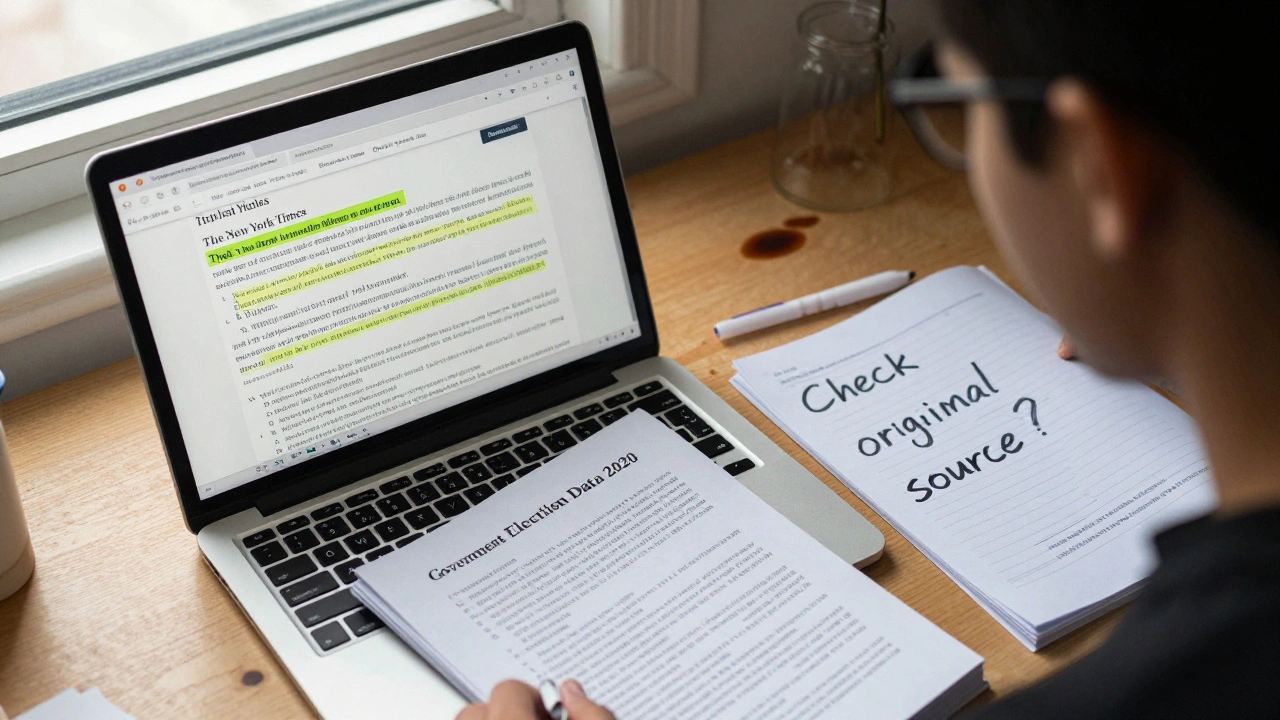
For example, if a Wikipedia article says, “The 2020 U.S. election had the highest voter turnout in over a century,” that’s a claim based on data. But the data itself comes from the U.S. Election Assistance Commission-that’s the primary source. If you want to be sure the number is right, you go to the original report.
Another example: If you’re studying how social media affects mental health, a Wikipedia article might cite a 2023 study in The Lancet. That’s a primary source. But if you just read the Wikipedia summary, you might miss that the study only looked at teens in urban areas. The primary source tells you the limits.
Wikipedia doesn’t replace primary sources-it points you to them. Use Wikipedia to find the right primary sources, not to replace them.
When Should You Stick to Secondary Sources?
Secondary sources are perfect when you need:
- A clear, simplified overview
- Context that connects multiple facts
- Expert analysis without digging through technical papers
For example, if you’re writing a high school paper on the causes of World War I, you don’t need to read every diplomatic telegram from 1914. You need a good history book that explains alliances, nationalism, and militarism in plain language. That’s what Wikipedia gives you-by citing those books.
Secondary sources also help you spot bias. If three different reputable news outlets all report the same interpretation of an event, you can trust it’s well-supported. If only one obscure blog says something different, you know to be skeptical.
Wikipedia is built on this principle. It doesn’t claim to be the original source. It’s a guidebook that shows you where the real sources are.
Red Flags: When Wikipedia Gets It Wrong
Wikipedia isn’t perfect. Sometimes editors mix up primary and secondary sources-or worse, use a primary source without context.
Watch out for:
- Articles that quote a single tweet or YouTube video as evidence
- Claims based on personal blogs or self-published books
- Statistics without citations to official data
- “Experts say…” without naming who or where they published it
These are signs the article isn’t following Wikipedia’s sourcing rules. Always check the references. Click on them. If the source is a random website or doesn’t match the claim, the article might be unreliable.
On the flip side, if a Wikipedia article cites peer-reviewed journals, government reports, or major newspapers, you’re on solid ground. That’s the gold standard.
How to Use Both Like a Pro
Here’s a simple way to use primary and secondary sources together:
- Start with Wikipedia to get the big picture. What’s the event? Who’s involved? What are the key facts?
- Look at the references. Find the secondary sources (books, articles, reports) that explain the topic.
- Then, follow the trail to the primary sources cited in those secondary works.
- Compare what the experts say with the raw data. Do they match? Are there gaps?
This method works for students, journalists, and curious adults. It’s how real research is done-not by trusting one source, but by connecting them.
For example, if you’re researching the 2023 AI regulations in the EU:
- Wikipedia gives you a timeline and summary
- The secondary source is a Reuters article explaining the law’s impact
- The primary source is the actual EU regulation document (Regulation (EU) 2024/1689)
You don’t need to read the 100-page regulation to understand the basics. But if you’re writing a legal analysis, you absolutely need to.
Final Rule: Trust the Chain, Not Just the Page
Wikipedia is a bridge-not the destination. It connects you to sources that have been vetted by experts. The real authority isn’t Wikipedia. It’s the original documents, peer-reviewed studies, and reputable publications it links to.
Don’t treat Wikipedia like a textbook. Treat it like a library catalog. It tells you what books to pull off the shelf. You still have to read them.
Use secondary sources to understand the story. Use primary sources to check the facts. Together, they give you real knowledge-not just a summary.
Can I cite Wikipedia as a primary or secondary source in my research?
No. Wikipedia is a tertiary source-it compiles information from primary and secondary sources. Academic papers and professional reports don’t accept Wikipedia as a valid citation. Always go to the original source listed in Wikipedia’s references.
Are all Wikipedia references reliable?
No. Wikipedia allows many types of sources, but not all are trustworthy. Look for citations from peer-reviewed journals, major newspapers, government websites, or university publications. Avoid blogs, forums, self-published material, or sites with obvious bias.
Why does Wikipedia prefer secondary sources over primary ones?
Because primary sources often require expert interpretation. A raw scientific study might use complex statistics or jargon. A newspaper article or academic review explains what the study means in plain language. Wikipedia’s goal is to be understandable and accurate, not to publish raw data.
How can I tell if a source on Wikipedia is primary or secondary?
Ask: Is this the original material or a summary? If it’s a government report, interview, or original research paper-it’s primary. If it’s a book, article, or documentary analyzing that material-it’s secondary. Check the publisher and format: academic journals and major news outlets are usually secondary.
Can I trust Wikipedia for academic work?
Use it to find sources, not to cite them. Wikipedia is excellent for getting started, learning key terms, and finding credible references. But for your final paper or report, always go back to the original books, studies, or reports listed in its citations.