Launching a new online encyclopedia is hard enough in your home market. Expanding internationally? That’s where most projects stumble. You don’t just need more editors; you need cultural fluency, local trust signals, and a technical architecture that can handle dozens of languages without breaking. The gap between a domestic success and a global platform isn’t just scale-it’s relevance. If your content feels translated rather than native, users bounce. If your community management ignores local norms, you get vandalism or silence. This guide breaks down the specific strategies that allow new entrants to compete against established giants like Wikipedia and Britannica in foreign markets.
The Core Challenge: Trust and Relevance
Before talking about tech stacks or hiring plans, understand what users actually want from an encyclopedia. They want accuracy, speed, and context. In international markets, "context" is king. A fact that is neutral in the US might be controversial in Japan or politically charged in Brazil. Your first job isn’t to translate text; it’s to translate perspective. For example, historical dates, measurement systems, and even the definition of "neutral point of view" vary by region. If your platform displays all dates in MM/DD/YYYY format globally, you’ll confuse European and Asian users instantly. Localization isn’t a post-launch feature; it’s the foundation of user retention.
Trust is built through visible editorial standards. Established platforms have decades of track records. New players must compensate with transparency. Show your sources clearly. Display editor credentials. Make the revision history public. When a user in Germany sees that a claim about WWII was verified by a local historian, their confidence spikes. This is why editorial governance must be decentralized. Centralized control from one headquarters leads to cultural blind spots. Local editors need autonomy to decide what matters to their audience.
Localization vs. Translation: The Critical Distinction
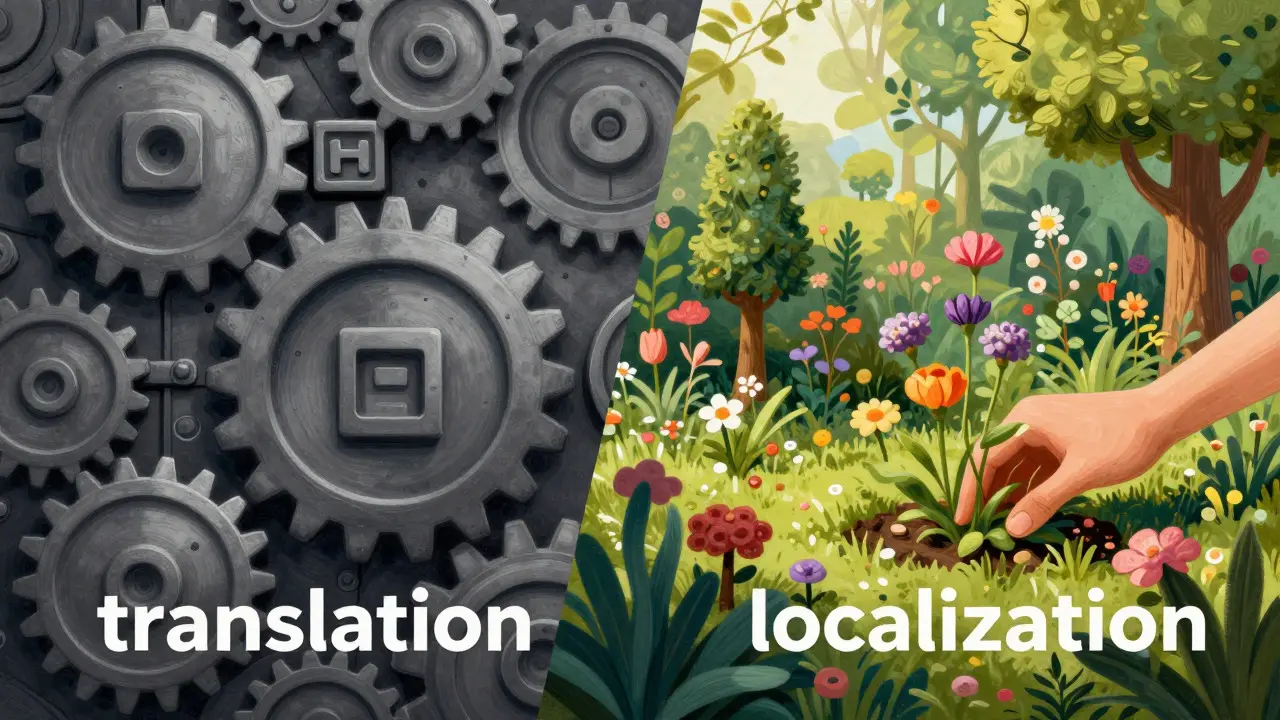
Many founders confuse these two terms, and it costs them users. Translation converts words from Language A to Language B. Localization adapts the entire product experience to a specific culture. It includes:
- Linguistic adaptation: Using regional dialects (e.g., Brazilian Portuguese vs. European Portuguese) and appropriate formality levels.
- Cultural references: Swapping examples. Instead of using baseball stats as analogies for data growth in India, use cricket or local sports metrics.
- Legal compliance: GDPR in Europe, LGPD in Brazil, and PDPA in Singapore all require different data handling practices.
- UI/UX adjustments: Right-to-left support for Arabic and Hebrew, date formats, currency symbols, and number grouping.
For a new encyclopedia, this means building a modular content structure. Don’t write one article and translate it. Write separate articles for each major locale, allowing local nuances to emerge. A page on "Education Systems" should look fundamentally different when viewed in Finland versus South Korea. The core facts remain, but the framing, examples, and emphasis shift. This approach doubles your initial content workload but triples your long-term engagement.
Technical Architecture for Global Scale
Your infrastructure must handle latency, language complexity, and search behavior. Users in Tokyo expect sub-100ms response times. Users in rural areas of Africa may connect via low-bandwidth networks. Your CDN (Content Delivery Network) strategy needs to place edge servers close to your target audiences. More importantly, your search engine must understand local intent.
Consider the entity relationships in your database. A simple tag system won’t cut it. You need a semantic graph that links entities across languages. For instance, the concept of "Democracy" connects to specific political parties in France, constitutional structures in Canada, and protest movements in Chile. When a user searches for "election fraud" in Poland, your system should prioritize recent Polish events over generic US definitions. This requires multilingual NLP (Natural Language Processing) models trained on local corpora. Off-the-shelf translation APIs often fail here because they lack domain-specific training data for encyclopedic topics.
Community Building in Foreign Markets
Encyclopedias are only as good as their contributors. In new markets, you start with zero community trust. How do you recruit editors who care about quality? Partner with local universities, libraries, and professional associations. Offer certification programs for volunteer editors. Create "local champions"-individuals who become recognized experts in specific niches within your platform. For example, if you’re expanding into Mexico, find a respected historian who agrees to curate the Mexican Independence section. Their name becomes a seal of approval for other potential contributors.
Also, adapt your moderation tools. Vandalism patterns differ by region. In some cultures, adding personal opinions is seen as helpful rather than disruptive. Your automated filters need to be tuned to local linguistic norms. Too strict, and you block valid contributions. Too loose, and you invite chaos. Regularly review false positives and adjust thresholds based on feedback from local moderators.
Monetization and Sustainability
How do you pay for all this? Advertising is common but intrusive. Subscriptions work well in developed markets but struggle in emerging economies. Consider a hybrid model: free access for basic content, premium features for advanced research tools, and institutional licenses for schools and corporations. In many countries, government grants for digital literacy or education technology can offset early costs. Look into programs from UNESCO or national ministries of education that fund open-access knowledge projects.
Don’t ignore the value of API access. Developers love clean, structured data. Offering a robust API for multilingual content can attract tech partners who embed your encyclopedia into apps, chatbots, and educational platforms. This creates passive traffic and brand visibility without direct ad spend.

Risks and Pitfalls to Avoid
The biggest risk is cultural arrogance. Assuming your home-market best practices apply everywhere leads to failure. Another pitfall is underinvesting in legal compliance. Data privacy laws are getting stricter globally. One violation in the EU can halt your entire operation due to fines. Hire local legal counsel before launch, not after.
Finally, beware of scope creep. Trying to launch in 50 countries at once dilutes your resources. Pick 3-5 strategic markets first. Master them. Build proof of concept. Then expand. Each successful market provides insights that make the next launch smoother. Iterate, don’t sprawl.
Frequently Asked Questions
What is the difference between localization and translation?
Translation converts text from one language to another. Localization adapts the entire product-including UI, cultural references, legal compliance, and UX-to a specific region. For encyclopedias, localization ensures content feels native, not just readable.
How much does it cost to localize an online encyclopedia?
Costs vary widely. Machine translation is cheap but low-quality. Human translation costs $0.05-$0.15 per word. Native authoring can cost 3-5x more. Budget at least $50k-$100k per major locale for initial setup, including legal and technical adjustments.
Which countries are best for initial international expansion?
Start with markets that have high digital literacy, strong English proficiency, and clear regulatory frameworks. Examples include Canada, Australia, and the Nordics. These regions offer lower risk and easier entry points before tackling complex markets like Southeast Asia or Latin America.
How do I build trust with local users?
Partner with local institutions, hire native editors, display transparent sourcing, and respect cultural norms in content presentation. Visibility of local expertise is key. Users trust content curated by people they recognize as authorities in their own country.
What technical infrastructure is needed for global reach?
You need a global CDN for low latency, multilingual NLP for search accuracy, and a scalable database that supports semantic linking across languages. Ensure your backend can handle right-to-left scripts and variable character encoding without performance degradation.