Wikipedia isn’t just a website. It’s a global movement fueled by volunteers, funded by donations, and shaped by real-world goals: to give everyone free access to knowledge. But how do you know if a program-like a workshop for students, a partnership with a museum, or an edit-a-thon for underrepresented communities-is actually working? Measuring impact isn’t about counting edits. It’s about understanding change.
What Does ‘Impact’ Even Mean on Wikipedia?
Many assume impact means more articles, more edits, or more users. But those are outputs, not outcomes. A single edit-a-thon might generate 200 new articles, but if those articles vanish within months or aren’t cited, did it really work? True impact is about lasting value: better content, broader participation, deeper trust in the information.
Wikimedia Foundation’s evaluation team tracks four key outcomes:
- Content quality: Are articles more accurate, well-sourced, and comprehensive after a program?
- Editor diversity: Are new contributors joining from groups historically underrepresented on Wikipedia?
- Knowledge reach: Are people using Wikipedia more for learning, research, or public understanding?
- Community health: Is the editing community more inclusive, supportive, and sustainable?
These aren’t guesses. They’re measured using data from Wikipedia’s internal tools, surveys, and third-party research.
How Do You Actually Measure Content Quality?
It’s not enough to say, “This article looks better now.” You need a system. That’s where the Wikipedia Content Quality Framework comes in. It uses machine learning and human review to score articles across five dimensions:
- Comprehensiveness: Does the article cover key topics with appropriate depth?
- Neutrality: Is the tone balanced and free of bias?
- Citations: Are claims backed by reliable, published sources?
- Structure: Is the article well-organized and easy to navigate?
- Accessibility: Is the language clear for non-experts?
For example, in 2024, a study of 1,200 articles edited during university partnerships showed a 37% average improvement in citation quality and a 29% increase in comprehensiveness scores. That’s not just more edits-it’s better knowledge.
Tools like ORES (Objective Revision Evaluation Service) help automate part of this. It flags edits likely to be damaging or low-quality before they’re published. But human reviewers still judge nuance-like whether a medical article correctly explains a treatment’s risks versus its benefits.
Tracking Who’s Editing-and Who’s Not
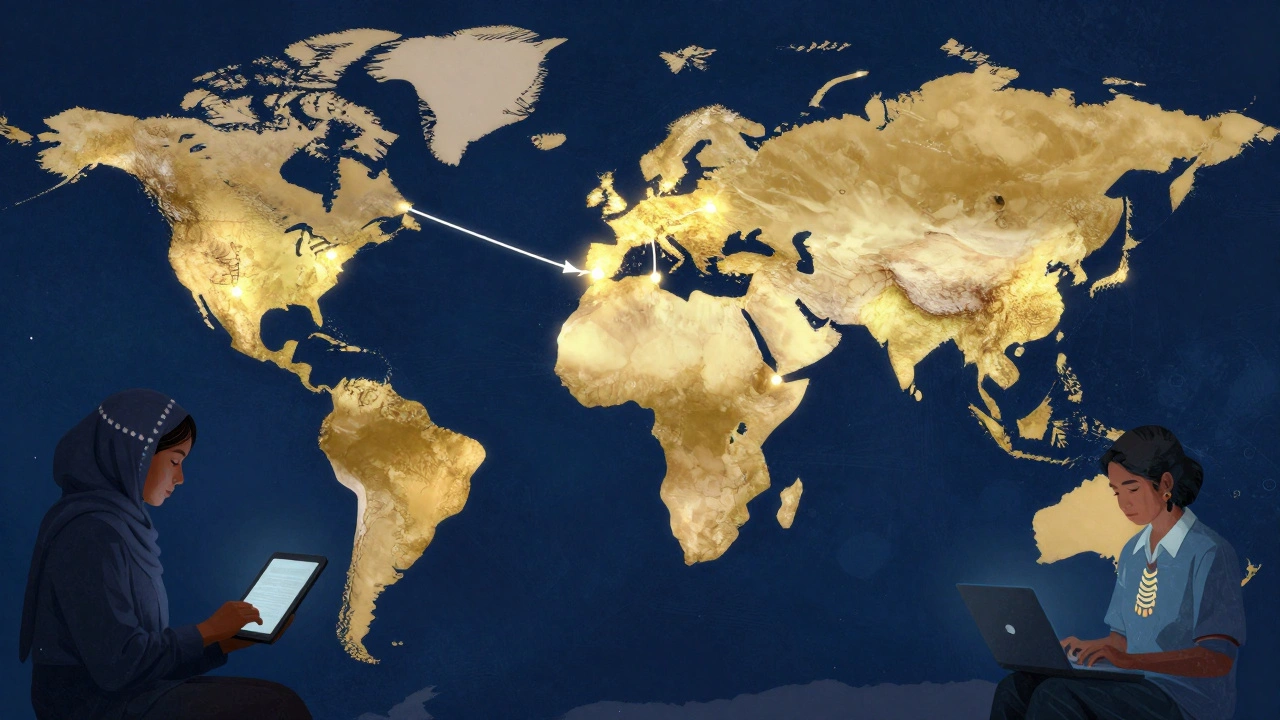
Wikipedia’s biggest problem isn’t lack of content. It’s lack of diverse voices. Women make up only about 15-20% of active editors globally. People from Africa, Latin America, and Indigenous communities are even more underrepresented.
Programs targeting these gaps track participation using demographic data collected through opt-in surveys. In 2023, a Wikimedia partnership with libraries in rural Nigeria trained 400 new editors. Of those, 68% were women, and 82% had never edited Wikipedia before. That’s not just a win for Nigeria-it’s a win for global knowledge equity.
They also track retention. Did those new editors come back after 30 days? 90 days? The answer matters. One-off events create noise. Sustainable programs build community. The 2024 Global Edit-a-thon Report found that programs offering mentorship saw 3.5 times higher retention than those that didn’t.
Measuring Knowledge Reach: Are People Actually Learning?
Wikipedia gets over 1.5 billion monthly visits. But are those visits turning into learning? That’s harder to measure than clicks.
Researchers use surveys, pageview analysis, and even eye-tracking studies. In one 2025 study, students using Wikipedia for a school project were asked to rate their confidence in the information before and after. Those who used well-cited articles showed a 41% increase in confidence in their understanding-compared to only 12% for those using poorly sourced ones.
Another approach: tracking citations in academic papers, news articles, and public policy documents. In 2024, over 11,000 peer-reviewed studies cited Wikipedia. That’s not a sign of weakness-it’s proof of influence. When researchers use it as a starting point, or even as a reference, it means Wikipedia is shaping how knowledge is built.
Community Health: Is Wikipedia Still a Place People Want to Be?
Wikipedia’s success depends on its community. But toxicity, burnout, and gatekeeping have pushed people away. Programs now measure community health through:
- Survey responses on safety and belonging
- Retention rates of new editors
- Frequency of conflict resolution requests
- Use of supportive tools like “Welcome” bots and mentorship programs
One program in Canada introduced “edit sprints” with structured, low-pressure tasks and peer feedback. Within six months, new editor retention jumped from 18% to 47%. The key? Reducing intimidation. New editors weren’t told to fix everything-they were given one clear, small task and someone to ask questions.
Impact isn’t just about what’s added. It’s about who feels welcome enough to add it.
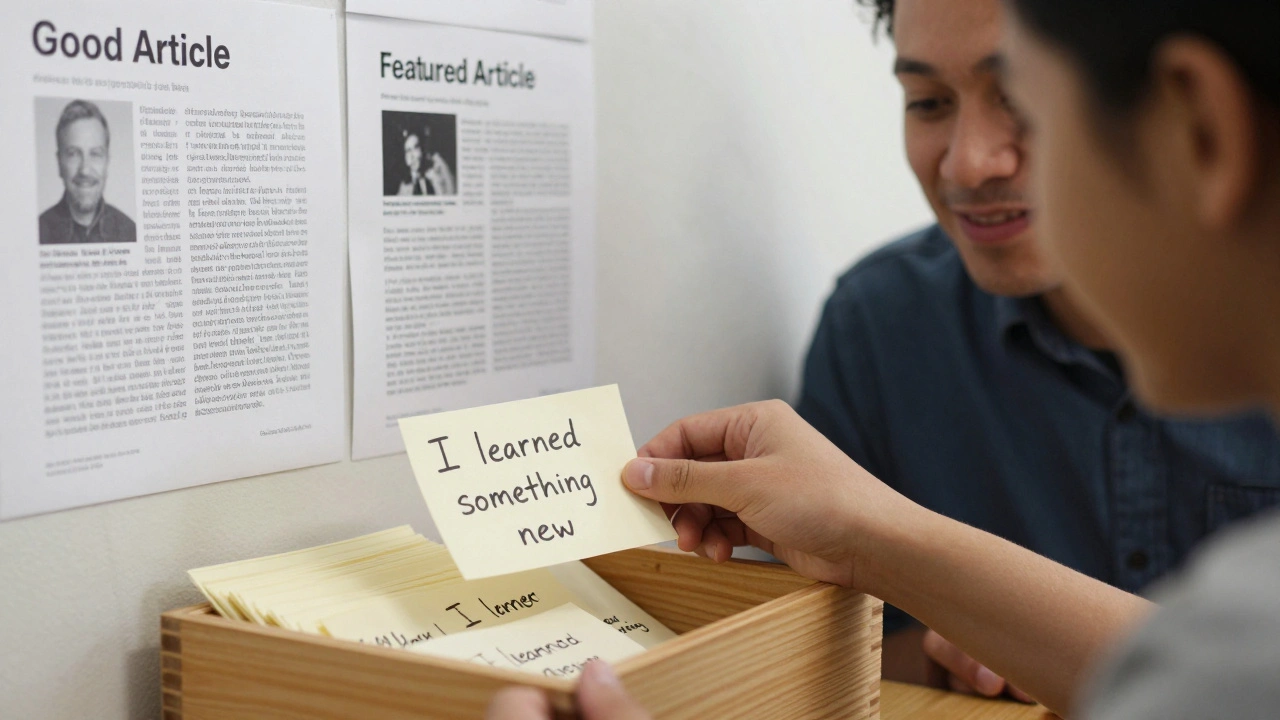
Learning From Failure
Not every program works. And that’s okay-if you learn from it.
In 2022, a Wikimedia initiative tried to partner with high schools in rural India to teach Wikipedia editing. They trained 300 teachers. Only 12 students ever edited. Why? The teachers didn’t have time to support students after the training. The program wasn’t designed for real-world constraints.
That failure led to a new model: train students directly, give them simple editing tasks tied to their curriculum, and connect them with local Wikipedia editors for help. In 2025, that revised approach reached 5,000 students-with 63% continuing to edit after three months.
Learning means being honest. It means asking: Did we assume too much? Did we ignore context? Did we measure the right things?
What You Can Do: Simple Ways to Evaluate Your Own Efforts
You don’t need a team of data scientists to measure impact. Here’s how to start:
- Define your goal: Are you trying to improve health info? Add local history? Train new editors? Be specific.
- Pick one metric: Don’t track everything. Pick one outcome-like “number of new female editors” or “improvement in article citations.”
- Collect baseline data: Before you start, record what’s already there. How many articles exist? Who edits them?
- Ask participants: A simple survey-“Did this help you understand the topic better?”-gives powerful insight.
- Share what you learn: Even if it didn’t work, tell others. That’s how Wikipedia improves.
Impact isn’t about perfection. It’s about progress. And progress only happens when you look closely-and honestly-at what’s working, what’s not, and why.
How does Wikipedia measure the success of its education programs?
Wikipedia evaluates education programs by tracking changes in article quality, editor diversity, student learning outcomes, and long-term participation. They use tools like ORES for automated scoring, surveys for participant feedback, and citation analysis to see if content is being used in academic work. Success isn’t just about how many edits are made-it’s whether those edits improve knowledge and keep new editors engaged.
Why is editor diversity important for Wikipedia’s impact?
When only a narrow group of people edit Wikipedia, the content reflects their perspectives-and leaves out others. Women, people of color, and Global South communities often have knowledge that’s missing from articles. Increasing diversity doesn’t just make Wikipedia fairer-it makes it more accurate, complete, and useful for everyone. Studies show that articles edited by diverse teams contain more nuanced information and are cited more often in academic and public contexts.
Can small organizations measure Wikipedia impact without big budgets?
Absolutely. You don’t need fancy tools. Start by choosing one clear goal-like improving local history articles. Count how many articles exist before your project. Afterward, check if they’ve been expanded, cited, or updated. Ask participants if they feel more confident using or contributing to Wikipedia. Even simple pre- and post-surveys give you meaningful data. Sharing those results helps others improve too.
What’s the difference between an output and an outcome in Wikipedia programs?
An output is something you directly produce: number of edits, number of workshops held, number of new accounts created. An outcome is the real change that follows: better articles, more diverse editors, increased trust in information. You can have 500 edits and no lasting impact. Or 50 thoughtful edits that lead to a new generation of contributors. Outcomes matter more than outputs.
How do you know if a Wikipedia article is truly high-quality?
High-quality articles have strong citations from reliable sources, balanced perspectives, clear structure, and depth that matches the topic’s importance. Tools like ORES can flag low-quality edits, but human review still matters most. Look for articles tagged as “Good Article” or “Featured Article”-those go through formal review. Also, check if the article is cited in textbooks, news reports, or academic papers. That’s real-world validation.
Where Do We Go From Here?
The future of Wikipedia’s impact depends on learning, not just launching. Programs that listen, adapt, and measure will thrive. Those that assume success without evidence won’t last.
Wikipedia’s power doesn’t come from being perfect. It comes from being open to correction-from volunteers, from data, from the people who use it. Every edit is a step. But every measured step forward? That’s how knowledge grows.