Think about the last time you looked up a local politician, a neighborhood park, or a small business on Wikipedia is a free online encyclopedia that relies on volunteer editors to create and maintain articles. Did you find detailed history? Or just a dry list of dates and names? Often, the gap between what’s happening in your town and what’s recorded globally is huge. This disconnect highlights a critical issue: Local Journalism is reporting focused on news, events, and people within a specific geographic community serves as the primary engine for factual accuracy in our immediate surroundings, yet it rarely translates directly into the global archive.
The relationship between these two pillars of information is not just academic; it’s practical. When local reporters dig into zoning disputes, school board decisions, or economic shifts, they generate the raw material that makes encyclopedic entries meaningful. However, bridging this gap requires intentional effort from both journalists and volunteers. Understanding how community-focused content flows from the beat reporter’s notebook to the wiki page helps us appreciate why some towns are well-documented while others remain digital ghosts.
The Role of Local Journalism in Factual Accuracy
Global news cycles often ignore the granular details that define a community. A national outlet might report on a state budget deficit, but only a local paper will explain how that deficit means the library in your district is closing its weekend hours. This specificity is where Civic Reporting is journalism that covers government actions, public policy, and community issues affecting residents shines. It provides the verified facts, quotes, and context that prevent encyclopedia entries from becoming vague summaries.
Consider the entity of Community History is the documented past of a specific group or place, including social, cultural, and political developments. Without consistent local coverage, this history remains fragmented in oral traditions or obscure archives. Journalists act as the first archivists of the present day. When a reporter documents the renovation of a historic bridge, they provide the dates, costs, and architectural details that future editors need. This creates a direct semantic link: Local Journalism [provides] Verified Facts [for] Encyclopedia Entries.
- Verification: Local reporters verify claims against primary sources like city council minutes, which are often inaccessible to remote volunteers.
- Context: They explain *why* an event matters to residents, adding depth beyond simple dates.
- Continuity: Daily or weekly coverage tracks changes over time, creating a narrative arc that one-off wiki edits lack.
Bridging the Gap: From Beat to Wiki Page
So, how does a story in the *Madison Courier* end up on Wikipedia? It’s rarely automatic. The process involves a translation layer where journalistic narrative is converted into encyclopedic neutrality. This is where Open Source Knowledge is information created and maintained by a community of contributors using collaborative tools meets professional standards.
Many local newsrooms now have dedicated staff or partnerships with university journalism programs to feed data into open platforms. For instance, when a local festival gains national attention, the initial buzz comes from local coverage. If no one uploads that information to the global platform, the article might remain a stub for years. Conversely, if a local editor takes the initiative, they can cite the local newspaper as a reliable source, satisfying Wikipedia’s citation requirements.
| Attribute | Local Journalism | Wikipedia (Volunteer-Edited) |
|---|---|---|
| Primary Goal | Inform citizens, hold power accountable | Summarize notable topics neutrally |
| Source Reliability | High (verified by editors/reporters) | Variable (depends on cited sources) |
| Update Frequency | Daily/Weekly | As needed by volunteers |
| Scope | Hyper-local to regional | Global/National focus |
| Barriers to Entry | Professional credentials required | Open to anyone with account |
Challenges in Documenting Small Communities
Not all communities get equal treatment in the digital archive. Rural areas or smaller cities often suffer from "notability bias." In Media Studies, this refers to the tendency of major media outlets to focus on urban centers, leaving rural narratives underreported. If a town doesn’t make national headlines, its history may never reach the global stage unless locals take charge.
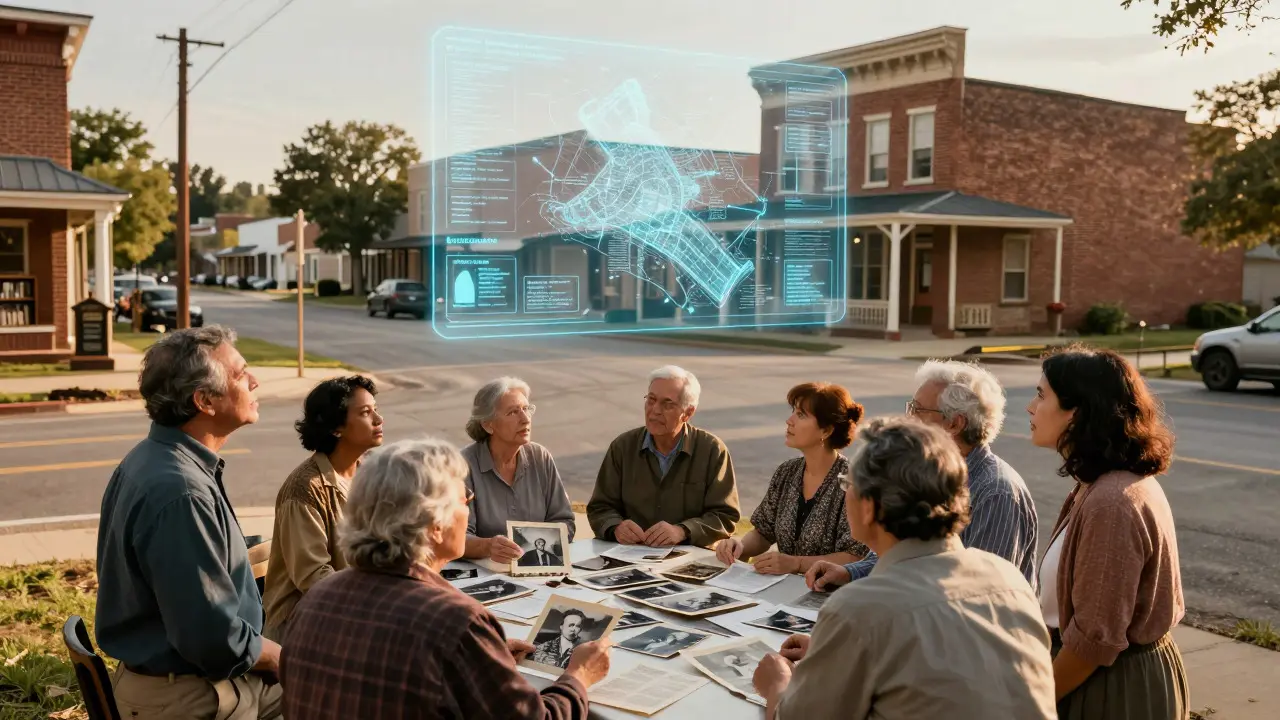
This leads to a phenomenon known as Information Asymmetry is an imbalance in the amount or quality of information held by different parties. Residents know their own history, but the global audience doesn’t. Closing this gap requires active participation. Local libraries, historical societies, and even individual enthusiasts play a crucial role here. They digitize old photos, transcribe interviews, and upload data, effectively acting as unpaid curators of local memory.
However, there are pitfalls. Volunteer editors sometimes struggle with sourcing. Citing a local blog post might be seen as unreliable compared to a peer-reviewed journal or a major newspaper. To combat this, the best practice is to prioritize citations from established local outlets. This ensures that the Encyclopedia Entry is a structured piece of writing on a specific topic, typically found in an encyclopedia stands up to scrutiny.

Practical Steps for Community Engagement
If you’re interested in ensuring your community is properly represented, you don’t need to be a professional journalist. You can start by identifying gaps. Search for your town’s name on Wikipedia. Is the article complete? Are there recent events missing? Here is a simple workflow to contribute effectively:
- Identify Notable Events: Look for recent local news stories that have lasting impact, such as infrastructure projects, significant legal cases, or cultural milestones.
- Gather Reliable Sources: Collect links to articles from local newspapers, radio stations, or official government websites. Avoid personal blogs unless they are highly reputable.
- Draft Neutral Content: Write in a factual tone. Avoid promotional language. Focus on *what* happened, *when*, and *why* it was notable, rather than *how good* it was.
- Cite Everything: Every claim needs a reference. Use the citation tools provided by the platform to ensure formatting is correct.
- Collaborate: Reach out to other editors or local historians. Working together reduces the risk of edit wars and improves accuracy.
This process strengthens the bond between Digital Archiving is the long-term preservation of digital content in accessible formats and real-world civic engagement. It turns passive readers into active participants in shaping the record.
The Future of Hybrid Information Ecosystems
Looking ahead, we see a trend toward hybrid models where newsrooms and open knowledge platforms collaborate more closely. Some local papers now offer APIs that allow developers to pull data directly into open databases. This automation could significantly reduce the manual effort required to keep local entries updated.
Furthermore, the rise of artificial intelligence in summarizing text may change how we consume this content. AI tools can scan thousands of local articles to suggest updates for encyclopedia pages, flagging new facts that need verification. While human oversight remains essential, this technology bridges the volume gap between daily news flow and static encyclopedic entries.
Ultimately, the value of connecting local journalism with global platforms lies in preserving the diversity of human experience. A world where every village has a well-sourced, accurate entry is a world where no community is invisible. It’s a testament to the idea that knowledge isn’t just global-it’s local, too.
Can local newspapers be used as sources on Wikipedia?
Yes, local newspapers are generally considered reliable secondary sources for local topics, especially if they have a history of editorial independence and fact-checking. They are preferred over blogs or personal websites for documenting local events.
What makes a local topic 'notable' enough for an encyclopedia entry?
Notability usually requires coverage in multiple independent, reliable sources. For local subjects, this means being covered by several different local outlets or having significant impact on the broader region, rather than just appearing in one single article.
How do I fix outdated information in a local Wikipedia article?
You can edit the page directly after creating an account. Always add a citation to support your change. If you are unsure, leave a comment on the article's talk page to discuss the update with other editors before making major changes.
Do local journalists actively contribute to Wikipedia?
Some do, but many prefer to let the work fall to volunteers to maintain editorial independence. However, many newsrooms encourage their reporters to ensure their beats are accurately represented by providing easy-to-cite links and press releases.
Why are some small towns missing from global encyclopedias?
This is often due to a lack of volunteer interest or difficulty finding sufficient independent sources. If a town hasn't made national news, fewer people are motivated to research and write its history, leading to gaps in documentation.