The Reality of the Editor Gap
When we talk about Wikipedia community accessibility, we aren't just talking about screen readers or alt-text. We're talking about who feels welcome in the "village pump." For years, the Wikimedia movement is a global effort, but its demographics have skewed heavily toward a specific profile: male, tech-savvy, and often from the Global North. This creates a feedback loop where the rules of the community are written by people with similar backgrounds, making the space feel alien to others.
Think about the "edit war." To a veteran editor, a heated debate over a comma or a source is just a Tuesday. To a newcomer from a marginalized community, that same interaction can feel like a targeted attack. When the barrier to entry is a steep learning curve combined with a high-friction social environment, many people simply give up. We see this in the stark data regarding gender gaps; women are significantly underrepresented in the editor population, which directly leads to gaps in the content regarding women's lives and achievements.
Breaking Down Technical Barriers
One of the biggest hurdles is the sheer complexity of Wiki markup, a lightweight markup language used to format pages. While the VisualEditor has helped, the community's obsession with precision often pushes newcomers back into the scary world of brackets and curly braces. If you can't figure out how to create a basic citation without spending an hour on a forum, you're less likely to stay.
True accessibility means meeting people where they are. This involves improving Web Content Accessibility Guidelines (WCAG), the international standard for making web content accessible, ensuring that the interface works for people with visual or motor impairments. But it also means simplifying the onboarding process. We need more "training wheels"-guided paths that don't punish a user for making a mistake. A mistake should be a teaching moment, not a reason for a "warn and block" cycle.
| Barrier Type | Example | Impact on Inclusion | Proposed Solution |
|---|---|---|---|
| Technical | Complex wikitext | Intimidates non-tech users | Enhanced VisualEditor |
| Social | Aggressive reverts | Discourages marginalized groups | Mentorship programs |
| Structural | Strict sourcing rules | Erasure of oral histories | Diverse source acceptance |
The Challenge of "Neutral Point of View"
Wikipedia's golden rule is Neutral Point of View (NPOV), the principle that articles should be written without bias. On paper, it sounds fair. In practice, the definition of "neutral" is often decided by the dominant group. When an editor from a Western background decides what constitutes a "reliable source," they might dismiss a community-led archive or a traditional oral history as "unreliable." This effectively silences indigenous voices and keeps the encyclopedia centered on a colonial perspective.
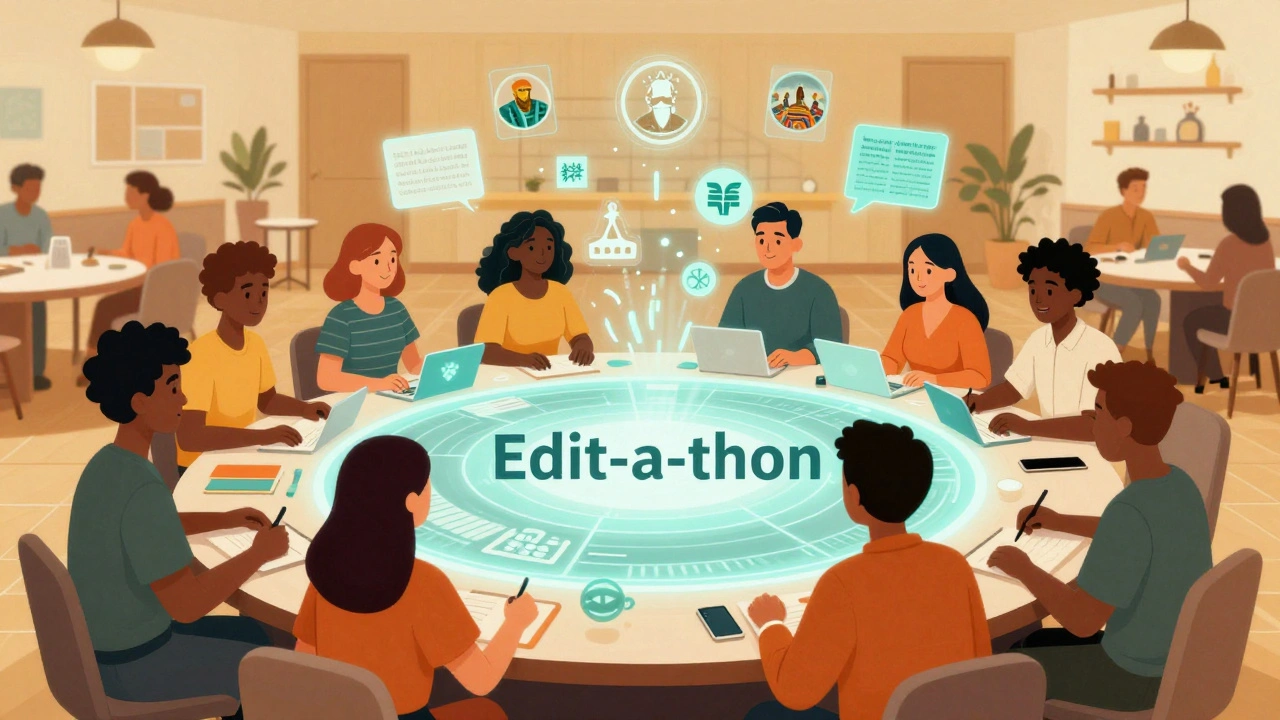
To move toward true inclusion, we have to rethink what "neutrality" looks like. It's not about removing all perspective; it's about incorporating a wider variety of perspectives. This means actively supporting Edit-a-thons, organized events where people gather to improve content on specific underrepresented topics. By bringing people together in a physical or virtual space to write about their own communities, we shift the power dynamic from "gatekeeping" to "empowering."
Cultivating a Culture of Kindness
You can have the most accessible software in the world, but if the community is hostile, people will leave. The "boldly go" spirit of Wikipedia-encouraging people to just jump in and edit-often clashes with a culture of rigid policing. For many, the first interaction with an experienced editor is a notification saying their work was deleted because they didn't follow a specific, obscure naming convention. This is a terrible way to start a relationship.
We need to transition from a culture of "policing" to a culture of "hospitality." This means creating specific roles for mentors who don't just fix mistakes, but explain why the change was needed in a supportive way. Imagine if, instead of a cold revert, a new editor received a message saying: "Hey! I see you're trying to add a great point here. The formatting is a bit off-want me to show you how to fix it?" That small shift in tone can be the difference between a one-time editor and a lifelong contributor.
Scaling Inclusion Across Languages
Accessibility isn't just about English Wikipedia. The Wikimedia Foundation, the non-profit organization that manages Wikipedia, oversees hundreds of language versions. However, the tools and policies often trickle down from the English version. This "English-centricity" can stifle the growth of smaller language communities who have different social norms and needs.
True inclusion requires decentralized support. We need tools that are localized not just in language, but in cultural context. For example, in regions with unstable internet access, a heavy web interface is a barrier. Lightweight, offline-first editing tools could open the door for millions of people in the Global South to contribute without needing a high-speed connection. When we solve for the most constrained users, we actually make the experience better for everyone.
Concrete Steps for a More Open Space
How do we actually make this happen? It starts with a conscious effort to audit our own biases. Current editors should ask themselves: "Am I protecting the quality of the article, or am I protecting my own preference for how it's written?" When we prioritize the inclusive editing process over rigid adherence to internal bureaucracy, the quality of the content actually improves because it becomes more accurate and comprehensive.
- Implement "Soft Landings": Create a tiered editing system where newcomers have a grace period to learn without fear of immediate blocks.
- Diversify Source Standards: Create guidelines that recognize and validate non-traditional sources from marginalized cultures.
- Active Outreach: Move beyond the digital bubble and partner with local libraries and community centers to host training sessions.
- Accessibility Audits: Regularly test the editor interface with users who rely on assistive technology.
Why is the gender gap on Wikipedia so persistent?
The gap persists due to a combination of technical barriers, social hostility, and a lack of representation in leadership. Many women report feeling unwelcome in the highly critical and often aggressive communication style prevalent in talk pages. Additionally, a lack of female-led mentorship makes it harder for new women editors to find their footing.
Does NPOV prevent the inclusion of marginalized perspectives?
Not inherently, but the implementation often does. When "neutrality" is defined by the dominant group, it can result in the erasure of minority viewpoints by labeling them as "non-neutral" or "unreliable." The solution is to broaden the definition of reliable sources to include diverse academic and community-led records.
How can I help a new editor feel welcome?
Focus on "positive reinforcement." Instead of just reverting an edit, leave a kind note explaining the rule and offering to help. Acknowledge the value they are adding to the project before correcting the formatting. Small gestures of kindness reduce the fear of failure for newcomers.
What are Edit-a-thons and how do they help?
Edit-a-thons are organized events where people collaborate to improve content on specific topics. They help inclusion by providing a supportive social environment, immediate technical help from experienced editors, and a focused goal that empowers people to write about their own lived experiences.
What is the difference between accessibility and inclusion?
Accessibility is about the tools-making sure a person with a visual impairment can use the website. Inclusion is about the culture-making sure that once they can access the site, they feel they belong in the community and their contributions are valued.
Next Steps for Contributors
If you're a veteran editor, the best thing you can do today is find one one-off editor and send them a message of encouragement. If you're a newcomer, don't let a "revert" stop you; find a local user group or a themed Edit-a-thon to get support. For the developers at the Wikimedia Foundation, the focus should remain on reducing the friction between an idea and a published edit. The goal isn't just to have a site that everyone can read, but a site that everyone can help build.