Wikipedia isn’t one website-it’s hundreds. Each language edition, from English to Zulu, operates like its own encyclopedia, built by volunteers who speak that language. But here’s the problem: not all editions are created equal. The English Wikipedia has over 6.6 million articles. The Swahili edition has about 100,000. The Tagalog edition has 1.3 million. Why such a gap? And does it matter? Measuring coverage parity across Wikipedia language editions isn’t just about counting articles-it’s about understanding who gets seen, who gets heard, and who’s left out of the global knowledge conversation.
What Does Coverage Parity Even Mean?
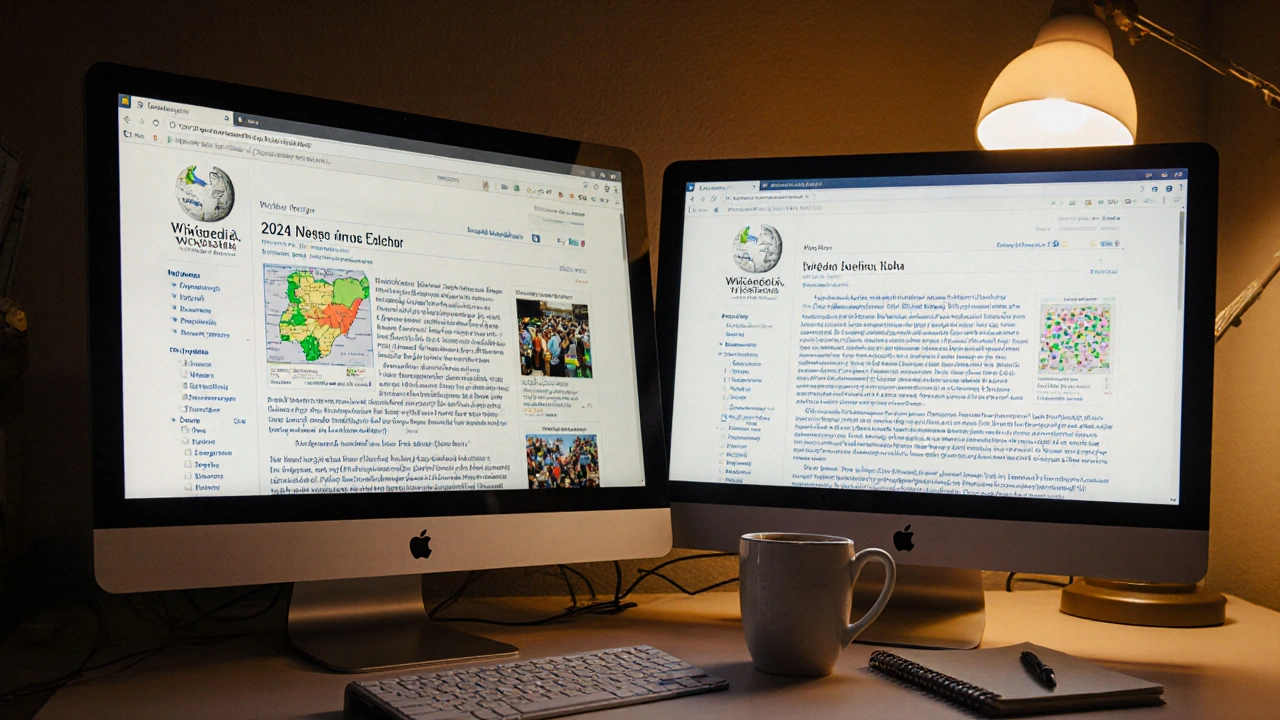
Coverage parity means that a topic covered in one language edition should also be covered in others, with similar depth and quality. It’s not just about having the same number of articles. It’s about whether a person in Lagos, Manila, or Lima can find the same level of detail on their local history, science, or culture as someone in New York or London.For example, the English Wikipedia has detailed articles on the 2024 Nigerian presidential election, including candidate backgrounds, voting patterns, and international reactions. But the Yoruba edition? It has a single paragraph. Meanwhile, the Hindi edition has a 12-section article on the same election, complete with maps and voter demographics. That’s not parity. That’s inconsistency.
Parity isn’t about making every edition the same size. It’s about ensuring that important topics-especially those tied to local identity, history, or public interest-are represented meaningfully in every major language community. Otherwise, Wikipedia becomes a tool that amplifies some voices while silencing others.
How Do We Measure It?
There’s no single official metric, but researchers and editors use a few practical methods to compare editions.One common approach is the article count ratio. This compares the number of articles in a language edition to the number in English Wikipedia. For instance, if the German Wikipedia has 2.8 million articles and English has 6.6 million, the ratio is about 42%. But this number is misleading. A small edition might have fewer articles but cover its local context far more thoroughly.
A better method is the topic coverage index. This looks at a fixed set of high-priority topics-like major historical events, scientific concepts, or globally recognized people-and checks how many language editions have articles on each. A 2023 study by the Wikimedia Foundation analyzed 500 core topics (including the moon landing, the French Revolution, and the 2020 U.S. election) across 100 language editions. They found that 87% of editions had no article on the 2020 U.S. election, even though it was covered in 94% of editions with over 100,000 articles.
Another method is content depth scoring. This evaluates how detailed an article is-not just its length, but the presence of citations, images, references to primary sources, and structured data. An article with five references, three images, and a timeline scores higher than one with a single paragraph and no sources. Studies show that smaller language editions often have higher depth scores per article, because their editors focus intensely on local relevance.
Why Some Languages Have More Content Than Others
It’s not about how many people speak a language. Mandarin Chinese has over a billion speakers, yet the Chinese Wikipedia has fewer articles than the Dutch edition. Why?It comes down to three things: internet access, volunteer infrastructure, and cultural priorities.
First, internet access matters. In many African and South Asian countries, mobile data is expensive, and stable connections are rare. Editing Wikipedia requires time, bandwidth, and familiarity with digital tools. If you’re spending your day commuting or working multiple jobs, editing an encyclopedia isn’t a priority.
Second, Wikipedia needs active communities. English Wikipedia has over 100,000 active editors. The Bengali edition has around 1,200. The Quechua edition? Maybe 20. Those numbers aren’t random. They reflect whether there’s a network of people who care enough to edit regularly, who know how to use the tools, and who feel their language deserves a place in the global knowledge system.
Third, cultural priorities shape content. In some communities, oral history is more valued than written documentation. In others, religious or political norms discourage public writing on certain topics. In still others, education systems don’t teach critical research skills-so people don’t know how to write a Wikipedia article that meets quality standards.
The Gap in Representation
The most glaring disparities aren’t between big languages-they’re between languages with global influence and those without.Take the topic of climate change. The English, French, Spanish, and German editions all have extensive articles with data, policy analysis, and regional impacts. But the Hausa edition? A single paragraph. The Tigrinya edition? No article at all. Meanwhile, the same edition might have a detailed article on local farming practices that no other language edition covers.
This creates a dangerous imbalance. When you search for information on indigenous medicine in the Aymara language, you might find rich detail. But if you search for the same topic in English, you might get nothing-or worse, a misleading article written by someone who doesn’t speak Aymara.
And it’s not just about culture. It’s about power. The languages with the most coverage are those tied to colonial histories, economic power, or academic dominance. Arabic, Russian, and Japanese have strong coverage because they’re used in universities, media, and government. But languages like Kinyarwanda, Nahuatl, or Ainu? They’re barely represented, even though they’re spoken by millions.
What’s Being Done to Fix It?
There are efforts to close the gap, but they’re uneven.Wikimedia Foundation runs programs like Wikipedia Zero (now discontinued) and Wiki Loves Africa, which train local editors and provide offline tools. The Content Translation Tool lets editors translate articles from one language to another with minimal effort. But translation isn’t parity. Translating an English article about the U.S. healthcare system into Swahili doesn’t make it relevant to Tanzanian health policy.
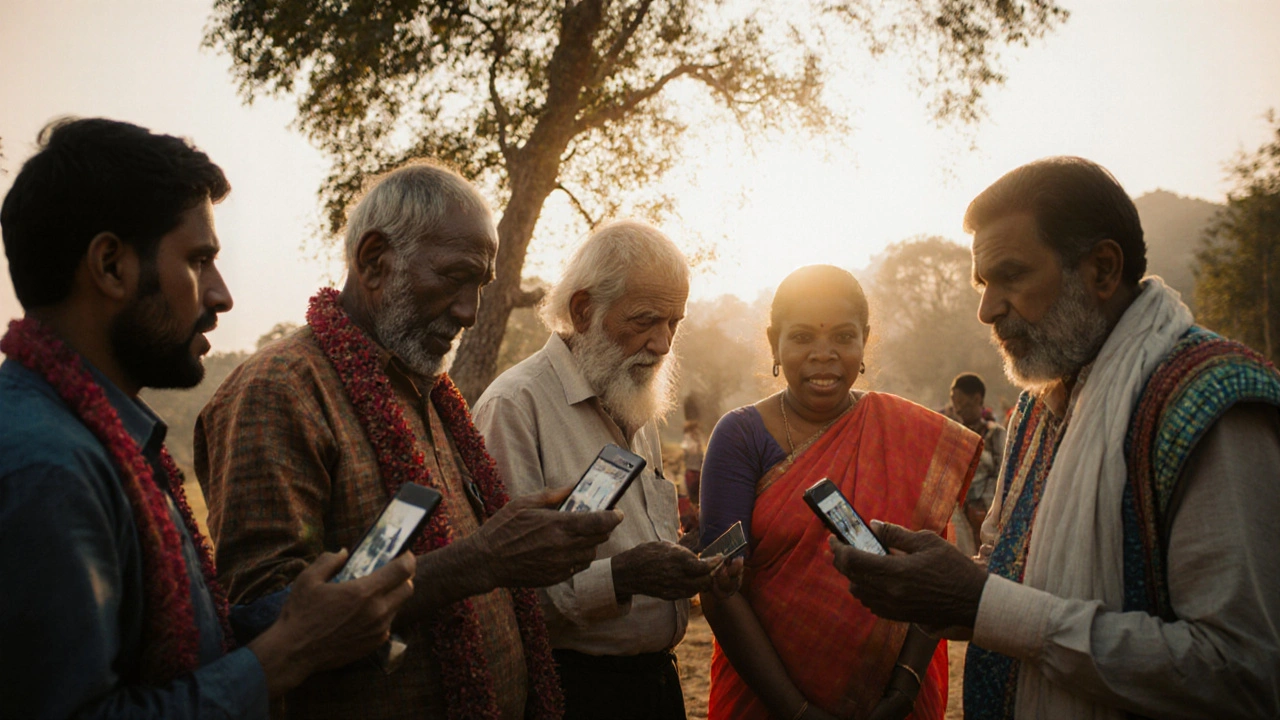
Some communities are building their own solutions. The Tamil Wikipedia community created a Local Knowledge Initiative, where volunteers interview elders, document oral histories, and upload photos of local temples and festivals. The result? Over 80,000 articles on Tamil culture, many of which don’t exist in any other language.
In Nepal, volunteers started a project called Wikipedia in Maithili, using WhatsApp groups to recruit editors and recording interviews with village teachers. Within two years, they went from 500 articles to over 12,000-mostly on local agriculture, festivals, and dialects.
These aren’t top-down fixes. They’re grassroots movements. And they’re working.
Why Parity Matters Beyond Wikipedia
This isn’t just about Wikipedia. It’s about how knowledge is valued in the digital age.If you grow up in a community where your language isn’t represented in the world’s largest encyclopedia, you learn early that your knowledge doesn’t count. That’s not just unfair-it’s dangerous. It shapes how people see themselves, how schools teach history, and how governments make policy.
When a student in Guatemala searches for information on Mayan astronomy and finds nothing in Spanish or Quichua, they turn to YouTube or TikTok. There, they might find misinformation, oversimplified myths, or cultural appropriation. But if they found a well-sourced, community-written article in Quichua? That’s power.
Parity in Wikipedia isn’t about equality of numbers. It’s about equity of access. It’s about making sure that no matter where you live, what language you speak, or how much money you have-you can find reliable, detailed, and culturally accurate information.
What You Can Do
You don’t need to be a linguist or a tech expert to help.- If you speak a minority language, start editing. Even one well-written article makes a difference.
- If you’re bilingual, translate articles from large editions into your native language-but only if you can adapt them to local context.
- If you’re a teacher, show your students how to edit Wikipedia in their language. It’s a real-world research project.
- If you’re part of a cultural organization, partner with Wikimedia chapters to document traditions, songs, or local history.
Wikipedia doesn’t need more money. It needs more voices.
Why doesn’t every language have the same number of Wikipedia articles?
Article counts vary because of differences in internet access, volunteer communities, and cultural priorities. A language with millions of speakers may have few editors if people lack time, tools, or training. Meanwhile, smaller language communities with strong local networks can build deep, high-quality content even with fewer articles.
Is translating articles from English enough to achieve coverage parity?
No. Translation alone doesn’t create parity. An article about U.S. healthcare in Spanish won’t help someone in Bolivia understand their own public health system. Parity means writing articles that reflect local realities-local laws, local history, local science-not just translated versions of Western content.
Which Wikipedia language editions have the most coverage gaps?
Languages spoken in regions with limited digital infrastructure and low editor participation have the biggest gaps. This includes many African languages like Hausa, Yoruba, and Tigrinya, as well as indigenous languages like Quechua, Nahuatl, and Ainu. Even some widely spoken languages like Bengali and Vietnamese have major gaps in coverage of global events and scientific topics.
How do researchers measure content depth on Wikipedia?
Researchers use metrics like number of citations, presence of images, use of structured data (like infoboxes), and length of content. An article with five references, three images, and a timeline scores higher than one with a single paragraph. Depth matters more than word count-especially in smaller language editions where every article is often written with care.
Can small language editions compete with English Wikipedia?
They don’t need to compete-they need to complement. The English Wikipedia covers global topics broadly. Smaller editions cover local topics deeply. A Quechua article on traditional Andean crop rotation might not exist anywhere else. That’s not a deficit-it’s a strength. Parity means valuing both breadth and depth.
What tools help editors build content in underrepresented languages?
The Content Translation Tool helps move articles between languages. Offline editors like WikiEditor and the Wikipedia Android app work without constant internet. Wikimedia also offers grants and training programs for local editors, especially in Africa, South Asia, and Latin America. Community-driven projects, like WhatsApp groups and local workshops, are often the most effective.