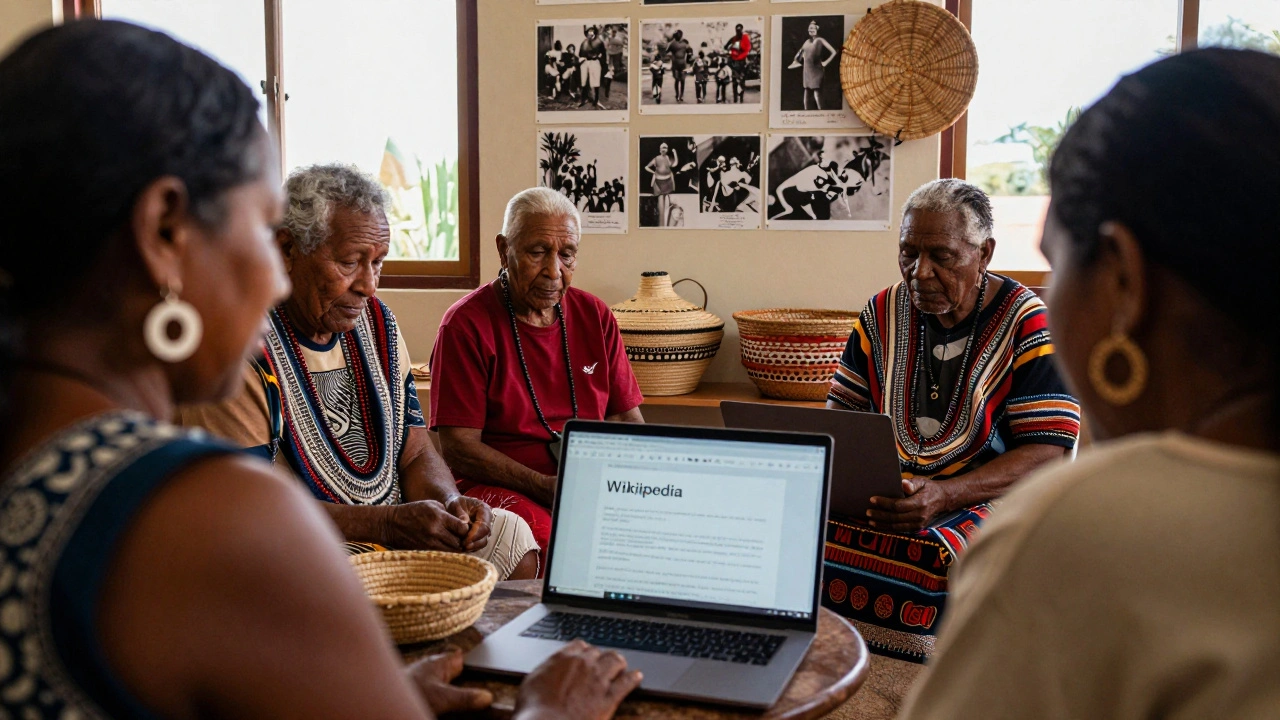
Wikipedia isn’t just a single language site. It’s a network of over 300 language versions, each shaped by local culture, history, and knowledge. But how do museums, libraries, and archives - the GLAM institutions (Galleries, Libraries, Archives, Museums) - help make this global knowledge more complete? The answer lies in multilingual GLAM-Wiki projects. These aren’t just donation drives for old photos. They’re structured partnerships that bring underrepresented stories into Wikipedia, one language at a time.
What Are GLAM-Wiki Projects?
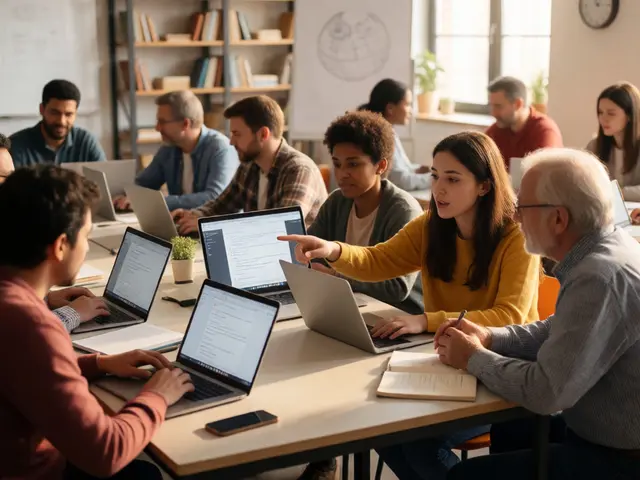
GLAM-Wiki projects connect cultural institutions with Wikipedia editors. The goal? To open up their collections - photos, documents, audio recordings - to the public through free, multilingual access. These projects don’t just upload files. They train staff to edit Wikipedia, help local communities contribute in their native languages, and fix gaps in knowledge that colonial histories or language dominance created.
For example, a museum in Sweden might upload 10,000 digitized folk costumes to Wikimedia Commons. But if those images only have English captions, they’re useless to a farmer in rural Bolivia or a student in Senegal. A true GLAM-Wiki project ensures those same images have captions in Swedish, Spanish, and Wolof - and that the stories behind them are written by people who understand them.
Case Study: The National Library of Australia and Indigenous Languages
In 2021, the National Library of Australia launched a project with Aboriginal and Torres Strait Islander communities to add content in over 20 Indigenous languages to Wikipedia. Many of these languages had no written Wikipedia pages before. The library didn’t just provide scans of old ethnographic notes. They trained community members to edit Wikipedia using their own oral histories, song lyrics, and place names.
One result: the Warlpiri Wikipedia, a version of Wikipedia in the Warlpiri language spoken by about 3,000 people in central Australia. Before this project, there were only 12 articles. Three years later, there were over 800. Articles covered traditional land management, kinship systems, and medicinal plants - topics rarely found in English Wikipedia.
The library also created a multilingual glossary of 500 key terms, translated into Warlpiri, Yolŋu Matha, and English. This became a resource for schools, linguists, and other GLAM institutions working with Indigenous heritage. The project didn’t just add content - it gave authority back to the communities whose knowledge was historically locked in archives.
Case Study: Europeana and the Forgotten Languages of Eastern Europe
Europeana, the digital library for European cultural heritage, partnered with Wikipedia editors in Ukraine, Moldova, and Georgia to build content in minority languages like Romanian, Gagauz, and Rusyn. Many of these languages were ignored in mainstream European media and had minimal Wikipedia presence.
One campaign focused on folk music recordings from the 1950s held in the National Archives of Moldova. These recordings were digitized and uploaded to Wikimedia Commons. But instead of just tagging them as "Moldovan folk songs," editors worked with local musicians and ethnomusicologists to write articles in Romanian and Gagauz about the instruments, dance styles, and social contexts.
The result? The Gagauz Wikipedia grew from 37 articles to 412 in 18 months. Articles included biographies of forgotten singers, explanations of polyphonic singing traditions, and maps of regional music festivals. The project also trained 120 archivists across five countries to edit Wikipedia - not just upload files, but write in their own languages.
This wasn’t about making Wikipedia "more European." It was about correcting the imbalance. Before this, most Eastern European minority languages had less than 100 articles each. Now, some have thousands - and they’re growing.
Case Study: The British Museum and the Global Repatriation Movement
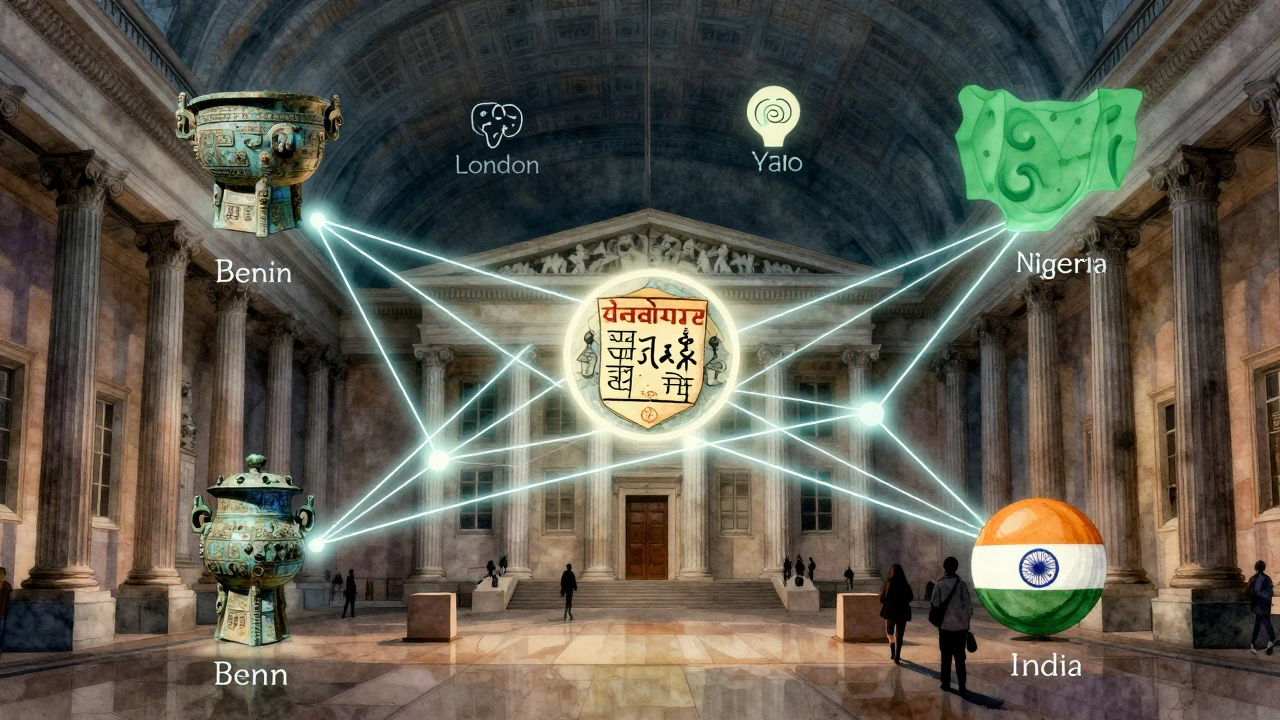
The British Museum holds over 8 million objects - many taken during colonial rule. For years, Wikipedia articles about these items were written in English, often with outdated colonial terminology. In 2023, the museum launched a multilingual GLAM-Wiki initiative with partners in Nigeria, Benin, and India to rewrite those articles in Yoruba, Edo, and Hindi.
Instead of calling a Benin Bronze "looted artifact," the new Yoruba Wikipedia article calls it "ọmọ ọ̀rọ̀ Ẹdọ" - "the voice of the Edo people." The article includes oral histories from Edo elders, maps of original palace locations, and details about ritual use - information never published in Western museums.
The British Museum didn’t just provide metadata. They gave editors access to internal research, conservation reports, and even unpublished photographs. Editors from Lagos, Benin City, and Delhi wrote over 1,200 new articles in their languages. The English versions were updated too, but now they link to the multilingual versions as primary sources.
This project changed how Wikipedia handles contested heritage. It’s no longer a single narrative in English. It’s a network of voices - each language version telling the story from its own perspective.
Why Language Matters More Than You Think
Most people assume Wikipedia is global because it has many languages. But that’s not enough. If the content in those languages is shallow, poorly sourced, or written by outsiders, it’s still a distorted version of reality.
Take the topic of traditional medicine. English Wikipedia has 12,000 articles on herbal remedies. But only 48 are in Swahili, and just 11 in Quechua. Meanwhile, in rural Kenya and Peru, people use these plants every day. Who writes about them? Often, it’s a volunteer in London or Toronto who’s never held the plant. That leads to errors - misidentified species, wrong dosages, cultural misunderstandings.
GLAM-Wiki projects fix this by putting the knowledge in the hands of those who live it. When a Maori elder in New Zealand writes about rongoā (traditional healing) in te reo Māori, the article becomes accurate, authoritative, and culturally safe. It’s not just translation. It’s reclamation.
How These Projects Succeed
Successful GLAM-Wiki projects share three things:
- Local leadership - The project is led by people from the community, not outsiders.
- Language-specific training - Editors learn Wikipedia editing in their native language, not English.
- Long-term access - Institutions don’t just upload files once. They create ongoing partnerships with local editors.
One failed project in Brazil tried to upload 50,000 indigenous artifacts to Wikipedia. But they trained only English-speaking university students. The result? 95% of the articles were poorly written, with incorrect names and missing context. The project was shut down within a year.
The winning approach? In 2024, the Museu do Índio in Rio de Janeiro partnered with 17 Indigenous groups to train 85 community editors in their own languages. They created a multilingual glossary of 1,200 terms. Now, the Tupi-Guarani Wikipedia has over 600 articles - all written by people who speak the language.
What’s Next for Multilingual GLAM-Wiki Projects?
The next wave is AI-assisted translation - but with a twist. Instead of using Google Translate to auto-translate articles, projects are training AI models on local dialects and oral traditions. In 2025, a pilot in Nepal used a custom AI model trained on 200 hours of Nepali, Tamang, and Newari speech to help editors generate accurate article drafts in their languages.
But the human element stays central. The AI doesn’t write the articles. It helps editors find the right words, suggest sources, and avoid common mistakes. The knowledge still comes from the community.
More institutions are starting to see Wikipedia not as a platform to control, but as a living archive - one that grows stronger when it’s shared, translated, and rewritten by the people it represents.
How You Can Support These Efforts
Even if you’re not a museum curator, you can help. If you speak a minority language, start editing Wikipedia in it. Upload a photo of a local monument. Write a short article about a tradition your family practices. Link to existing articles in other languages.
If you work with a cultural institution, ask: "Can we partner with local editors to write about our collection in their languages?" Don’t just send files. Send access, training, and trust.
Wikipedia’s strength isn’t in how many languages it has. It’s in how many voices it lets speak - truly, fully, and in their own words.
What does GLAM stand for in GLAM-Wiki projects?
GLAM stands for Galleries, Libraries, Archives, and Museums. These are cultural institutions that hold historical and artistic collections. In GLAM-Wiki projects, they partner with Wikipedia to share their materials - photos, documents, artifacts - and help people edit Wikipedia in multiple languages.
Do GLAM-Wiki projects only work with English Wikipedia?
No. The whole point of multilingual GLAM-Wiki projects is to support non-English versions of Wikipedia. Many projects focus on languages with few editors - like Warlpiri, Gagauz, or Quechua - to fill gaps in knowledge that English-language Wikipedia often misses. The goal is to make cultural heritage accessible in the languages people actually speak.
How do GLAM-Wiki projects handle cultural sensitivity?
They work directly with the communities who own the knowledge. Instead of outsiders deciding what to publish, local elders, artists, and historians lead the process. Some materials are kept private out of cultural respect. Others are shared only in certain languages or with specific access rules. This ensures that sacred or sensitive information isn’t exposed inappropriately.
Can individuals join GLAM-Wiki projects without working for a museum or library?
Yes. Many GLAM-Wiki projects rely on volunteer editors from the community. If you speak a language with little Wikipedia content, you can start editing. You can upload photos you’ve taken of local heritage sites, write about family traditions, or help translate existing articles. You don’t need to be a professional - just someone who cares about preserving knowledge in your language.
Are GLAM-Wiki projects successful in increasing Wikipedia’s diversity?
Yes. Projects like the Warlpiri Wikipedia and the Gagauz Wikipedia have grown from fewer than 50 articles to hundreds in just a few years. These aren’t just numbers - they represent real knowledge being saved and shared in languages that were nearly lost. When communities write about their own history, Wikipedia becomes more accurate, more complete, and more fair.