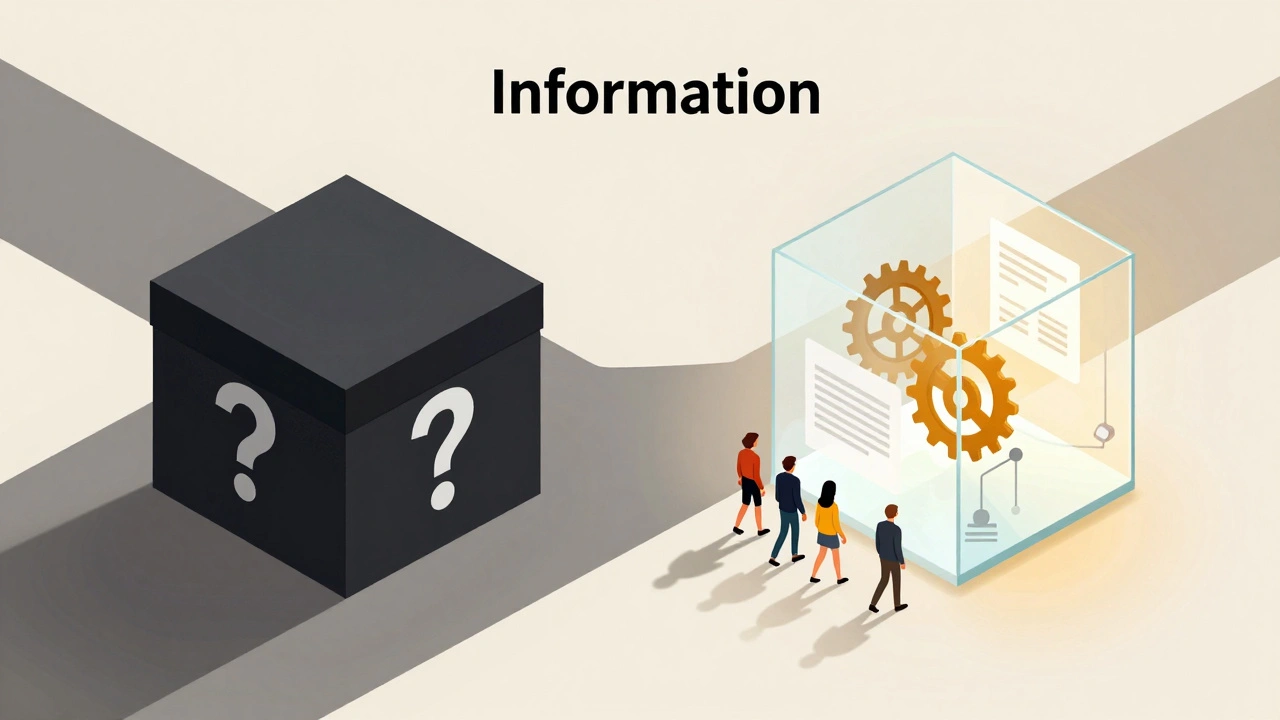
Trust in information is at an all-time low. You scroll through headlines, check a wiki page, or read a blog post, and you wonder: is this true? Who decided it was true? For years, we relied on big brands to act as gatekeepers. We trusted the logo more than the content. That model is broken. In 2026, the shift isn't just about better algorithms; it's about open metrics. This approach flips the script. Instead of asking you to trust a source blindly, it invites you to see exactly how that source reached its conclusions.
This isn't just a buzzword for tech conferences. It’s a practical framework for restoring credibility in an era of AI-generated noise and deepfakes. When you make the criteria for quality visible, you stop hiding behind authority. You start building evidence. Let’s look at how this works in practice and why it matters for every piece of content you consume or create.
The Crisis of Invisible Authority
We used to have a simple rule: if it’s published by a major newspaper or a university press, it’s likely accurate. That heuristic worked because those institutions had reputations to lose. They employed editors, fact-checkers, and peer reviewers. But the internet democratized publishing while keeping the old trust models intact. Now, anyone can publish anything, but the signals that tell us what’s reliable are often opaque.
Consider the difference between a traditional encyclopedia entry and a modern social media thread. The former hides its process behind a byline. The latter exposes every interaction, yet lacks any formal quality control. We’re stuck in the middle. We want the rigor of academia with the speed of Twitter. Open metrics try to bridge this gap by making the "rigor" part visible and measurable.
When you don’t know how a claim was verified, you can’t trust it. You’re left guessing. Is this expert biased? Was this data cherry-picked? Without open metrics, these questions remain unanswered. The result is skepticism. And skepticism kills engagement. People stop reading when they feel like they’re being sold something rather than informed.
Defining Open Metrics in Practice
Open Metrics is a system of transparent, accessible, and standardized indicators used to evaluate the quality, reliability, and bias of information sources. It’s not a single number. It’s a dashboard of truth. Think of it like nutrition labels on food packaging. You don’t just eat the snack because the brand looks nice. You check the sugar, the fat, the ingredients. Open metrics do the same for information.
These metrics typically include:
- Source Provenance: Where did the original data come from? Is it primary research or second-hand reporting?
- Editorial History: Who changed the text? When? Why? A full revision log shows stability and accountability.
- Conflict of Interest Disclosures: Who funded the study? Does the author have a financial stake in the outcome?
- Consensus Score: How many independent experts agree with this finding? Disagreement is normal, but total isolation is a red flag.
- Update Frequency: Information decays. A medical guideline from 2015 might be dangerous today. Freshness matters.
The key word here is "open." These metrics aren’t locked behind a paywall or buried in a legal disclaimer. They’re front-and-center. If a news site uses open metrics, you see the confidence score next to the headline. If a scientific paper uses them, you see the raw data links before you read the abstract.
How Transparency Builds Trust
Trust isn’t given; it’s earned. And it’s earned through consistency and visibility. When you hide your methods, people assume you have something to hide. When you show your work, you invite scrutiny. Scrutiny sounds scary, but it’s actually a feature, not a bug. It filters out bad actors.
Let’s look at Wikipedia. For years, critics said anyone could edit it, so it couldn’t be trusted. But Wikipedia’s strength wasn’t its anonymity; it was its transparency. Every change is logged. Every talk page debate is archived. You can see the arguments. You can see the consensus forming. That openness built a level of trust that surprised many academics. Open metrics take this principle further by quantifying it.
In journalism, this means showing your receipts. Not just linking to sources, but explaining why those sources were chosen over others. Did you interview three experts? Why those three? Were there dissenting voices excluded? If you disclose that, readers respect the process even if they disagree with the conclusion. It shifts the conversation from "is this true?" to "how do we know this is true?" That’s a much healthier dynamic.
The Role of AI and Automation
Artificial intelligence is changing the game. AI tools can generate text faster than humans, but they also hallucinate facts. This makes open metrics more critical, not less. You can’t manually verify every AI-generated article. You need automated checks.
Imagine a browser extension that scans an article and highlights claims based on their metric scores. Green for high-confidence, backed by multiple primary sources. Yellow for moderate confidence, relying on secondary reports. Red for low confidence, unverified or conflicting. This isn’t science fiction. Tools like this are already in development.
AI can also help maintain these metrics. Natural language processing can track editorial changes, detect sentiment shifts, and cross-reference citations against known databases. The goal isn’t to replace human judgment but to augment it. Humans provide context; machines provide scale.
However, there’s a risk. If the metrics themselves are black-boxed-if an algorithm says "this is trustworthy" without explaining why-we’ve just replaced one opaque system with another. The metrics must be interpretable. You need to know why a score is high. Otherwise, you’re just trusting the machine instead of the publisher.
Challenges to Implementation
Adopting open metrics isn’t easy. It requires cultural change. Publishers worry that showing flaws will hurt their brand. Editors fear that transparency will slow down production. There’s also the technical hurdle. Building systems that collect, store, and display these metrics costs money.
There’s also the problem of standardization. If every site uses different metrics, users get confused. One site rates "accuracy" out of 10; another rates "credibility" out of 100. We need common standards. Organizations like the International Organization for Standardization (ISO) and various academic consortia are working on this, but progress is slow.
Another challenge is gaming the system. If metrics drive traffic, some creators will optimize for them. They might cite popular but shallow sources to boost their "consensus score" while ignoring nuanced but lesser-known research. We need metrics that reward depth, not just popularity.
| Feature | Traditional Model | Open Metrics Model |
|---|---|---|
| Trust Basis | Institutional Brand | Verifiable Evidence |
| Error Correction | Slow, Opaque | Fast, Visible |
| User Agency | Passive Consumer | Active Verifier |
| Bias Handling | Hidden in Editorial Policy | Explicitly Disclosed |
| Cost | High (Brand Maintenance) | Moderate (Tech Infrastructure) |

Real-World Applications
You might think this only applies to news sites or academic journals. But it’s relevant everywhere. E-commerce reviews use open metrics when they show purchase verification. Social media platforms use them when they label state-affiliated accounts. Even personal blogs can benefit by disclosing sponsorship deals.
Take climate change reporting. It’s a polarized topic. With open metrics, you can see which studies are cited, who funded them, and what the broader scientific consensus says. You don’t have to take the journalist’s word for it. You can see the data trail. This doesn’t solve political disagreement, but it removes the ability to claim "both sides are equal" when the evidence clearly favors one.
In healthcare, open metrics could save lives. If a patient reads an article about a new treatment, seeing the trial size, the side effects, and the funding source helps them make informed decisions. Hiding that info creates liability. Showing it builds trust.
The Future of Knowledge Verification
We’re moving toward a world where trust is decentralized. No single entity owns the truth. Instead, truth emerges from a network of verified claims. Open metrics are the glue holding that network together. They allow strangers to collaborate because they share a common language of quality.
This won’t happen overnight. It requires investment from publishers, developers, and readers. Readers need to demand transparency. Publishers need to build the tools. Developers need to create the standards. But the direction is clear. Opacity is no longer sustainable. In a world flooded with synthetic media, the only thing that stands out is the real, verifiable, and open.
If you’re creating content, start small. Add source links. Disclose conflicts. Show your edits. If you’re consuming content, look for these signals. Reward transparency. Ignore opacity. Over time, the market will shift. Those who hide will fade. Those who show will thrive.
What are open metrics?
Open metrics are transparent, standardized indicators that measure the quality, reliability, and bias of information. They include factors like source provenance, editorial history, conflict of interest disclosures, and consensus scores. Unlike traditional trust models that rely on brand reputation, open metrics allow users to verify claims independently.
Why is transparency important for public trust?
Transparency builds trust by replacing blind faith with verifiable evidence. When sources show their work-such as citing primary data or disclosing funding-they invite scrutiny. This openness reduces skepticism and allows audiences to make informed judgments about the credibility of the information.
How do open metrics differ from traditional editorial standards?
Traditional editorial standards are often internal and opaque, relying on the reputation of the publishing institution. Open metrics are external and visible, providing specific data points that users can inspect. While traditional methods ask you to trust the brand, open metrics ask you to examine the evidence.
Can AI help implement open metrics?
Yes, AI can automate the collection and analysis of open metrics. Machine learning tools can track citation networks, detect bias patterns, and verify source authenticity at scale. However, the algorithms themselves must be transparent to avoid creating new black-box trust issues.
What are the challenges of adopting open metrics?
Challenges include the cost of implementing technical infrastructure, the lack of universal standards, and the potential for gaming the system. Publishers may also resist due to fears that exposing flaws will damage their brand. Cultural shifts toward valuing transparency over prestige are also required.
Who benefits most from open metrics?
Consumers benefit by gaining tools to verify information independently. Reputable publishers benefit by differentiating themselves from misinformation sources. Researchers benefit from clearer attribution and reduced plagiarism. Ultimately, society benefits from a more resilient information ecosystem.
Are open metrics applicable outside of news and academia?
Yes, open metrics apply to e-commerce (product review verification), social media (account authenticity), and even personal blogging (sponsorship disclosure). Any domain where trust is a currency can benefit from transparent quality indicators.