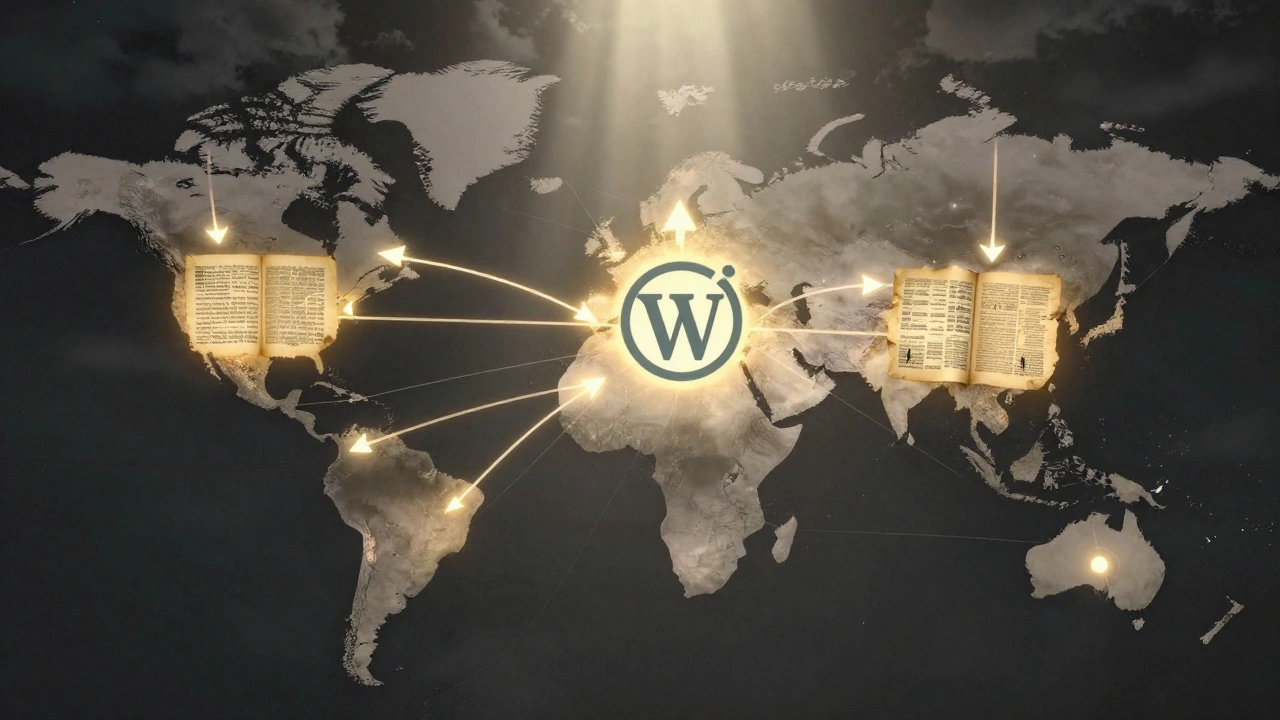
Wikipedia is the world’s most used reference site, but its content doesn’t always reflect the world. Millions of people rely on it to understand history, politics, culture, and science - yet many articles on global topics are built almost entirely from Western sources. This isn’t an accident. It’s a pattern. And it’s distorting how we see the world.
Why Western Sources Dominate
Wikipedia’s editorial culture favors sources that are easily accessible, widely cited, and written in English. That means academic journals from the U.S. and Europe, major newspapers like The New York Times and The Guardian, and English-language books get prioritized. Meanwhile, local newspapers from Nigeria, peer-reviewed journals from Indonesia, or oral histories from Indigenous communities in the Amazon rarely make the cut - not because they’re less valid, but because they’re harder to find, cite, or verify.
This creates a feedback loop. Editors who grew up in Western countries naturally look to sources they’re familiar with. New editors learn the norms by watching what gets accepted. Over time, the system reinforces itself. A 2023 study by researchers at the University of California found that articles on African history cited Western sources 78% of the time, even when high-quality local sources were available and accessible online.
What Gets Lost
When non-Western sources are excluded, entire ways of knowing disappear. Take the topic of traditional medicine. Articles on herbal remedies often cite only studies from Harvard or Oxford, ignoring centuries of documented use in Ayurveda, Traditional Chinese Medicine, or African phytotherapy. The result? Readers get a partial, sanitized version of reality - one that makes Western science the gold standard and everything else anecdotal.
Same goes for history. The 1994 Rwandan genocide is frequently framed through Western diplomatic reports and NGO accounts. But local testimonies from survivors, community archives, and radio transcripts from Rwandan media are rarely integrated. This doesn’t just leave gaps - it shifts blame, responsibility, and narrative control away from those who lived it.
How Wikipedia’s Policies Make It Worse
Wikipedia’s core policies - verifiability, no original research, and reliable sources - sound neutral. But they’re applied unevenly. A peer-reviewed article from a German university is automatically trusted. A report from a university in Ghana, even if published in a peer-reviewed journal, often gets flagged as "unreliable" because it’s not indexed in Western databases like JSTOR or Scopus.
There’s also the language barrier. Wikipedia’s English edition has over 6 million articles. The Swahili edition has about 14,000. That’s not because Swahili speakers care less - it’s because the tools, templates, and editorial communities are built for English speakers. Non-English sources often can’t be cited unless they’re translated - and translation isn’t part of the verification process.
Real Examples of Bias in Action
Look at the Wikipedia page for "Mali". The history section relies heavily on French colonial archives and academic books written in Paris. There’s almost no mention of the Timbuktu Manuscripts - over 700,000 historical texts written in Arabic and African languages, preserved for centuries by local scholars. These manuscripts are now digitized and publicly accessible, yet they’re rarely cited.
Or consider the article on "climate change in Southeast Asia." It cites NOAA, NASA, and IPCC reports - all valid. But it omits local data from the Philippines’ weather bureau, community-led monitoring projects in Indonesia, or traditional ecological knowledge from the Dayak people of Borneo. These aren’t "unscientific" - they’re just not in English.
Changing the System
Some editors are pushing back. Groups like WikiProject Global Sources and the African Wikimedians User Group have started training editors to find and cite non-Western sources. They’ve created curated lists of trusted journals from Latin America, Africa, and Asia. They’ve built templates to help editors tag sources by region and language.
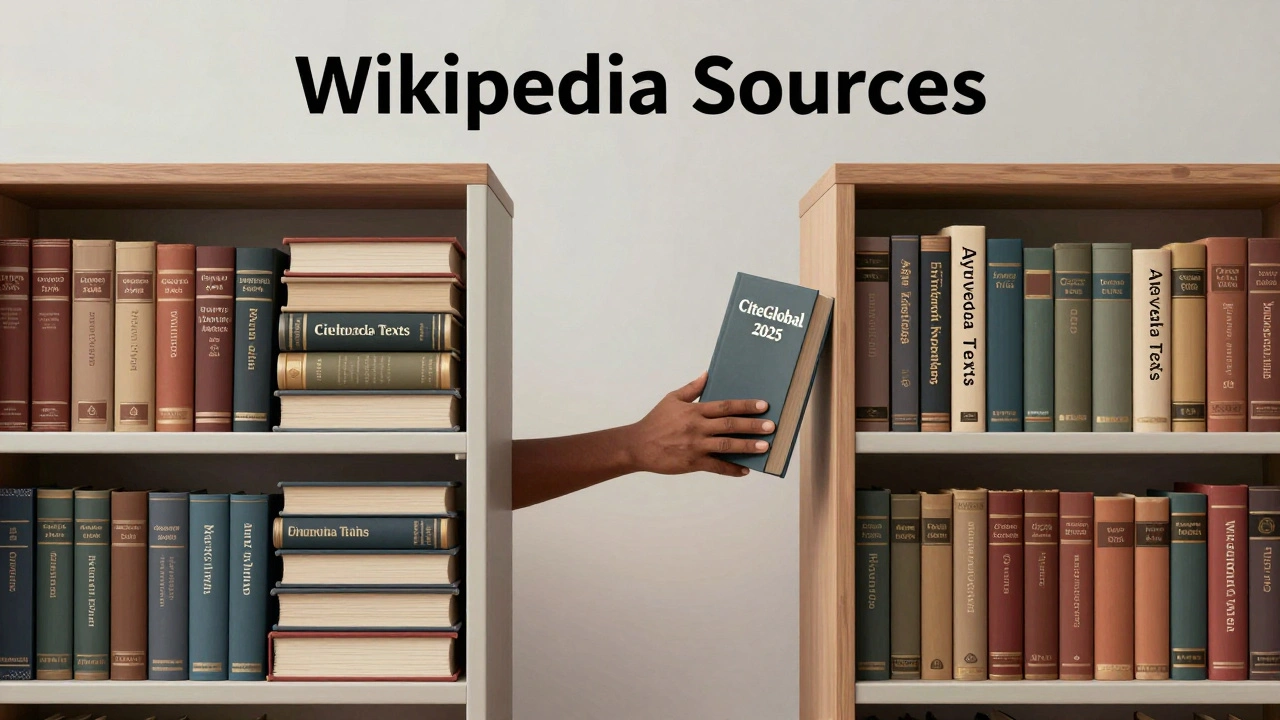
One project, called "CiteGlobal," now helps editors verify local publications by cross-checking them against national library databases. In 2025, over 12,000 new citations from non-Western sources were added to Wikipedia articles through this initiative. Many of these came from sources previously dismissed as "unreliable" - like the Nigerian Journal of History or the Bangladesh Journal of Environmental Studies.
Wikipedia’s own guidelines now say: "Reliability is not determined by geography." That’s a start. But it’s still not practiced consistently. Editors need better tools, not just better intentions.
What You Can Do
You don’t need to be an expert to help. If you’re reading a Wikipedia article on a global topic and notice it only cites Western sources, you can edit it. Here’s how:
- Find a credible source from the region. Look for university publications, national archives, or government reports.
- Check if it’s available online. Many are - even if they’re not in English.
- Use Google Translate or DeepL to read key sections. You don’t need to be fluent - just understand the main claim.
- Add the source with a note: "Cited in original language. Translated summary provided."
- Use the Verifiability policy as your shield. If the source is published and traceable, it’s valid.
There’s no need to wait for permission. Wikipedia is built by volunteers. Every citation you add shifts the balance.
Why This Matters Beyond Wikipedia
Wikipedia doesn’t just record knowledge - it shapes it. When students, journalists, and policymakers use it as a starting point, they absorb its biases. A 2024 survey by the Global Media Monitoring Project found that 63% of journalists used Wikipedia as their primary source for international stories. If Wikipedia only shows Western views, the world’s news will keep reflecting them.
Reducing Western-centric sources isn’t about replacing one bias with another. It’s about expanding the table. It’s about recognizing that knowledge isn’t owned by one region. It’s shared, layered, and lived - from the streets of Lagos to the mountains of Nepal.
Wikipedia can be a mirror of the world - not just the Western half. But it won’t happen unless more people start looking beyond the usual sources.
Why aren’t non-Western sources considered reliable on Wikipedia?
They often are - if they’re published, traceable, and meet Wikipedia’s criteria for reliability. But many non-Western sources aren’t indexed in Western databases like JSTOR or Google Scholar, so editors assume they’re not credible. This isn’t about quality - it’s about access. A peer-reviewed article from a university in Kenya is just as valid as one from Oxford, but it’s harder to find and verify. Wikipedia’s tools and community norms still favor sources that are easy for English-speaking editors to access.
Can I cite a source in a non-English language?
Yes. Wikipedia allows citations in any language, as long as the source is verifiable. You can add a non-English source and include a translated summary in parentheses. For example: "According to the Ministry of Health of Senegal (2023), vaccination rates rose by 32% (translated from French)." The key is that the source must be publicly available and identifiable. Translation doesn’t need to be perfect - just accurate enough to support the claim.
Are there databases of non-Western sources for Wikipedia editors?
Yes. Several initiatives now compile trusted sources from underrepresented regions. The African Journals Online (AJOL) database includes over 1,000 peer-reviewed journals from 30 African countries. The Latin American Network of Scientific Journals (Redalyc) has more than 1,500 journals. The Indian Citation Index and the Southeast Asian Regional Journal of Science are also widely used. These are now linked in Wikipedia’s official citation guides and can be used just like JSTOR or PubMed.
Does Wikipedia have a policy against Western bias?
Wikipedia doesn’t have a formal policy named "anti-bias," but its core principles require neutrality and global representation. The Neutral Point of View policy states that articles must fairly represent all significant viewpoints. The Verifiability policy requires sources to be reliable - not Western. Editors are encouraged to seek out diverse sources. In 2025, the Wikimedia Foundation updated its guidelines to explicitly recommend seeking sources from non-Western academic institutions and local media.
How can I find credible non-Western sources?
Start with national libraries, university websites, and government portals. Many countries have open-access digital archives - like the National Library of Indonesia’s repository or the Nigerian National Archives. Use Google Scholar and filter by country. Search for "[topic] site:.edu.[country-code]" - for example, "traditional medicine site:.edu.ng" for Nigerian academic sources. Join WikiProjects focused on global content. They share curated lists of trusted sources and often host training sessions.