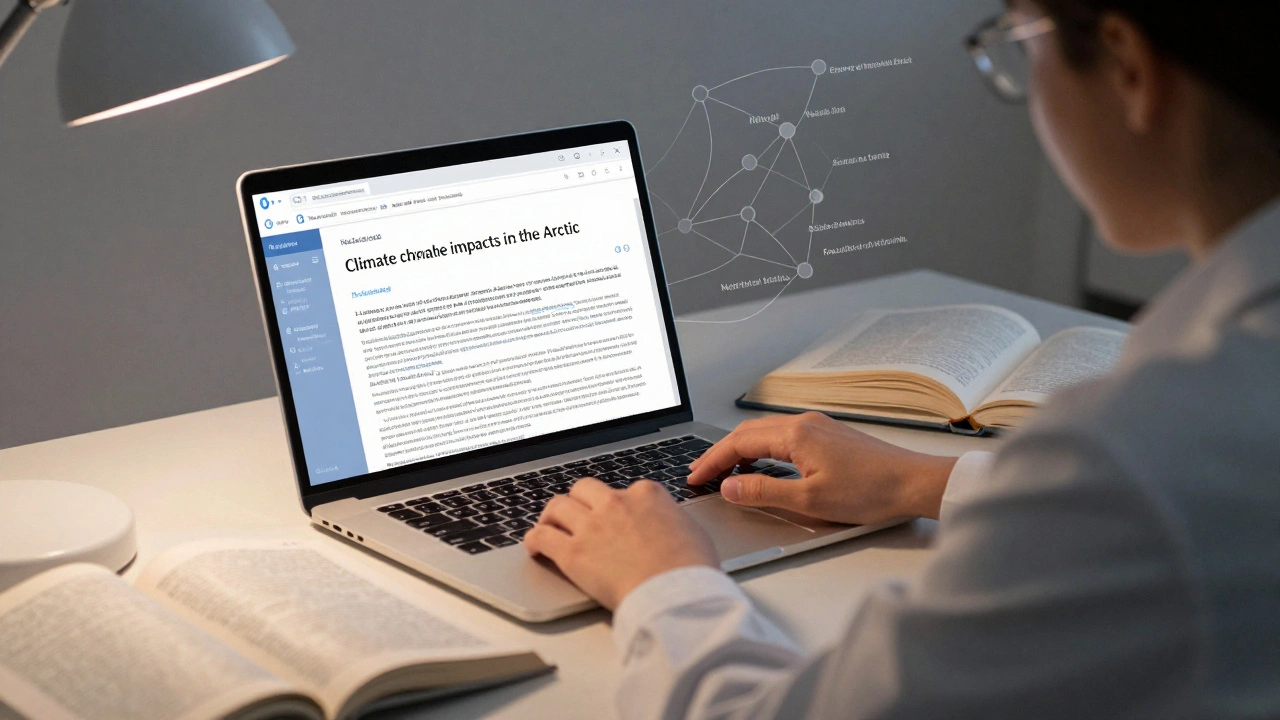
Many professors still tell students not to use Wikipedia. But if you look at how scholars actually work today, that advice doesn’t match reality. A 2021 study from the University of Oxford found that over 60% of humanities and social science researchers checked Wikipedia at least once during their research process. Not to cite it - but to get oriented. The problem isn’t Wikipedia itself. It’s the myths we’ve been taught about it.
Myth: Wikipedia is written by amateurs
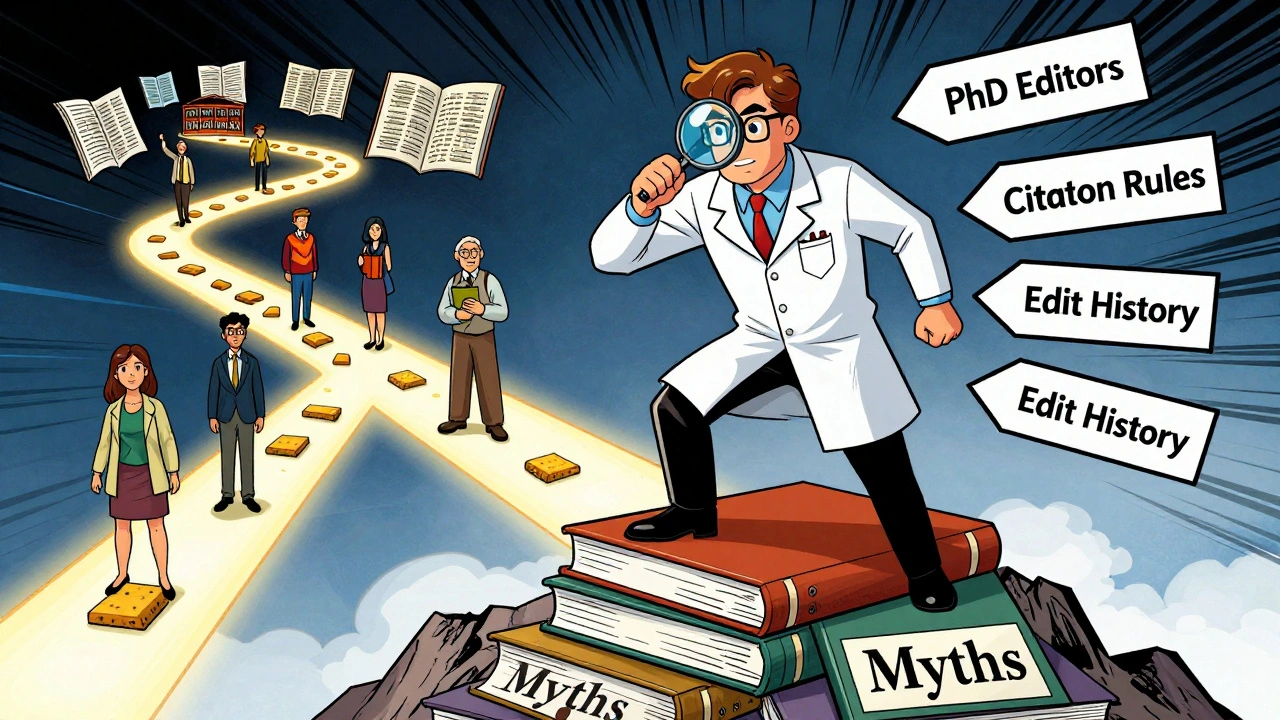
This one sticks around because it sounds plausible. But look closer. Wikipedia’s top 1% of editors - the ones who write and edit the most detailed articles - are often PhD candidates, retired professors, or professionals with decades of experience in their field. A 2020 analysis of Wikipedia’s science articles by researchers at the University of Michigan showed that 42% of the most active contributors to biology, physics, and chemistry entries held advanced degrees. That’s not amateurs. That’s experts who volunteer their time because they care about accurate public knowledge.
And it’s not random. Wikipedia has strict sourcing rules. Every claim in a well-written article must be backed by a published, peer-reviewed source. No personal opinions. No unpublished data. No blogs. If you edit an article and add something without a citation, it gets deleted - often within hours. The system is designed to filter out noise.
Myth: Wikipedia is too shallow for serious research
It’s true that Wikipedia won’t replace a journal article. But it’s also true that most scholars don’t start with journal articles. They start with context. A 2023 survey of 1,200 university researchers across North America found that 78% used Wikipedia as a starting point to understand unfamiliar topics before diving into academic databases. Why? Because it’s fast. Because it links directly to the original sources. Because it summarizes decades of research into one clear overview.
Take the article on climate change impacts on Arctic ecosystems. It doesn’t just say “it’s warming.” It breaks down permafrost thaw rates, species migration patterns, and ice-albedo feedback loops - each section tied to peer-reviewed papers from Nature, Science, and PNAS. You can follow those citations like breadcrumbs to the real scholarship. That’s not shallow. That’s a gateway.
Myth: Wikipedia is biased and unreliable
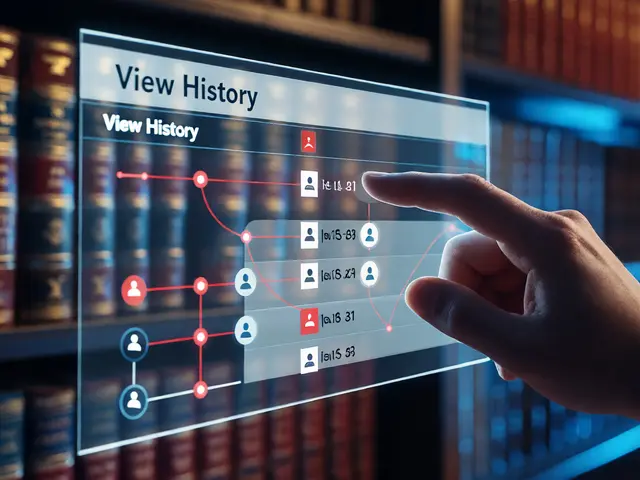
Yes, some articles have bias. But so do textbooks. So do peer-reviewed journals. The difference? Wikipedia is transparent. You can see every edit. You can read the talk page where editors debate whether a source is credible. You can check the edit history and see who made what change - and why.
For example, the Wikipedia article on gender and wage gaps has been edited over 15,000 times since 2007. Each edit is logged. If someone tries to insert a misleading statistic, other editors flag it. The article now includes data from the U.S. Bureau of Labor Statistics, the OECD, and the World Economic Forum - all cited. If you’re skeptical, you can trace every number back to its original source. That’s more transparency than most academic publishers offer.
Studies from Stanford and MIT have shown that Wikipedia’s accuracy on factual topics - like historical dates, scientific facts, and medical conditions - is comparable to Britannica. In a 2022 blind review, experts couldn’t consistently tell the difference between Wikipedia and Britannica entries on 100 randomly selected scientific topics.
Myth: Scholars don’t use Wikipedia
That’s simply false. A 2024 report from the American Historical Association found that 67% of history professors who teach undergraduates now assign Wikipedia-editing projects. Why? Because teaching students how to improve Wikipedia teaches them how to evaluate sources, write clearly, and engage with public knowledge. At MIT, students in the course “Writing the History of Science” spend half the semester editing Wikipedia articles - and their edits are still live today, cited by other researchers.
Even journals are starting to reference Wikipedia. In 2023, the journal Science published a paper that cited a Wikipedia article on “CRISPR-Cas9 delivery methods” as a background source. The citation wasn’t for the claim itself - it was to point readers to a well-sourced, comprehensive overview of the topic. That’s not a sign of weakness. It’s a sign of practicality.
How scholars really use Wikipedia
If you’re a student or researcher, here’s how to use Wikipedia the right way:
- Use it to find context - If you’re new to a topic, start here. You’ll get a clear summary and key terms.
- Follow the citations - Every good article has references at the bottom. Click them. That’s where the real scholarship lives.
- Check the edit history - Click “View history.” If the article has been stable for months, it’s likely well-vetted. If it’s being edited daily by anonymous users, be cautious.
- Don’t cite it - Unless your professor allows it (some do for background), use Wikipedia to find sources, not as a source.
- Improve it - If you spot a gap, error, or outdated reference, fix it. You’re not just a reader. You’re part of the knowledge ecosystem.
The real danger: ignoring Wikipedia
The biggest risk isn’t using Wikipedia. It’s dismissing it entirely. When scholars ignore it, they miss out on a dynamic, evolving tool that aggregates decades of research in plain language. They also miss the chance to shape it. Wikipedia isn’t perfect. But it’s the closest thing we have to a global, open-access encyclopedia - and it’s built by people who care about accuracy.
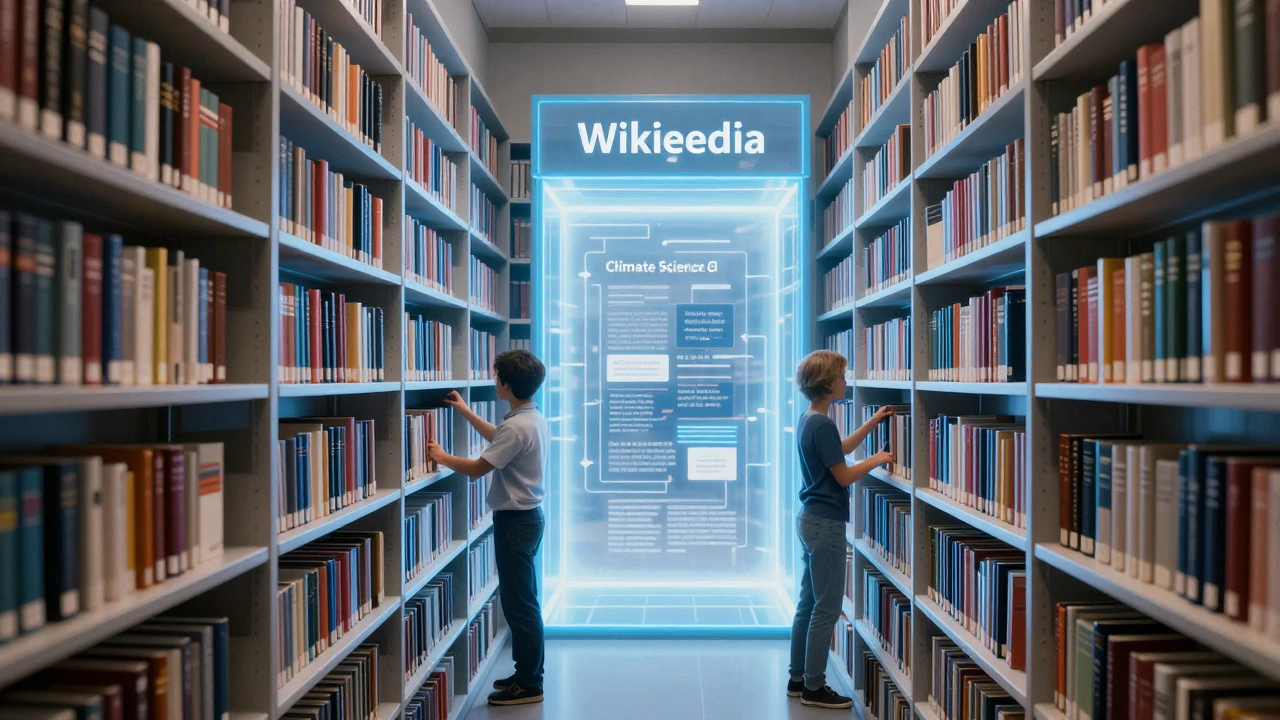
Think of it like a library catalog. You don’t cite the catalog. But you use it to find the books. Wikipedia does the same for academic knowledge. It doesn’t replace scholarship. It points you toward it.
Can I cite Wikipedia in my academic paper?
Most academic institutions and journals do not accept Wikipedia as a formal citation because it’s a secondary source that can change at any time. Instead, use Wikipedia to find the original peer-reviewed sources listed in its references. Cite those instead. Some professors allow Wikipedia for background context in early drafts, but always check your guidelines.
Is Wikipedia more accurate than Google Scholar?
They serve different purposes. Google Scholar finds academic papers - often behind paywalls - and shows you who cited them. Wikipedia summarizes those papers into clear, accessible overviews. Neither is “more accurate.” Wikipedia is better for understanding a topic quickly. Google Scholar is better for finding original research. Use them together.
Why do some professors hate Wikipedia?
Many professors learned research in an era when Wikipedia didn’t exist. They were taught to avoid encyclopedias because they were seen as superficial. That advice made sense in 1995. Today, Wikipedia is far more rigorous than the encyclopedias of that time. Some professors resist change. Others have seen students misuse it as a primary source. But the growing number of academics who assign Wikipedia-editing projects shows the tide is turning.
Are Wikipedia articles peer-reviewed?
Not in the traditional sense. But they’re reviewed - constantly. Every edit is visible. Every claim must be cited to a reliable source. Experienced editors patrol high-traffic articles, and disputes are settled publicly on talk pages. In practice, top-tier Wikipedia articles undergo more scrutiny than many journal articles, which often go uncorrected for years after publication.
Can I trust Wikipedia for medical information?
Yes - but with caution. Medical articles on Wikipedia are among the most rigorously maintained. They follow strict guidelines requiring citations from authoritative sources like the CDC, WHO, and peer-reviewed journals. A 2023 study in the British Medical Journal found that Wikipedia’s medical content was as accurate as UpToDate, a commercial clinical reference tool. Still, never use it to make health decisions. Always consult a medical professional and verify with primary sources.
Wikipedia isn’t a replacement for academic databases. But it’s not the enemy either. It’s a tool - and like any tool, its value depends on how you use it. For scholars, it’s a starting point, a cross-reference, and sometimes, a mirror of what the public needs to know. The real question isn’t whether Wikipedia is reliable. It’s whether you’re willing to engage with it wisely.