Wikipedia isn’t run by paid staff. It’s built by people like you-volunteers who spend nights fact-checking, rewriting outdated entries, and fighting misinformation. Yet most of these contributors do it without pay, often juggling full-time jobs, school, or family. That’s where scholarships and fellowships come in. They don’t just give money. They give time, resources, and recognition to the people keeping the world’s largest free encyclopedia alive.
What These Programs Actually Do
Wikipedia scholarships and fellowships aren’t like college grants. You won’t get a check for tuition. Instead, you get support to do the work you’re already doing-better. The Wikimedia Foundation offers several programs, including the Wikipedia Fellowship and WikiConference North America Scholarships. These let contributors take time off work or school to focus on editing, organizing events, or building tools that help others edit more effectively.
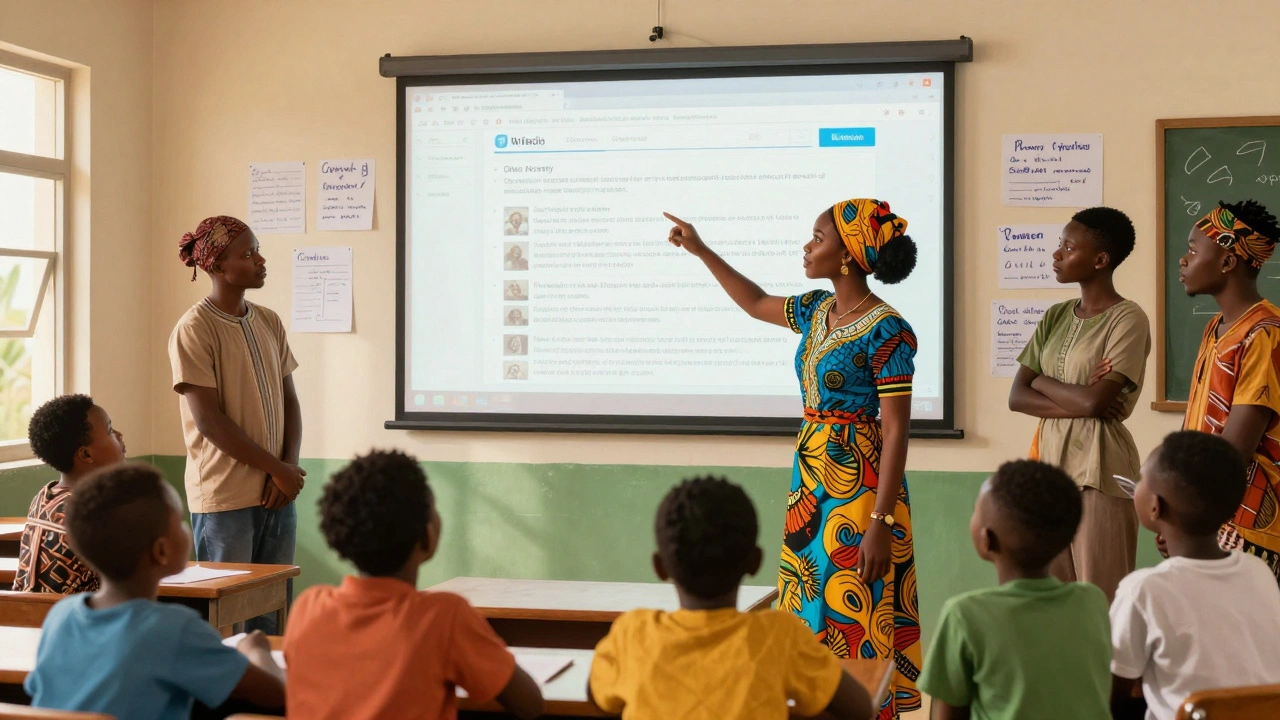
One fellow in 2024 spent three months training rural educators in Nigeria to add local history to Wikipedia. Another used their fellowship to build a bot that automatically flagged broken citations in medical articles. These aren’t theoretical projects. They directly improve the quality of information millions use every day.
Who Gets Selected
You don’t need a PhD or a fancy degree. What matters is impact. The selection committees look for people who’ve already contributed meaningfully-editing consistently for at least six months, organizing edit-a-thons, or creating templates that help other editors. A student in India who started translating Wikipedia articles into Hindi for her village library got funded. A retiree in Canada who spent two years fixing biographies of women scientists won a fellowship. It’s not about how many edits you’ve made. It’s about how those edits changed something.
There’s also a strong focus on diversity. Programs actively encourage applicants from underrepresented regions, languages, and communities. If you edit in Swahili, Quechua, or Bengali, your chances aren’t lower-they’re higher. The goal isn’t to make Wikipedia more English. It’s to make it truly global.
What You Get Beyond Money
Money is part of it. Fellowships typically offer $3,000 to $10,000, depending on the scope and duration. But the real value is in access. Fellows get direct mentorship from senior Wikimedia staff. They’re invited to private workshops on data ethics, citation tools, and conflict resolution in editing. Some get access to academic databases like JSTOR or ProQuest-resources most volunteers can’t afford.
One recipient in Brazil used her fellowship to connect with local universities. She trained 12 professors to use Wikipedia in their courses. Now, their students are required to edit articles as part of their assignments. That’s not just editing. That’s systemic change.
How to Apply
Applications open twice a year-usually in March and September. You’ll need to submit a project plan. Not a vague idea. Something specific: “I will edit 50 articles about Indigenous languages in Peru, and host two virtual workshops for Quechua speakers to learn how to edit.” Include timelines, measurable goals, and how you’ll track success.
You also need letters of support. Not from professors. From people who’ve seen your work. A fellow editor who noticed your cleanup of a high-traffic page. A community organizer who saw your edit-a-thon draw 80 participants. Real examples. Concrete impact.
The process isn’t easy. In 2024, over 1,200 people applied for 42 fellowship slots. But if you’ve been editing for a while, you already have the skills. You just need to frame your work as something worth investing in.
What Happens After You’re Selected
Once you’re in, you’re not left alone. You’re assigned a mentor who checks in weekly. You join a cohort of other fellows-people from Brazil, Indonesia, Kenya, Ukraine-who share your passion. You get to present your progress at a virtual summit. Some fellows turn their projects into full-time roles with Wikimedia chapters. Others start nonprofits. One former fellow now runs a nonprofit that trains refugees to document their stories on Wikipedia.
There’s no obligation to keep editing after the fellowship ends. But most do. Because once you see what’s possible-once you realize your edits can change how a whole community understands its own history-you can’t walk away.
Alternatives If You Don’t Get Selected
Not everyone gets a fellowship. That doesn’t mean you’re out of options. Wikimedia chapters in over 40 countries offer smaller grants-$500 to $2,000-for local projects. You can apply for a grant to buy books for research, pay for internet access, or print flyers for an edit-a-thon. The WikiProject Grants program is open year-round and has a 60% approval rate for well-written proposals.
There are also university partnerships. The University of Edinburgh, for example, gives credit to students who edit Wikipedia as part of their coursework. In the U.S., the University of Michigan and Stanford have similar programs. Even if your school doesn’t, you can propose one. All it takes is one professor willing to try it.
Why This Matters More Than Ever
In 2025, Wikipedia has over 66 million articles in 300 languages. But the number of active editors has dropped 20% since 2017. The people who still show up are aging. New contributors aren’t replacing them fast enough. The platform is at risk of becoming a static archive instead of a living resource.
These scholarships and fellowships are the best tool we have to reverse that. They’re not charity. They’re investment. Every dollar spent on a fellow returns hundreds in improved content, better citations, and new editors trained by those who came before.
If you’ve ever fixed a typo, added a source, or translated a paragraph-you’ve already done the hard part. Now it’s time to ask for support. Not because you need it. But because Wikipedia needs you to keep going.
Can I apply for a Wikipedia fellowship if I’m not a student?
Yes. Wikipedia fellowships are open to anyone who has made meaningful contributions to Wikipedia or its sister projects. Most recipients are not students-they’re librarians, teachers, researchers, retirees, and volunteers. What matters is your track record of editing, not your enrollment status.
Do I need to speak English to apply?
No. Applications can be submitted in any language supported by Wikipedia. The selection committees include reviewers who speak over 50 languages. Projects focused on non-English editions are not only accepted-they’re prioritized. If you edit in Arabic, Tagalog, or Zulu, your application is just as valid as one in English.
How long do fellowships last?
Most fellowships last between three and six months, though some extend to a year for larger projects. The duration depends on your proposed goals. A short-term project like organizing a local edit-a-thon might be funded for three months. A project building a new tool or training program could be approved for up to 12 months.
Are these scholarships only for individuals?
No. While most fellowships are awarded to individuals, group applications are accepted. Teams of editors applying together-for example, a group of university students launching a campus Wikipedia club-can apply for a joint fellowship. The key is showing how the group’s work will have a measurable impact on Wikipedia’s content or community.
What if my project fails?
Failure is part of the process. The Wikimedia Foundation expects that not every project will go exactly as planned. What matters is transparency. If your project hits a roadblock, you’re expected to report it honestly and adjust your plan. Many successful fellows had projects that changed direction mid-way. What gets funded isn’t perfection-it’s persistence and learning.
Next Steps If You Want to Apply
Start by reviewing your own editing history. Look at your top 10 contributions. What did you fix? Who did it help? Did you create a new template? Train someone? Translate a page? Write that down. Then, think of one small project you could do in the next six months that builds on that.
Don’t wait for permission. Reach out to a fellow editor you respect and ask for feedback. Join the Wikimedia mailing list for your language. Attend a virtual meeting. You don’t need to be an expert to apply-you just need to be committed. And if you are? Wikipedia will find a way to support you.