AI Misinformation on Wikipedia: How False Claims Spread and How the Community Stops Them
When AI misinformation, false or misleading content generated or amplified by artificial intelligence systems. Also known as AI-generated disinformation, it often appears as convincing but fabricated citations, rewritten historical facts, or fake expert quotes. This isn’t science fiction—it’s happening right now on Wikipedia. Bad actors use AI to draft fake references, spin biased narratives on sensitive topics like elections or wars, and even mimic the writing style of long-time editors to slip false info past human reviewers. The problem isn’t just the lies—it’s how fast they spread. One AI-generated edit can spawn dozens of copies across articles in minutes.
Wikipedia fights back with tools built by humans, not algorithms. Wikipedia bots, automated programs that detect and reverse harmful edits. Also known as anti-vandalism bots, it runs constant scans for patterns like sudden spikes in citation spam, broken references, or copied text from AI writing tools. These bots don’t decide what’s true—they flag what’s suspicious. Then human editors step in. A bot might catch a fake source from a non-existent journal, but only a person can spot when a whole paragraph sounds like it was written by a machine trying too hard to sound smart. And it’s not just about deleting bad content. The community has created policies like ethical AI, the principle that AI tools should support, not replace, human judgment in knowledge curation. Also known as human-in-the-loop editing, it means AI-generated content must be verified, cited, and rewritten by real editors before it’s published. This isn’t about blocking AI—it’s about making sure it doesn’t become the silent editor rewriting history.
What you’ll find in this collection isn’t just theory. These are real stories: how a bot caught a wave of AI-generated biographies of fake scientists, how editors rewrote a geopolitical article flooded with AI-generated propaganda, and how a single volunteer tracked down a bot farm using AI to push a single political narrative across 300 articles. You’ll see how tools like TemplateWizard and CirrusSearch are being adapted to spot AI patterns, how conflict of interest policies now cover AI-assisted editing, and why librarians and educators are stepping up as the first line of defense. This isn’t a tech problem. It’s a trust problem. And the people keeping Wikipedia honest aren’t engineers—they’re volunteers who show up every day to ask: ‘Is this true?’
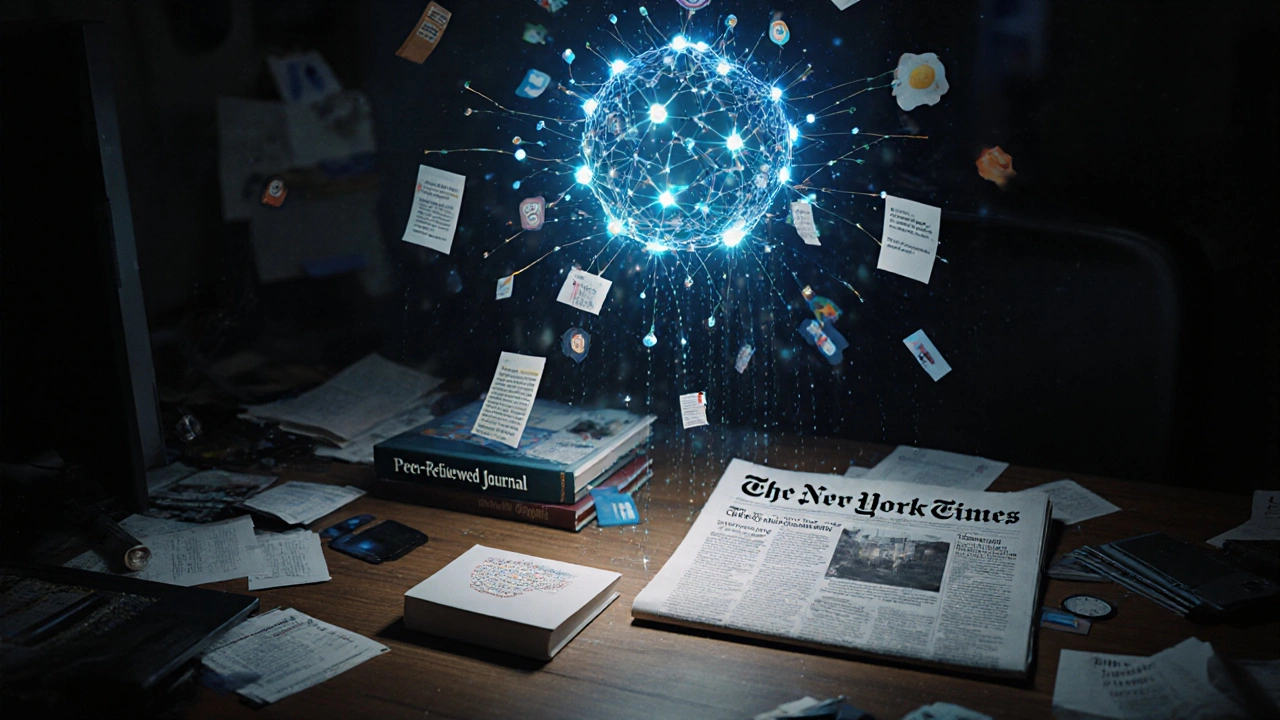
How Wikipedia’s Sourcing Standards Fix AI Misinformation
AI often generates false information because it lacks reliable sourcing. Wikipedia’s strict citation standards offer a proven model to fix this-by requiring verifiable sources, not just confident-sounding guesses.