Decentralized Editing on Wikipedia: How Volunteers Shape Knowledge Without Central Control
When you edit a Wikipedia article, you’re taking part in decentralized editing, a system where knowledge is built and maintained by distributed volunteers, not a central authority. Also known as crowdsourced editing, it’s the engine behind the world’s largest encyclopedia—no CEO, no editorial board, just people from every corner of the globe making small changes that add up to something huge. This isn’t chaos. It’s a carefully designed structure where anyone can contribute, but no one owns the outcome. The rules aren’t enforced by a single team—they’re upheld by thousands of volunteers who watch, revert, discuss, and improve every edit.
This system relies on three key tools: edit histories, the public record of every change made to every article, visible to anyone, talk pages, where editors debate content before it goes live, and edit filters, automated systems that catch spam, vandalism, and policy violations in real time. These aren’t just features—they’re the bones of decentralized editing. Without them, the system would collapse under its own scale. But with them, even a single edit from a high school student in Nairobi or a retired professor in Tokyo can improve the accuracy of a global reference tool.
Decentralized editing doesn’t mean no rules. It means the rules are written, debated, and refined by the community itself. Policies like verifiability and neutral point of view aren’t handed down from headquarters—they’re shaped in thousands of talk page arguments, edited over years, and enforced by volunteers who care enough to show up every day. That’s why Wikipedia survives attacks, misinformation, and media skepticism: because its strength isn’t in its servers or its funding, but in its distributed network of people who believe knowledge should be open, editable, and accountable to everyone.
What you’ll find in this collection are real stories of how this system works—sometimes messily, often brilliantly. From how edit conflicts are resolved manually to how new editors get mentored, from how vandalism is caught in seconds using tools like Huggle to how cultural bias gets challenged by volunteers pushing for local knowledge to be included. You’ll see how decentralized editing isn’t just a technical process—it’s a social contract. And it’s the only reason Wikipedia still works after two decades.
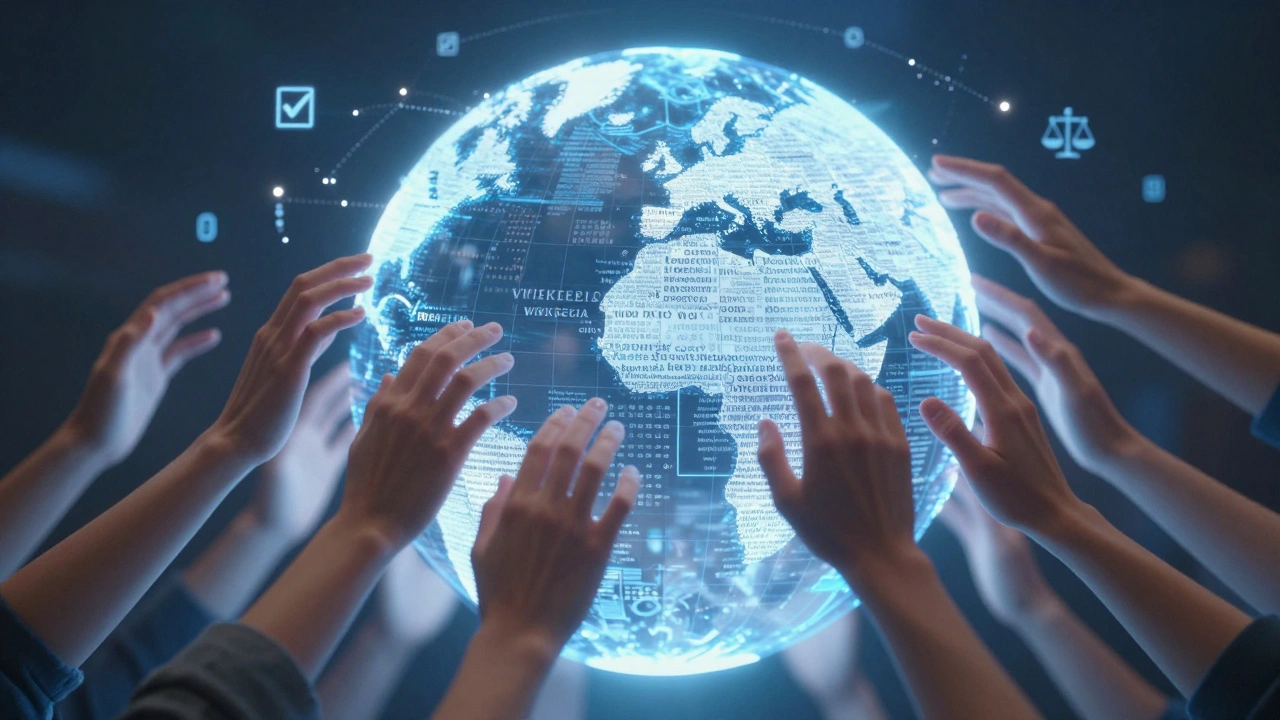
Why Wikipedia Avoids Top-Down Editorial Control Despite Global Scale
Wikipedia thrives without top-down control by relying on community norms, transparent processes, and open collaboration. Millions of edits daily are guided by policy, not authority - making it one of the most resilient knowledge systems ever built.