Editorial Changes on Wikipedia: How the Community Shapes the Encyclopedia
When you see an article on Wikipedia updated, corrected, or cleaned up, that’s an editorial change, a modification made by a volunteer to improve or fix content on Wikipedia. Also known as wiki edits, these changes are the heartbeat of the site — not done by algorithms alone, but by real people who care about getting facts right. Every edit, big or small, is part of a larger system designed to balance openness with accuracy.
These editorial changes don’t happen in a vacuum. They’re shaped by tools like edit filters, automated systems that flag suspicious edits before they go live, and processes like pending changes, a review system that holds edits from new or untrusted users until approved. They’re also guided by community norms — like citing reliable sources, avoiding original research, and keeping tone neutral. When a journalist writes about a breaking event, or a student adds a citation from a textbook, or a veteran editor reverts vandalism on a high-profile page, they’re all making editorial changes. And the system is built to handle all of it: from tiny spelling fixes to major policy debates over what counts as credible information.
Behind every change is a reason. Sometimes it’s a bot undoing spam. Other times, it’s a group of editors arguing for days over how to frame a controversial topic. The Wikipedia community, the network of volunteers who write, review, and govern content on Wikipedia doesn’t always agree — but it has rules. These rules are updated through discussion, not top-down orders. That’s why editorial changes aren’t just about fixing errors — they’re about shaping collective understanding. When a news article gets updated after a major event, or a historical figure’s page gets rewritten to reflect new scholarship, it’s the community deciding what the world should know.
Some changes are quiet. Others spark debates that echo across forums and even make headlines. The same system that lets anyone edit also protects against abuse — through tools like Huggle for rapid vandalism reversal, WikiProject worklists to track article quality, and administrator elections that now favor experience over popularity. You won’t find a corporate team deciding what stays or goes. It’s all people. And that’s what makes editorial changes on Wikipedia more than just updates — they’re a living record of how society learns, debates, and agrees on truth.
Below, you’ll find real stories of how these changes happen: how mentors help new editors stick around, how news articles get locked down during crises, how tools help volunteers spot bad edits before they spread, and how policies evolve to keep up with AI, copyright, and misinformation. This isn’t theory. It’s what’s actually happening on Wikipedia right now — one edit at a time.
How Editorial Corrections in News Affect Wikipedia Content
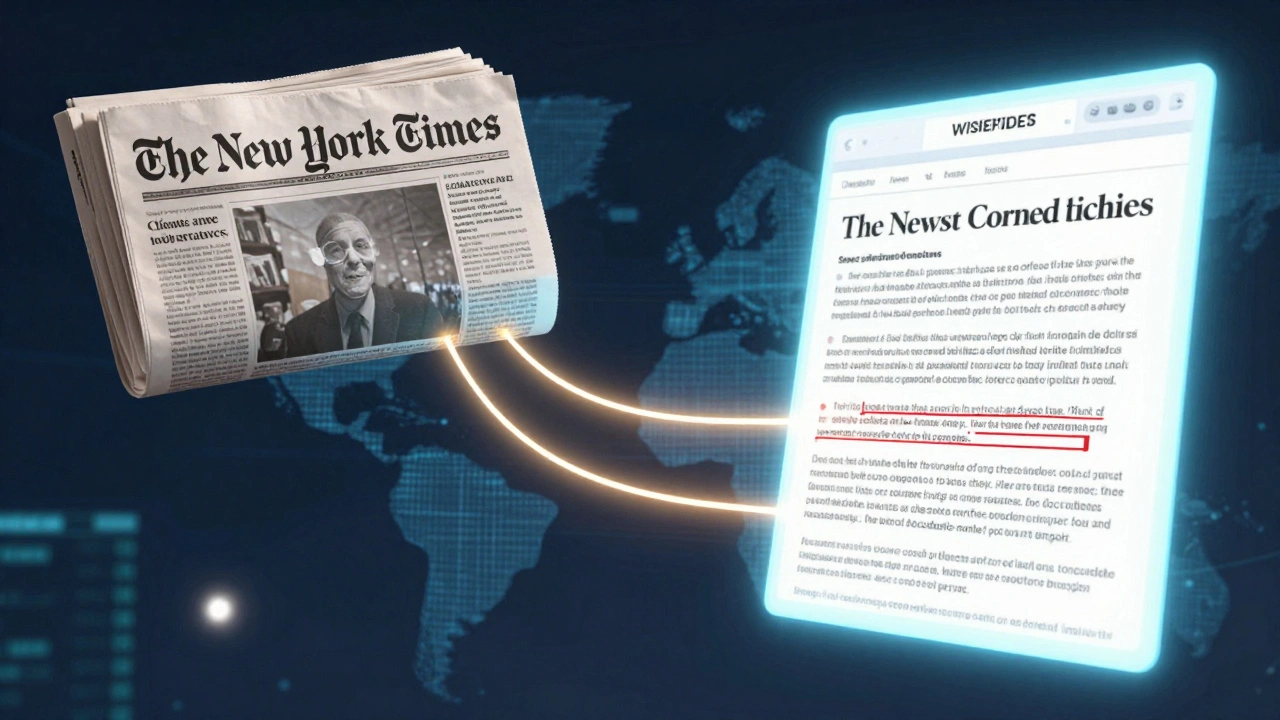
News corrections don't just fix mistakes-they reshape Wikipedia. Learn how editorial changes in major outlets trigger updates across thousands of Wikipedia entries, and why this matters for accuracy online.