Educational Accessibility on Wikipedia: How Free Knowledge Reaches Everyone
When you think of educational accessibility, the ability of anyone, anywhere, to learn without financial, technical, or geographic barriers. Also known as open learning, it’s what keeps Wikipedia alive—not because it’s perfect, but because it’s free and open to all. Unlike paid platforms that lock content behind subscriptions, Wikipedia lets a student in rural Kenya, a retiree in Ohio, or a teacher in Bangladesh access the same information with just a phone and an internet connection. That’s not just convenient—it’s revolutionary.
But educational accessibility, the ability of anyone, anywhere, to learn without financial, technical, or geographic barriers. Also known as open learning, it’s what keeps Wikipedia alive—not because it’s perfect, but because it’s free and open to all. isn’t automatic. It’s built by people. Librarians, educators, and volunteers in underrepresented regions run edit-a-thons to fill gaps in local history. They translate articles using Wikipedia’s built-in tools so content isn’t just in English, but in Swahili, Hindi, and Quechua too. And when someone in a country with slow internet tries to load a page, Wikipedia’s mobile editing tools and low-bandwidth design make sure they still get the info they need. This is where Wikipedia education, the use of Wikipedia as a teaching and learning resource in schools, universities, and informal settings. Also known as open educational resources, it’s a key driver of equity in learning. meets real-world need.
Still, the system has blind spots. Most editors live in North America and Europe, so topics from the Global South often lack depth. A student in Nigeria might find more articles about American presidents than about their own country’s independence movement. That’s why Wikipedia equity, fair representation of knowledge across cultures, languages, and communities. Also known as content parity, it’s a growing focus in the Wikimedia movement. matters. It’s not just about having more articles—it’s about having the right ones, written by the right people, in the right languages. Tools like content translation and TemplateWizard help, but they’re only as good as the people using them. And that’s where you come in.
What you’ll find in this collection isn’t theory—it’s action. Guides on how to turn stubs into B-Class articles, how edit-a-thons bring new editors into the fold, how librarians train students to cite properly, and how mobile editing lets anyone contribute from anywhere. You’ll see how Wikipedia’s search, its policies, and even its spam filters all serve one goal: making sure knowledge doesn’t just exist, but is reachable, usable, and trustworthy for everyone. No paywall. No ads. Just facts, built by people who believe learning should be a right, not a privilege.
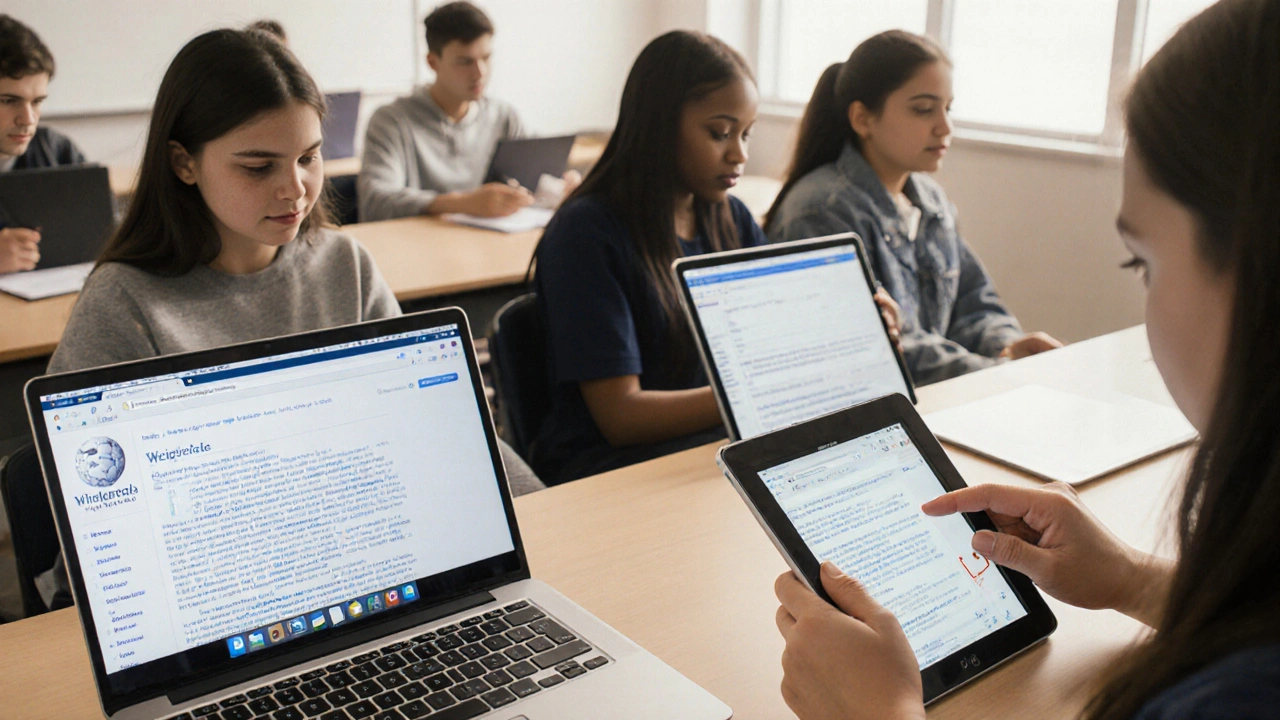
Accessibility Considerations for Educational Use of Wikipedia
Wikipedia is widely used in education, but its accessibility issues can exclude students with disabilities. Learn how teachers and students can make Wikipedia work for everyone through simple fixes, tools, and teaching strategies.