Global Knowledge Imbalance: Why Some Voices Dominate Wikipedia and Others Don't
When you think of Wikipedia, you might picture a universal library open to everyone. But global knowledge imbalance, the uneven distribution of content across languages and regions on Wikipedia. Also known as content disparity, it means that while English has over 6 million articles, many languages with hundreds of millions of speakers have fewer than 10,000. This isn’t an accident. It’s the result of who has access to technology, time, and training—and who doesn’t.
The editor demographics, the characteristics of people who create and maintain Wikipedia content. Also known as Wikipedia contributor base, it’s heavily skewed toward men in North America and Europe. Meanwhile, regions like Sub-Saharan Africa, South Asia, and Latin America have far fewer active editors, even though their populations are larger and their cultural knowledge just as rich. This gap shows up in what gets covered. You’ll find detailed articles on European history, but sparse or missing entries on Indigenous traditions, local politics, or regional science in many languages. The multilingual Wikipedia, the network of Wikipedia editions in different languages, each with its own community and standards. Also known as language editions, it’s not just about translation—it’s about whether a culture’s knowledge is seen as worthy of being documented in the first place. Without local editors, even accurate translations can’t replace original, culturally grounded content.
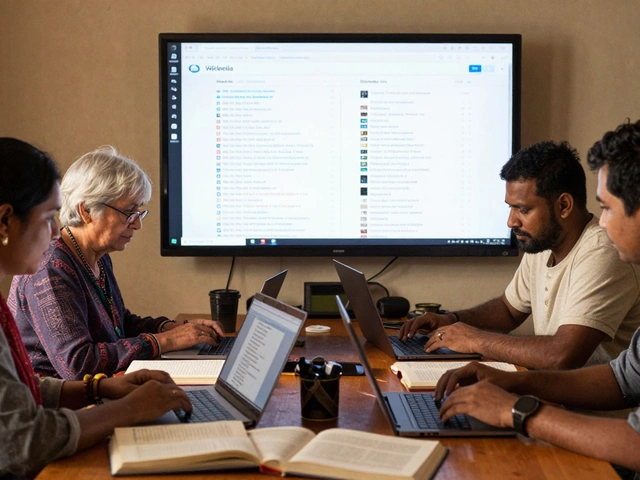
The content coverage, the depth and breadth of information available on a topic across Wikipedia’s language editions. Also known as knowledge parity, it’s not measured by article count alone. A language edition might have many articles, but if they’re all about foreign celebrities and lack local history, the coverage is still shallow. This is why tools like Edit-A-Thons and targeted training matter—they don’t just add articles, they build communities of editors who know what’s missing. The fix isn’t just more volunteers. It’s about changing who gets to decide what counts as knowledge.
What you’ll find below are real stories from the front lines: how local groups are rewriting the rules, how technology is helping bridge gaps, and why fixing this imbalance isn’t just fair—it’s essential for Wikipedia to stay trustworthy. This isn’t a problem far away. It’s happening in every language you use—and there’s a role for everyone to help fix it.
Geographic Bias in Wikipedia: How Location Shapes What We Know
Wikipedia claims to be a global knowledge hub, but its content is heavily shaped by where editors live. This article explores how geographic bias affects what’s written, who gets heard, and why the world’s knowledge is skewed toward the Global North.