Online Encyclopedia Funding: How Wikipedia Stays Free and Independent
When you search for anything on Wikipedia, you get answers—fast, free, and without ads. But online encyclopedia funding, the system that keeps Wikipedia running without charging users or selling data. It’s not powered by ads, subscriptions, or corporate sponsors. Instead, it relies on donor support, small contributions from millions of people who believe knowledge should be free and the work of the Wikimedia Foundation, the nonprofit that handles finances, legal issues, and technology for Wikipedia and its sister projects.
Most people don’t realize Wikipedia’s servers cost millions a year. Bandwidth, data centers, security, and staff to fight vandalism and misinformation don’t come cheap. Yet the site doesn’t ask you for money every time you click. Instead, it runs quiet, neutral fundraising banners—approved by community rules—to remind people that if they value free knowledge, they can help. These aren’t flashy sales pitches. They’re simple, factual requests. In 2023, over 100 million people visited Wikipedia. About 1% of them gave $10 or less. That’s how it adds up. The Wikimedia Foundation, the nonprofit that handles finances, legal issues, and technology for Wikipedia and its sister projects publishes every dollar it receives and spends. No secrets. No hidden agendas. Just transparency. That’s why it’s trusted. And why people keep giving.
It’s not just about money. It’s about independence. If Wikipedia took funding from a tech giant, a government, or a media company, its neutrality would be questioned. That’s why the foundation avoids big donors and corporate sponsorships. It takes small gifts from individuals, foundations that support open knowledge, and occasional grants tied to specific projects—like helping libraries digitize old records or training editors in underrepresented languages. This model keeps Wikipedia free from pressure. It also means the site can’t afford flashy features or viral marketing. But it doesn’t need them. People come because the information works. And they stay because they believe in the mission.
Behind every edit, every article, every server update is this quiet engine of funding: real people, real money, real trust. You won’t find billionaire backers on Wikipedia’s homepage. But you will find a link that says, "Donate." And that’s enough. Below, you’ll find real stories about how this system keeps Wikipedia alive—from how fundraising banners are approved, to how tools for editors are paid for, to how the foundation fights to protect free knowledge from AI companies and copyright threats. These aren’t abstract policies. They’re daily decisions shaped by the people who fund and run the world’s largest encyclopedia.
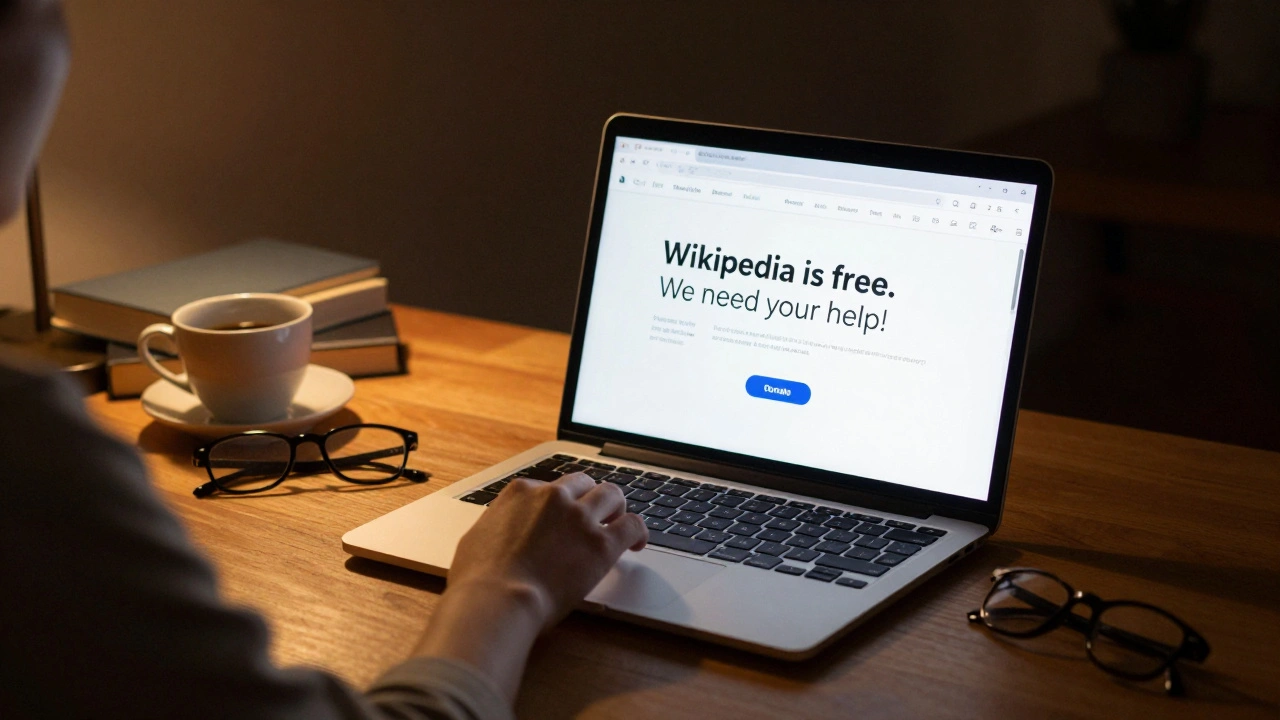
How Wikimedia Raises Money to Keep Wikipedia Free and Online
Wikipedia stays free thanks to millions of small donations. Learn how Wikimedia raises money, where it goes, and why this model works better than ads or subscriptions.