Translation Workflow on Wikipedia: How Multilingual Content Gets Made
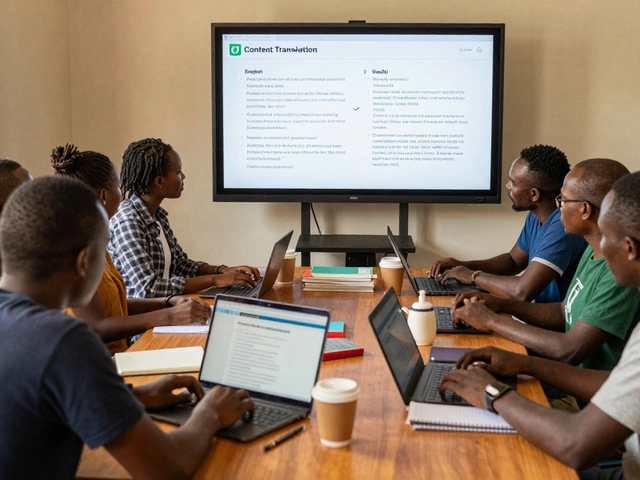
When you read a Wikipedia article in Spanish, Hindi, or Swahili, it didn’t just appear out of nowhere. It went through a translation workflow, a structured process where volunteers move content between language editions while preserving accuracy, context, and neutrality. Also known as cross-language editing, this workflow is what keeps Wikipedia truly global — not just in reach, but in depth. Unlike automated translators that spit out awkward phrasing, Wikipedia’s translation relies on real people who understand both the source language and the cultural nuances of the target. These editors don’t just copy-paste. They adapt, verify, cite, and sometimes rewrite entire sections to match local knowledge standards.
This process connects directly to other key parts of Wikipedia’s ecosystem. For example, Wikidata, a central repository of structured data used across all language editions. Also known as the knowledge graph behind Wikipedia, it helps translators pull consistent facts — like population numbers or dates — without having to hunt through dozens of articles. Then there’s content parity, the goal of making sure every language edition covers topics with equal depth and quality. Also known as coverage balance, it’s why some languages have detailed articles on local history while others only have stubs on major global events. Translation workflows are the engine behind this balance. Without them, Wikipedia would be a collection of isolated islands — English-heavy, culturally skewed, and missing half the world’s perspective.
It’s not just about moving text. It’s about fixing gaps. A translator might notice that a Wikipedia article in German has rich details about a historical figure, but the French version barely mentions them. They’ll bridge that gap — adding context, checking sources, and tagging the edit for review. This happens every day, quietly, by thousands of volunteers. And it’s not always easy. Some languages lack enough editors to keep up. Others face political pressure to censor or distort content. That’s why tools like translation workflow systems, community training programs, and outreach events like Edit-A-Thons are so vital. They’re not just about speed — they’re about fairness.
What you’ll find in the articles below are real stories from this invisible labor: how editors in Nigeria use mobile tools to translate medical info into local dialects, how bots help flag outdated translations, how the same article on climate change looks radically different across languages — and why that matters. You’ll see how this workflow ties into everything from accessibility to anti-vandalism efforts. No fluff. Just how knowledge moves — and who keeps it moving.
Content Translation Improvements on Wikipedia: What's New for Editors
Wikipedia’s updated translation tools help editors create accurate, high-quality multilingual articles faster. New features include AI suggestions, automatic citations, and image matching - making it easier than ever to share knowledge across languages.