Wikipedia history: How the world's largest encyclopedia evolved
When you think of Wikipedia history, the story of how a free, open-editing encyclopedia became the most visited reference site on Earth. Also known as the rise of collaborative knowledge, it’s not just about technology—it’s about people showing up, day after day, to fix typos, cite sources, and defend truth against misinformation. It started in 2001 as a side project to Nupedia, a slow-moving expert-written encyclopedia. But while Nupedia stalled, Wikipedia exploded because it let anyone edit. That simple idea changed everything.
What made Wikipedia different wasn’t just the open model—it was the rules. The Wikipedia community, a global network of volunteers who police quality, debate policy, and resolve conflicts without pay built systems to keep chaos in check. They created the neutral point of view policy, the conflict of interest guidelines, and the warning banners that flag biased or unverified content. These aren’t just rules—they’re the glue holding the whole thing together. And behind every article you trust, there’s a quiet editor checking citations, fighting spam bots, or rewriting a paragraph after a dispute on a talk page.
The Wikimedia movement, the nonprofit and volunteer ecosystem that supports Wikipedia and its sister projects didn’t build this alone. Librarians, students, journalists, and even retired engineers showed up because they believed knowledge should be free. They didn’t wait for permission. They just started editing. Over time, tools like TemplateWizard, CirrusSearch, and anti-spam bots emerged—not from corporate labs, but from editors who noticed a problem and coded a fix. Even now, as AI tries to mimic Wikipedia’s output, the real advantage isn’t speed—it’s sourcing. Every claim on Wikipedia has to tie back to a real, published source. That’s why it still outlasts every chatbot.
There are dark chapters too. Edit wars over politics, sockpuppet accounts trying to manipulate history, and the slow collapse of local news sources that once fed accurate regional stories. But the community keeps responding. When a conflict flares up, it’s not silenced—it’s debated on Village Pump. When a policy feels broken, it’s rewritten through consensus. This isn’t perfect. But it’s alive. And that’s what sets it apart from every other encyclopedia that ever existed.
What you’ll find below isn’t just a list of articles. It’s a map of how Wikipedia works from the inside: how editors fight misinformation, how tools keep the site running, how students are learning to write for the public, and how the platform survives when the world tries to break it. This is the real Wikipedia history—not the headlines, but the quiet, relentless work behind them.
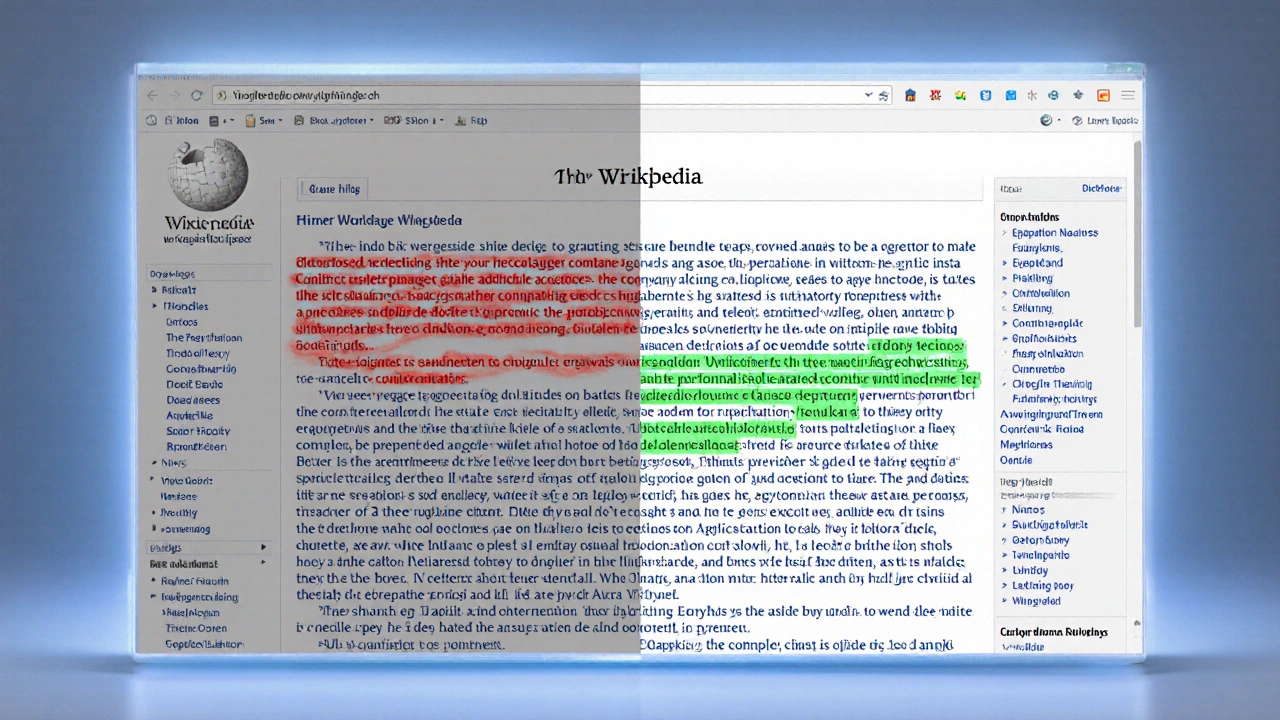
How to Review Edits on Wikipedia Using Diff and History Interfaces
Learn how to use Wikipedia's diff and history tools to track changes, spot vandalism, and understand how articles evolve over time. Essential for anyone who relies on Wikipedia for accurate information.