Ever opened Wikipedia and seen that clean, boxed section near the top of the page titled In the News? It’s not a random collection of headlines. It’s a carefully built, human-curated snapshot of what’s happening around the world - and it’s one of the most reliable places online to get a quick, neutral update on major events.
What Is the 'In the News' Box?
The In the News section appears on the main page of Wikipedia. It’s a small, scrollable box that shows about five to seven current events, each linked to a full Wikipedia article. These aren’t headlines pulled from Google News or Twitter. They’re selected by volunteers who follow strict rules to make sure the events are significant, well-documented, and neutral.
Each item in the box has to meet three basic criteria: it must be a major event, it must have a dedicated Wikipedia article written about it, and it must be supported by multiple reliable sources. That means if a local fire makes the news in your town, it won’t appear here - unless it triggers a national policy change, causes widespread disruption, or involves a public figure.
Think of it like a newsroom’s wire service, but run by editors who care more about accuracy than speed. Wikipedia doesn’t break news. It waits until the story is settled enough to be written as an encyclopedia entry. That’s why you’ll often see events in the box a day or two after they’ve been covered by CNN or BBC.
How Are Stories Chosen?
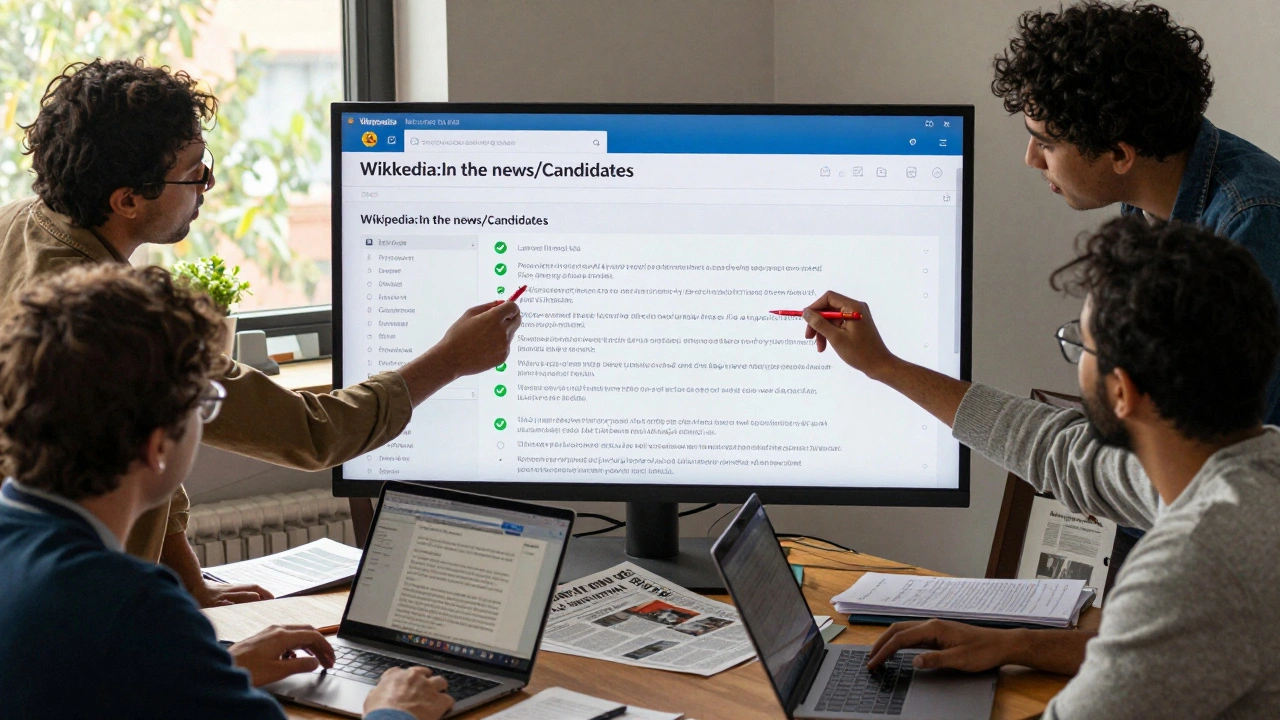
The selection process is public, transparent, and community-driven. Volunteers gather on a dedicated page called Wikipedia:In the news/Candidates. Every day, editors propose events they think belong in the box. They link to the article and cite at least two reputable sources - like The New York Times, Reuters, or the BBC.
Then, other editors review the submissions. They ask questions: Is this event truly significant? Is the article well-sourced and neutral? Is it already covered in other sections of Wikipedia? If an event is too speculative - like an unconfirmed rumor about a politician - it gets rejected. If it’s too minor - like a celebrity’s new hairstyle - it gets deleted.
There’s no algorithm involved. No AI picks these stories. No automated feed pulls headlines. It’s all humans, working in the open, following a set of guidelines written and refined over 15 years. The rules are strict: no opinion pieces, no clickbait, no events that are still unfolding without clear facts.
Why Does This Matter?
In a world where misinformation spreads faster than facts, Wikipedia’s In the News box is one of the few places on the internet that filters noise with discipline. It doesn’t chase trends. It doesn’t amplify outrage. It doesn’t prioritize viral content.
Take the 2023 earthquake in Turkey and Syria. While social media flooded with unverified videos and emotional posts, Wikipedia’s editors waited until rescue efforts were confirmed, casualty numbers were verified by the Red Cross, and international aid responses were documented. Only then did they add it to the box - and even then, they linked to a detailed, sourced article that included maps, timelines, and recovery data.
That’s the difference. Wikipedia doesn’t tell you what’s trending. It tells you what’s true.
Who Runs It?
The team behind the In the News box is made up of volunteers - students, retired journalists, librarians, and curious citizens from over 50 countries. Many have been doing this for years. Some have been editing Wikipedia since 2008.
They don’t get paid. They don’t have titles. But they follow a code: neutrality above all. If an event involves a political leader, they avoid language that implies guilt or praise. If a conflict is ongoing, they stick to facts reported by international organizations. They’re trained to spot bias, even subtle ones.
One editor from Canada once spent three hours cross-checking a report about a military strike in Ukraine. They compared statements from the Ukrainian government, the UN, and three independent news outlets before approving the entry. That’s the standard.
What Gets Left Out?
Many things you see on your phone’s news app never make it into the box. Here’s what gets filtered out:
- Breaking rumors without verification
- Entertainment gossip (even if it’s trending)
- Minor sports scores or awards ceremonies
- Opinion columns or editorials
- Events without a Wikipedia article
Even big stories can be left out if they’re not well-documented. For example, in early 2024, there was widespread reporting about a new AI startup that raised $200 million. But because the company had no public financial filings, no independent analysis, and no Wikipedia article yet, it was rejected. Not because it wasn’t important - but because Wikipedia doesn’t report on things that can’t be verified with reliable sources.
How Is It Different From Other News Sources?
Most news outlets prioritize speed and engagement. They want you to click, share, and stay on the page. Wikipedia prioritizes permanence and accuracy.
Compare this:
- Twitter: “BREAKING: Politician arrested!” - posted with no proof, later retracted.
- News website: “Politician under investigation after allegations” - based on one anonymous source.
- Wikipedia’s In the News: “Former senator indicted on bribery charges following federal investigation, confirmed by Department of Justice statement and multiple major news outlets.”
Wikipedia doesn’t just report the event - it reports the evidence behind it. That’s why researchers, journalists, and students often use the In the News box as a starting point for deeper research. It’s a curated gateway to verified information.
Can You Trust It?
Yes - but with context. Wikipedia isn’t perfect. It’s not a news agency. It doesn’t have reporters in the field. It doesn’t do original reporting. It relies entirely on what’s already published by others.
But here’s what makes it trustworthy: every claim in the In the News box is backed by a link to a source. Click any item, and you’ll land on a full article with citations from newspapers, government reports, academic journals, and international organizations. You can trace every fact.
It’s not a substitute for reading a full article from The Guardian or AP News. But it’s the best summary you’ll find that’s been vetted by dozens of editors, checked against multiple sources, and stripped of bias.
How to Use It
Here’s how to get the most out of the In the News box:
- Check it daily - it updates every few hours.
- Click on any item to go to the full article - that’s where the real depth is.
- Look at the citations at the bottom of the article - they’re gold for research.
- Don’t treat it as real-time news. Wait 12-24 hours after an event for it to appear.
- Use it to find reliable background on events you’ve heard about elsewhere.
If you’re a student, journalist, or just someone tired of fake headlines, this is your quiet ally. It doesn’t shout. It doesn’t sell ads. It just tells you what’s real.
What’s Next for the Box?
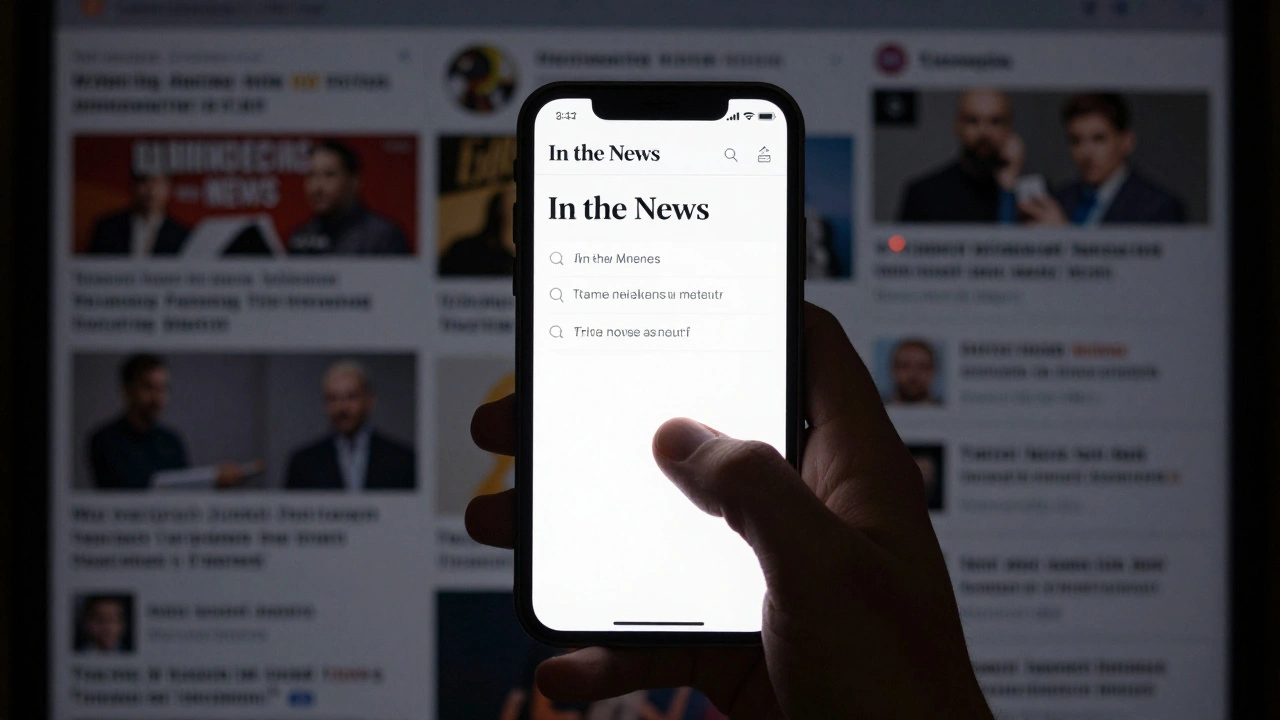
Wikipedia’s team is testing ways to make the In the News box more accessible - like adding translations for non-English speakers and improving mobile display. But the core rules won’t change. No automation. No algorithms. Just humans, committed to truth over traffic.
As of 2025, the box has been viewed over 2 billion times per year. Most users don’t realize how much work goes into each line. But for those who do - it’s a quiet revolution in how we consume news.
Is the 'In the News' box on Wikipedia automated?
No. Every entry is manually reviewed and selected by volunteer editors. No AI or automated system picks or approves stories. Each item must be proposed, cited with reliable sources, and approved by multiple editors before appearing.
Why do some big news stories not appear in the box?
If a story lacks a well-sourced Wikipedia article, or if sources are conflicting or unverified, it won’t be added. Wikipedia waits for clarity. A viral tweet or unconfirmed report won’t make the cut - even if major outlets are covering it.
Can I suggest a story for the 'In the News' box?
Yes. Anyone can submit a story to Wikipedia:In the news/Candidates. You need to link to a solid Wikipedia article and provide at least two reliable sources. Submissions are reviewed by volunteers within 24-48 hours.
Does Wikipedia report on politics differently than other news sites?
Wikipedia avoids language that implies judgment. Instead of saying “corrupt official,” it says “official indicted on bribery charges.” It reports facts from authoritative sources, not opinions. Political events are covered only when confirmed by multiple independent outlets.
How often is the 'In the News' box updated?
The box is updated several times a day, usually when new entries are approved. Most updates happen during peak editing hours in North America and Europe. Entries are removed after about 24-48 hours to keep the box current.