Every week, a quiet but powerful pulse runs through Wikipedia. It doesn’t come from the millions of edits made by anonymous users or the automated bots cleaning up vandalism. It comes from The Signpost, Wikipedia’s volunteer-run newspaper. For over 15 years, it’s been the go-to source for what’s really happening inside Wikipedia - the debates, the drama, the policy shifts, and the quiet wins that never make headlines elsewhere.
Who Reads The Signpost?
The Signpost isn’t meant for casual Wikipedia users. You won’t find it when you search for "how to cite a source" or "what’s the capital of Mongolia." Its readers are the people who live inside Wikipedia: editors with 10,000+ edits, administrators who handle disputes, stewards who manage global rights, and researchers studying how knowledge is built online. Its audience is small but deeply engaged.Based on server logs from 2024, The Signpost averages about 45,000 unique visitors per week. That’s less than 0.1% of Wikipedia’s total monthly traffic, but it’s not about size - it’s about influence. These readers don’t just read; they act. A single article in The Signpost can trigger a community-wide policy review, spark a fundraising campaign, or lead to the resignation of an administrator.
Where Do Readers Come From?
Most traffic to The Signpost comes from within Wikipedia itself. Around 62% of visitors arrive via internal links - from article talk pages, noticeboards, or the Wikipedia:Community portal. Another 23% come from direct visits, meaning readers bookmark it or type the URL manually. Only 8% arrive from external search engines like Google. This tells you something important: The Signpost isn’t a public-facing news site. It’s a tool for insiders.Geographically, the biggest readership is in the United States (31%), followed by the United Kingdom (17%), Germany (9%), Canada (6%), and Australia (5%). But the real story is in language. While The Signpost is published in English, its readership includes editors from non-English Wikipedias who use it to understand how the English Wikipedia community operates - often as a model for their own local discussions.
How Often Do People Read It?
Unlike most news outlets, The Signpost doesn’t rely on daily spikes. Its traffic pattern is predictable: a sharp rise every Monday morning, right after the new issue is published. The peak lasts about 12 hours, then drops off sharply. By Thursday, traffic is down to 15% of its Monday high. This isn’t because people lose interest - it’s because they’ve already read it. Most readers consume the entire issue in one sitting.Retention is high. About 78% of weekly visitors return within the next four weeks. That’s higher than most major news sites. Why? Because if you’re involved in Wikipedia’s governance, missing a Signpost issue means missing critical context. One editor told me, "I check The Signpost like I check my email - if I don’t, I’ll get left behind."

What Do People Actually Read?
Not every article gets equal attention. In 2024, the most-read pieces were:- "Administrators removed after controversial ban of longtime editor" (12,400 views)
- "New policy on paid editing: what it means for you" (10,800 views)
- "Wikipedia’s gender gap: where progress stalled" (9,600 views)
- "Wikimedia Foundation announces changes to grant program" (8,900 views)
- "Community reaction to AI-generated content guidelines" (8,200 views)
These aren’t flashy headlines. They’re policy updates, accountability reports, and community reflections. The most popular articles always involve power, fairness, or change - the things that keep Wikipedia’s volunteer ecosystem alive or broken.
How Is The Signpost Different From Other Wikipedia News?
There are other sources for Wikipedia news: Reddit threads, Twitter accounts, independent blogs, and even mainstream media. But none of them have The Signpost’s authority. Why? Because it’s written by editors, for editors. It doesn’t have a corporate agenda. It doesn’t chase clicks. It doesn’t simplify complex issues to make them digestible.For example, when the Wikimedia Foundation proposed new rules around AI-generated content in late 2023, mainstream outlets ran stories like "Wikipedia Bans AI" - misleading and sensational. The Signpost published a 3,200-word deep dive: the history of AI use on Wikipedia, the exact wording of the proposed policy, quotes from 12 editors across five countries, and a breakdown of how enforcement would work. It got 7,400 views in its first 48 hours. That’s not viral. That’s vital.
Who Writes It?
The Signpost has no staff. It’s entirely run by volunteers - about 15 active contributors who rotate roles: writers, editors, copyeditors, and layout designers. Most are long-term editors with 5+ years of experience. One of them, a retired professor from Australia, has written over 200 articles since 2010. Another, a high school student from India, started writing at 16 and now edits the weekly newsletter.They don’t get paid. They don’t get recognition beyond their usernames. But they’re deeply invested. The Signpost’s editorial board meets every Sunday night via video call to review the upcoming issue. They argue over tone, accuracy, and fairness. Sometimes, they delay publication for days to get a quote right.
Why Does It Matter?
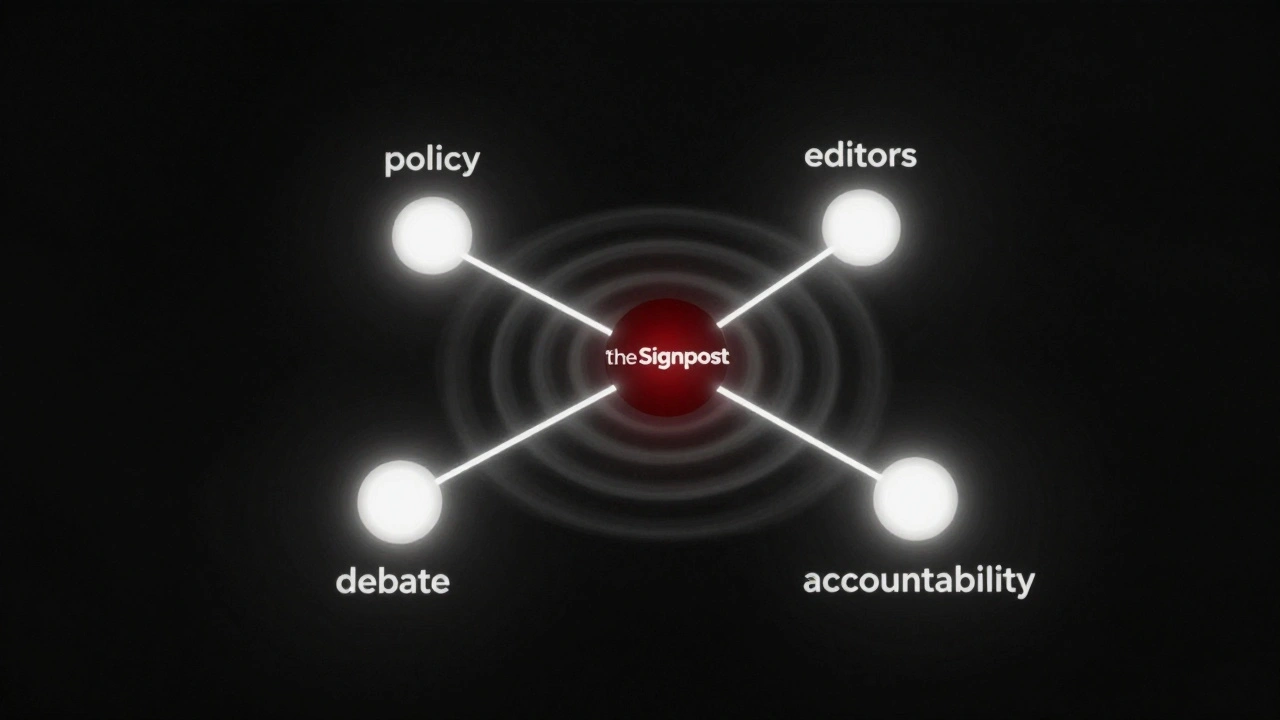
Wikipedia is often called the world’s largest encyclopedia. But it’s more than that. It’s a social experiment in open collaboration - and The Signpost is its public record. Without it, Wikipedia’s internal dynamics would be invisible. There’d be no paper trail for policy changes. No way to track how community norms evolve. No accountability for those in power.Researchers at the University of Oxford used The Signpost archives to study how Wikipedia’s editorial culture changed after 2015. They found that the frequency of policy debates increased by 40% after the introduction of the "revert war" guidelines - and that the tone of those debates shifted from confrontational to collaborative. That insight came from reading 1,200 Signpost articles.
For every editor who reads The Signpost, it’s a reminder: Wikipedia isn’t just a website. It’s a community. And like any community, it needs its newspaper.
How to Follow The Signpost
You don’t need to be an editor to read it. Anyone can visit wikipedia.org/wiki/Wikipedia:Signpost. You can subscribe to its weekly email digest by joining the mailing list on the same page. You can also follow its Twitter account (@WikipediaSignpost) for brief updates - though the full depth is only on the site.If you’re new to Wikipedia and curious about how it works behind the scenes, The Signpost is the best place to start. Don’t expect headlines. Expect honesty. Expect complexity. Expect a community trying - sometimes messily - to do the right thing.
Is The Signpost officially run by the Wikimedia Foundation?
No. The Signpost is entirely independent and volunteer-run. While it’s hosted on Wikipedia’s servers and links to official policies, it has no editorial control from the Wikimedia Foundation. The Foundation doesn’t fund, approve, or edit its content.
Can anyone write for The Signpost?
Yes. The Signpost welcomes submissions from any registered Wikipedia editor. There’s no formal application process - just send a draft to the editorial team via email or through their talk page. Most writers start by contributing small pieces or editing existing articles before writing full features.
How often is The Signpost published?
Every Monday, except during rare holidays or technical outages. It’s been published weekly since its launch in January 2005. Each issue is about 15-25 pages long and includes multiple articles, opinion pieces, and community updates.
Does The Signpost have a print version?
No. The Signpost exists only online. However, some readers print out weekly issues to read offline or share in local Wikipedia meetups. There’s no official PDF version, but you can save the webpage as a file from your browser.
Why doesn’t The Signpost have more readers?
It’s not designed to. The Signpost isn’t trying to be popular - it’s trying to be useful. Its audience is niche by design: people who care about how Wikipedia works, not just what it contains. If it had millions of readers, it would lose the trust of the community that keeps it alive. Its power comes from being small, credible, and deeply connected to the people who run Wikipedia.