Wikipedia has over 60 million articles in more than 300 languages. But behind every article you read, there’s a quiet, powerful system making sure facts stay consistent across languages, updates happen in one place, and machines can understand what those articles actually mean. That system is Wikidata.
What Wikidata Actually Is
Wikidata isn’t a website you browse like Wikipedia. You won’t find essays or stories there. Instead, it’s a free, open database of structured facts. Think of it as the backbone that connects all the information on Wikipedia and beyond.
Every time you see a box on a Wikipedia page listing a person’s birth date, nationality, or notable works - that data doesn’t live in the article itself. It comes from Wikidata. Change the birth year of Albert Einstein in Wikidata, and it updates automatically on every Wikipedia language version that pulls from it. No manual editing needed.
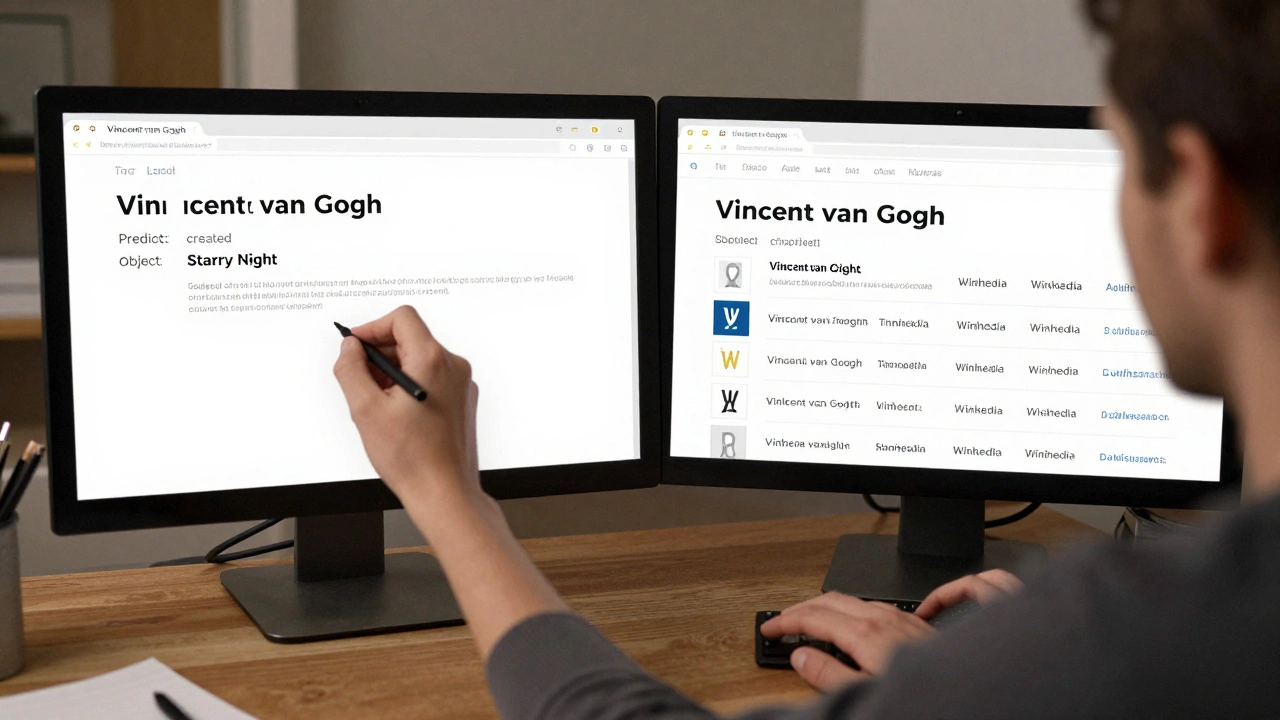
Wikidata stores data as statements: subject-predicate-object triples. For example:
- Albert Einstein - has occupation - physicist
- Albert Einstein - place of birth - Ulm, Germany
- Albert Einstein - received Nobel Prize in - Physics
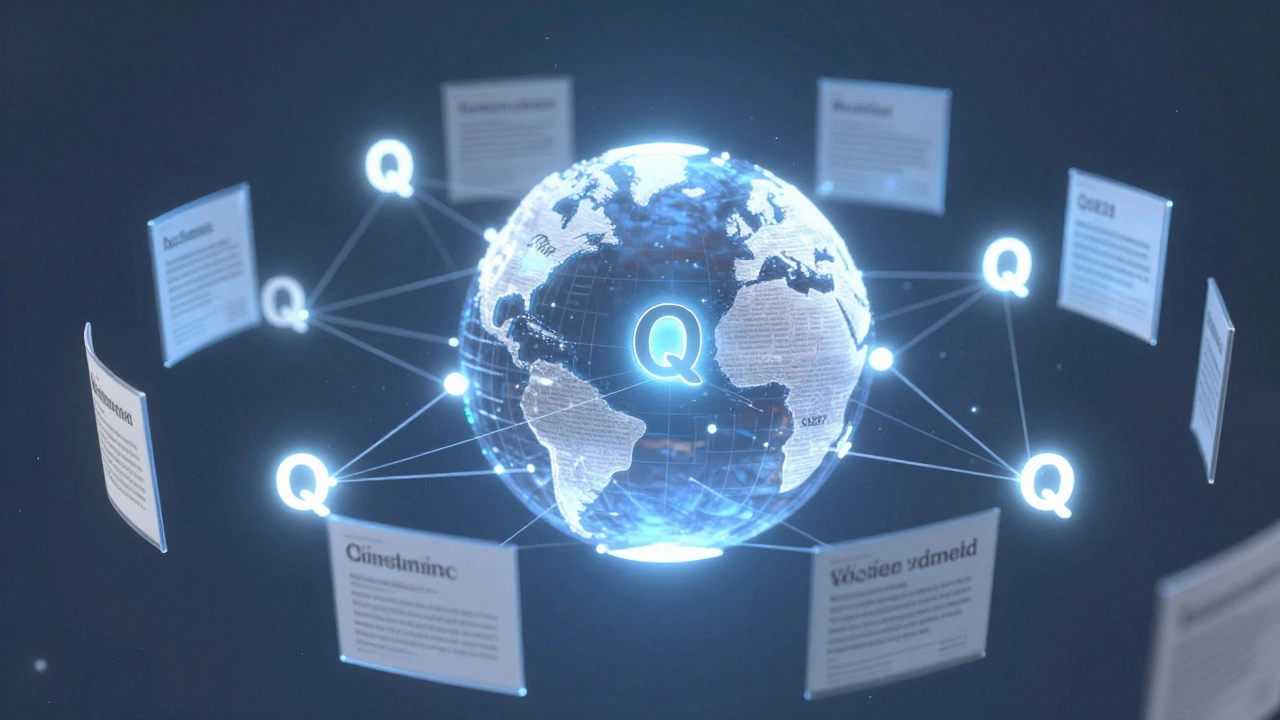
These aren’t just random facts. Each one is linked to a unique identifier - a Q-number, like Q937 for Einstein. That number stays the same no matter what language you’re reading in. It’s how Wikidata keeps everything connected.
Why Structured Data Matters
Wikipedia articles are written for humans. They’re full of context, stories, and nuance. But computers can’t easily understand them. If you ask Google, “Who won the Nobel Prize in Physics in 1921?”, it needs structured data to give a direct answer.
That’s where Wikidata shines. It turns messy text into machine-readable facts. Search engines, voice assistants, and AI tools use Wikidata to answer questions instantly. When Siri says, “Albert Einstein was born in 1879,” it’s likely pulling from Wikidata.
Wikidata also powers tools like Wikibase, used by museums, libraries, and research institutions to manage their own collections. The British Museum uses it to link artifacts to their historical context. The Smithsonian connects its catalog to global knowledge. It’s not just for Wikipedia anymore.
How Wikidata Differs from Wikipedia
Wikipedia and Wikidata work together, but they serve very different roles.
| Feature | Wikipedia | Wikidata |
|---|---|---|
| Format | Narrative articles in natural language | Structured data in triples (subject-predicate-object) |
| Primary users | Readers and editors | Machines, developers, automated tools |
| Updates | Manual edits per language | Single source, auto-synced across all Wikipedias |
| Content type | Articles, lists, essays | Entities, properties, qualifiers, references |
| Language | Separate versions per language | One database, multilingual labels and descriptions |
For example, the Wikipedia page for “Paris” in French, English, and Japanese all pull their population numbers, mayor, and founding date from the same Wikidata item (Q90). If someone corrects the population figure in Wikidata, every version updates within minutes. No more conflicting numbers across languages.
Who Builds and Maintains Wikidata
Wikidata is edited by volunteers - just like Wikipedia. But the editing interface is different. Instead of writing paragraphs, you’re adding structured statements. You might add that a painting was created in 1889, or that a river flows into another river.
Anyone can edit. You don’t need to be a scientist or programmer. If you know that the actor who played Spider-Man in the 2002 movie was Tobey Maguire, you can add that fact to Wikidata. It’s that simple.
There are also bots that automatically update data. For example, if a new country joins the United Nations, a bot can add it to Wikidata with its ISO code, capital, and population. Human editors then verify and add more details.
As of 2026, Wikidata contains over 110 million items - people, places, events, artworks, molecules, and more. It’s one of the largest open knowledge graphs in the world.
How Developers and Researchers Use Wikidata
Wikidata isn’t just for casual editors. It’s a critical tool for researchers, data scientists, and developers.
Historians use it to map networks of influence between writers and thinkers. Biologists use it to link gene names to organisms and diseases. Journalists use it to fact-check claims across borders. A team at the University of Oxford built a tool that traces how misinformation spreads by analyzing how false claims appear in Wikidata and then get copied into Wikipedia articles.
Programmers can access Wikidata through its API. You can ask for all paintings by Van Gogh, all Nobel laureates from Sweden, or all asteroids discovered before 1950 - and get clean, structured JSON back. No scraping. No messy HTML parsing.
Tools like Query Service let you write SPARQL queries - a language for asking questions of databases. You can find every film directed by a woman born in 1970, or all cities in Germany with more than 500,000 people. The results update in real time.
Limitations and Challenges
Wikidata isn’t perfect. Because it’s open, it can have gaps or errors. Some areas are well-covered - like famous people and countries. Others are sparse - like indigenous languages, local flora, or rural communities.
There’s also a bias. Most editors are from Western countries. That means data on African, Asian, or Indigenous topics may be incomplete or outdated. The community is working to fix this through edit-a-thons and partnerships with universities and cultural institutions.
And because it’s so open, bad data can slip in. A bot once added “penguins can fly” as a fact because someone mislinked a Wikipedia article. It took days to catch. That’s why every statement needs sources. You can’t just say “Leonardo da Vinci was born in 1980.” You need to cite a reliable reference - a book, academic paper, or official record.
The Bigger Picture: Wikidata and the Semantic Web
Wikidata is part of a much larger idea: the Semantic Web. That’s the vision of a web where machines can understand meaning, not just display text.
Imagine a future where your smart home knows your favorite books, your doctor’s system pulls your medical history from trusted sources, and your school’s database links every historical event to its geographic location - all because they’re connected to a shared, open knowledge base.
Wikidata is the closest thing we have to that today. It’s not owned by Google or Meta. It’s not locked behind paywalls. It’s free, public, and built by people like you.
That’s why it matters. Not because it’s flashy. But because it’s quiet, reliable, and growing - one fact at a time.
Is Wikidata the same as Wikipedia?
No. Wikipedia is a collection of human-written articles in many languages. Wikidata is a structured database of facts that powers Wikipedia and other tools. Changes in Wikidata update Wikipedia automatically, but you can’t read essays or stories in Wikidata.
Can I edit Wikidata even if I’m not a tech expert?
Yes. You don’t need to know programming. Wikidata has a simple interface where you pick an item, choose a property (like “birth date” or “country”), and enter a value. You just need to cite a reliable source for each fact you add.
How does Wikidata help search engines?
Search engines like Google and Bing use Wikidata to power knowledge panels and direct answers. When you ask, “When did Marie Curie win her first Nobel Prize?”, the answer comes from Wikidata - not from scraping Wikipedia pages.
Is Wikidata free to use?
Yes. All data in Wikidata is licensed under CC0, meaning it’s public domain. You can download it, use it in apps, or build tools with it - no permission needed.
What’s the difference between Wikidata and DBpedia?
DBpedia extracts structured data from Wikipedia articles automatically. Wikidata is created manually by editors with sources. That makes Wikidata more accurate and detailed, but DBpedia covers more topics because it’s automated. Many projects use both.
What You Can Do Next
If you’re curious, visit wikidata.org and search for something you know well - your favorite book, musician, or city. Click on the “Statements” tab. You’ll see the raw facts behind the Wikipedia page.
Try adding a fact. Maybe you know the exact release year of a song that’s missing. Or you can fix a wrong birthplace. Even small edits help.
Wikidata doesn’t need more experts. It needs more people who care about getting facts right - one triple at a time.