When you open a Wikipedia article, it looks like a neutral fact sheet. But behind every edit is a human being with specific habits, preferences, and limitations. The most visible limitation? Language. If you only speak English, you are likely editing the English Wikipedia. If you speak Japanese, you stay in the Japanese version. This creates a fragmented ecosystem where knowledge flows unevenly across borders. Understanding Wikipedia editor demographics helps explain why some topics are richly detailed while others remain stubs, and why certain cultural perspectives dominate global knowledge.
The Scale of Linguistic Fragmentation
Wikipedia exists in over 300 languages, but the distribution of editors is wildly uneven. The English edition remains the largest, hosting roughly 100 million articles. However, the number of active contributors per language varies drastically. A "active" editor is typically defined as someone who makes at least one edit in a month. In the top five languages (English, German, French, Russian, Spanish), you find the bulk of the community’s energy. Yet, even within these major editions, the ratio of readers to writers is massive. For every person who writes an entry, thousands just read it. This gap means that the "voice" of the encyclopedia is shaped by a small, self-selected group of volunteers in each linguistic sphere.
This fragmentation leads to what researchers call "editorial silos." An expert on African history who speaks only Swahili might struggle to contribute to the English Wikipedia if their technical writing skills in English are limited. Conversely, a tech-savvy user from the US might write extensively about Silicon Valley startups but know little about local innovations in Bangalore or Shenzhen. The result is a global encyclopedia that feels local in its biases.
Who Are the Multilingual Editors?
Multilingual editors are the bridge between these silos. These are users who maintain accounts on multiple language versions of Wikipedia. They don't just translate text; they transfer context, nuance, and structural logic. According to data from Wikimedia Research, only about 5-10% of all active editors are truly multilingual, meaning they make significant edits in two or more major language editions. This small percentage punches above its weight because they often handle high-profile articles that require cross-cultural accuracy.
These editors tend to have higher tenure than monolingual users. Why? Because learning the norms, talk page etiquette, and citation standards of a second language takes time. A new user might edit the French Wikipedia for a week before feeling comfortable enough to tackle the complex bureaucratic processes of the German edition. Once they do, they become valuable assets. They help prevent "translation errors" that can distort facts when automated tools or less experienced translators take over.
| Attribute | Monolingual Editors | Multilingual Editors |
|---|---|---|
| Average Tenure | 2-4 years | 5-8 years |
| Primary Focus | Local culture, regional news | International events, science, biography |
| Citation Style | Strictly follows local WP:VRS | Adapts to different citation norms |
| Conflict Resolution | Often escalates to admin mediation | Uses cross-language consensus |
| Content Gaps Addressed | Hyper-local details | Global perspective, missing links |
The Impact of Language Proficiency on Content Quality
Language skill isn't just about grammar; it's about cognitive load. When an editor works in their native language, they can focus entirely on sourcing and structure. When they work in a second language, part of their mental energy goes into finding the right words and avoiding awkward phrasing. This doesn't mean non-native speakers write worse articles-it often means they write more carefully. Many non-native English speakers produce highly structured, well-cited articles because they treat the platform with a sense of reverence and precision that native speakers sometimes lack due to familiarity.
However, there is a risk of "linguistic drift." If a concept doesn't exist in the target language, editors might use a direct translation that confuses readers. For example, translating specific legal terms from civil law systems to common law contexts without explanation can lead to misunderstandings. Multilingual editors mitigate this by adding footnotes or linking to equivalent concepts in other languages. This practice, known as "interlanguage linking," is a hallmark of sophisticated editorial work.
Demographic Skew: Who Is Missing?
While we look at language, we must also look at who speaks those languages. The core demographic of Wikipedia editors has historically been male, educated, and based in North America or Europe. This skews the content toward topics that interest this group. For instance, articles about video games and technology tend to be longer and more detailed than articles about domestic life or traditional crafts in regions with lower digital literacy rates.
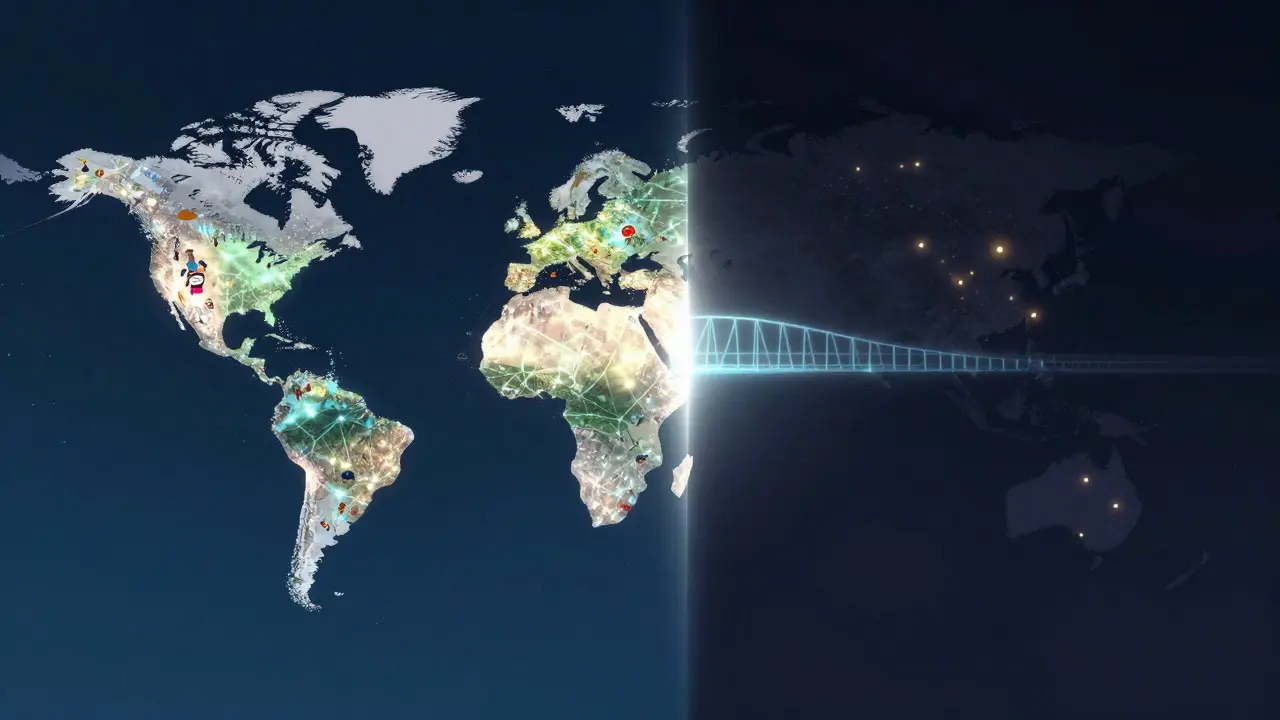
Recent efforts to diversify the editor base have shown promise. Programs like Wiki Loves Africa and Wikimania workshops aimed at underrepresented regions have increased participation. But the barrier remains: you need internet access, a computer, and the time to learn how to edit. In many parts of the world, these are still luxuries. Therefore, the demographic profile of editors directly mirrors the digital divide. Until the digital divide narrows, the linguistic diversity of Wikipedia will remain tied to the economic power of its contributing nations.
Tools That Empower Multilingual Workflows
Technology plays a crucial role in enabling multilingual editing. Tools like the Translate extension allow users to import translations from one language to another, providing a starting point rather than a blank page. While machine translation has improved, human review is still essential for accuracy. Another key tool is the "Wikidata" project, which stores facts in a structured format independent of language. This allows an editor in Brazil to update a fact in Portuguese, and that same fact to appear instantly in the Spanish, French, and English versions of the article. This decoupling of data from presentation is a game-changer for maintaining consistency across languages.
For individual editors, browser extensions and dictionary plugins help manage vocabulary. Some editors keep personal glossaries of recurring terms to ensure consistency across their edits. These small, practical strategies reduce the friction of working across languages, making it easier for casual contributors to step into multilingual roles.
Challenges in Cross-Cultural Consensus
One of the hardest parts of being a multilingual editor is navigating differing community cultures. The English Wikipedia tends to be very procedural, with heavy reliance on policies and templates. The German Wikipedia, by contrast, values deep research and academic rigor, often resulting in longer, more complex sentences. The French Wikipedia emphasizes literary quality and style. When an editor moves between these environments, they must adapt their behavior. What is considered polite in one community might seem evasive in another.
Conflicts often arise when editors assume their local norms are universal. A dispute over the length of an introduction might stem from a misunderstanding of stylistic expectations. Successful multilingual editors act as cultural diplomats, explaining *why* a certain approach is taken in their home language and inviting others to share their perspective. This soft skill is as important as linguistic ability.
Future Trends in Global Editing
As AI translation improves, the barrier to entry for multilingual editing will drop further. We may see a surge in "hybrid