When a major event breaks - a plane crash, a political resignation, a natural disaster - Wikipedia doesn’t just update. It explodes. Within minutes, millions of people flood to the site, searching for facts, context, and clarity. This isn’t random behavior. It’s predictable. And the data proves it.
How Wikipedia Becomes the First Source of Truth
When the 2020 assassination of Iranian General Qasem Soleimani happened, Wikipedia’s page for him received over 15 million views in 24 hours. That’s more than the population of Austria. In 2023, when Pope Francis was hospitalized, the Vatican’s official website saw a modest bump. Wikipedia’s page for the Pope? Over 12 million views. Why? Because people don’t trust headlines alone. They want structure. They want citations. They want to know who this person was, what their role meant, and what this event could mean next.
Wikipedia isn’t just a backup. It’s the default. A 2022 study by the University of Oxford found that during breaking news events, Wikipedia is the most frequently visited source among journalists, students, and the general public - even before major news outlets publish their first full article. It’s not because people think it’s perfect. It’s because it’s fast, free, and organized.
Patterns in the Data: When and Why Traffic Spikes Happen
Wikipedia’s traffic spikes aren’t random. They follow clear patterns tied to the type of event and its global reach.
- Political events - elections, resignations, impeachments - cause spikes in multiple languages simultaneously. When UK Prime Minister Liz Truss resigned in October 2022, the English page got 8.3 million views. The Spanish, French, and German versions combined hit over 6 million.
- Death of public figures - celebrities, politicians, scientists - trigger massive surges. When Queen Elizabeth II died in September 2022, her page received 18.5 million views in one day. The previous record was 12.1 million for Steve Jobs in 2011.
- Disasters and accidents - plane crashes, terrorist attacks, earthquakes - cause immediate spikes. After the 2023 Turkey-Syria earthquake, the event page saw 7.9 million views in 12 hours. The page for the city of Gaziantep, which was heavily affected, got over 2 million views in the same window.
- Legal rulings - Supreme Court decisions, major trials - cause sharp, sustained spikes. When the U.S. Supreme Court overturned Roe v. Wade in June 2022, the page for the case got 11.7 million views in 48 hours. The page for the state of Texas, where the trigger law was enacted, saw 3.1 million views.
What’s consistent? The spike always happens within 10 to 30 minutes of the first credible report. And it doesn’t fade quickly. Unlike social media trends that die in hours, Wikipedia traffic often stays elevated for 24 to 72 hours as people return to check updates, read deeper context, or cite the page in their own work.
Who’s Really Reading Wikipedia During Crises?
It’s not just casual browsers. Journalists, researchers, students, and even emergency responders rely on Wikipedia during fast-moving events.
A 2023 survey of 1,200 journalists across 18 countries found that 78% used Wikipedia to quickly verify names, titles, dates, and organizational structures during breaking news. One reporter from Reuters told researchers: “I don’t cite it. But I use it to make sure I’m not missing a key detail before I call a source.”
Students use it for last-minute research. Teachers use it to prep lessons. Local governments in crisis zones use it to understand the history of places they’re responding to. Even AI systems that power chatbots and news aggregators pull data from Wikipedia during high-traffic events because it’s the most reliable, structured source available in real time.
The Editing Rush: How Wikipedia Keeps Up
With millions of people reading, someone has to keep the content accurate. That’s where the volunteer editors come in.
During the 2021 Capitol riot, over 1,400 editors made edits to the event page in the first hour. Many were experienced editors who monitor breaking news. Others were ordinary users who saw errors and fixed them - correcting misspelled names, adding timestamps, removing unverified claims.
Wikipedia’s system is built for this. Pages related to major events are often “protected” to prevent vandalism. But even protected pages get updated by trusted editors who have proven track records. The site doesn’t wait for official announcements. It waits for multiple credible sources to confirm a fact.
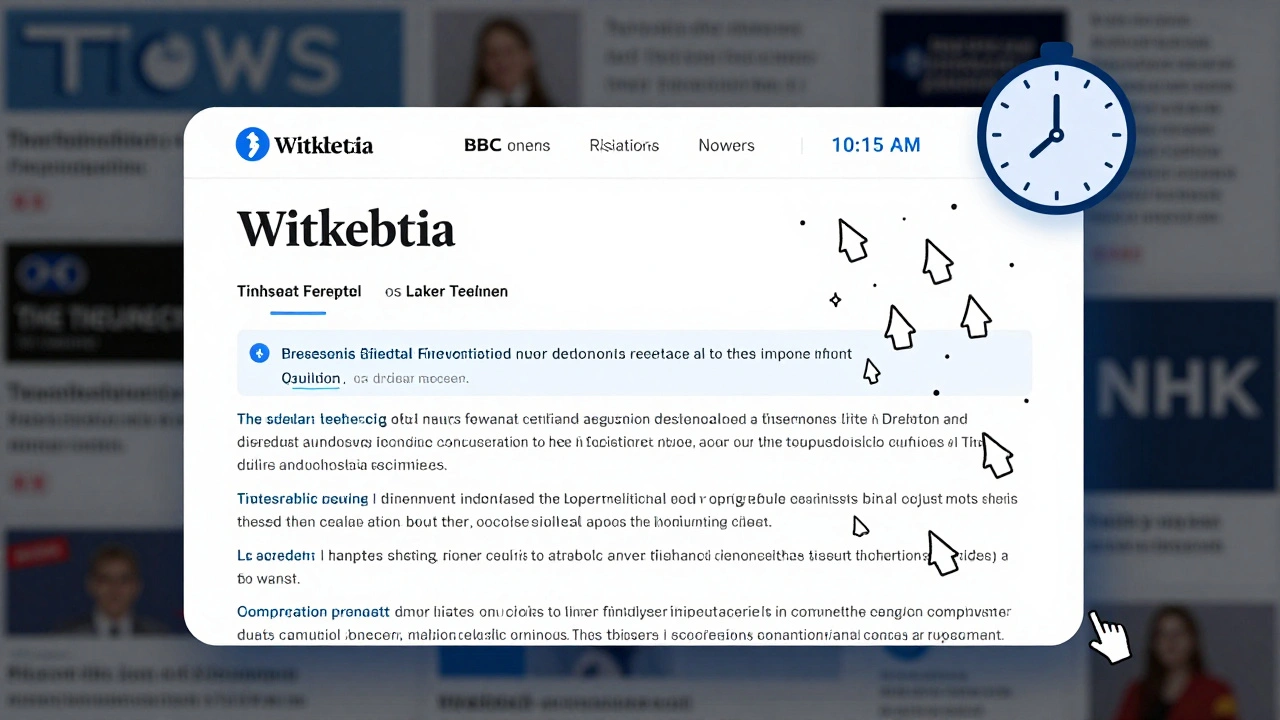
Take the 2023 death of former Japanese Prime Minister Shinzo Abe. The first reports came via Japanese media at 10:07 AM local time. By 10:15 AM, the English Wikipedia page was updated with his death, date of birth, and key political roles. By 10:30 AM, it included details about the suspect, the weapon used, and the location - all sourced from Reuters, BBC, and NHK. No corporate press release. Just verified public reporting.
What the Data Doesn’t Show: The Gaps
Wikipedia’s traffic spikes aren’t perfect. They reflect what the world is already talking about - not what’s important but underreported.
When a conflict breaks out in a region with fewer English speakers or less media coverage, Wikipedia traffic often stays low. For example, during the 2023 conflict in Sudan, the page for Khartoum saw only 412,000 views in the first week - compared to 18 million for the Queen’s death. That doesn’t mean the Sudan crisis was less severe. It means the world wasn’t searching for it yet.
Wikipedia follows attention, not need. This creates blind spots. A 2024 analysis by the Wikimedia Foundation found that pages related to African, Indigenous, and Global South events receive 60% fewer edits and 80% fewer views than comparable events in Western nations - even when the human impact is equal.
Why This Matters for Journalists and Researchers
If you’re reporting on breaking news, Wikipedia isn’t your source - it’s your compass.
Check the page history. Look at the edit timestamps. See what got added first, what got removed, and what sources were cited. You’ll often find the earliest verified facts there. If a page has been edited by 20 people in 30 minutes and includes three reputable sources, you’re looking at the most reliable snapshot available.
Use it to find names you missed. To understand the background of a person or place. To spot misinformation early - because when false claims appear, they usually get corrected within minutes. In 2022, a false rumor claimed a U.S. senator had died. The Wikipedia page was edited to correct it within 11 minutes. The rumor died faster than it spread.
Wikipedia doesn’t replace journalism. It supports it. It gives journalists a head start. A place to check facts before calling sources. A way to understand context before writing. A living document that updates as fast as the world changes.
The Future: Real-Time Knowledge in Action
Wikipedia’s role in news is growing. The Wikimedia Foundation is now testing automated tools that flag potential edits during breaking events - helping human editors focus on accuracy, not speed. Some universities are integrating Wikipedia editing into journalism curriculums. Newsrooms are creating internal dashboards that track Wikipedia traffic spikes to predict which stories are gaining public traction.
In 2025, the average newsroom spends less time verifying names and dates - and more time digging into why events matter. Wikipedia handles the “what.” Journalists handle the “why.” Together, they’re faster, sharper, and more accurate than either could be alone.
Why does Wikipedia traffic spike during major news events?
Wikipedia traffic spikes because it’s the fastest, most organized, and most trusted source for factual summaries during breaking news. People turn to it to verify names, dates, events, and background context - often before traditional media has published detailed reports. Its real-time editing system and reliance on cited sources make it a go-to for journalists, students, and the public alike.
Do journalists cite Wikipedia in their articles?
Most professional journalists do not cite Wikipedia directly. Instead, they use it as a research tool to quickly verify facts, find correct spellings, identify key players, and locate primary sources. The citations listed on Wikipedia pages often lead journalists to original reports from Reuters, AP, or major newspapers - which they then cite properly.
How quickly does Wikipedia update during breaking news?
Wikipedia updates within minutes. For major global events, the first edits often appear within 10 to 15 minutes of the initial report. Trusted editors - many of whom monitor news feeds - make updates using verified sources like BBC, Reuters, or official statements. The page is usually stabilized within an hour, with multiple edits confirming accuracy.
Are Wikipedia traffic spikes a sign of misinformation spreading?
Not necessarily. High traffic means high interest - not high falsehoods. In fact, Wikipedia’s editing community is highly effective at correcting misinformation. False claims during breaking news are typically removed within minutes by experienced editors. The spike in traffic often includes many people trying to fix errors, not spread them.
Why do some events get more Wikipedia traffic than others?
Traffic reflects global attention, not importance. Events involving Western leaders, celebrities, or nations with high English-language media coverage get more views. Events in underreported regions - like parts of Africa or Southeast Asia - often see far less traffic, even when the human impact is severe. This is a known bias in Wikipedia’s data, not a reflection of reality.
What to Do Next: Using Wikipedia Wisely
If you’re a journalist, researcher, or student: Use Wikipedia as your first stop during breaking news - but never your last. Check the references. Follow the links. Verify with primary sources. Look at the edit history to see how the page evolved. You’ll find clarity faster, make fewer mistakes, and save time.
Wikipedia doesn’t replace critical thinking. It enhances it. In a world full of noise, it’s one of the few places where facts are built, not bought - and updated, not deleted.