Imagine you are reading a Wikipedia article about a controversial political figure. The text claims they made a specific speech in 2019. But there is no link to a newspaper, no quote from a book, just a statement sitting there like it’s fact. Would you believe it? Probably not. This is where the concept of verifiability comes in, acting as the backbone of how we trust information on one of the world's largest collaborative platforms.
Verifiability on Wikipedia is not about whether an editor thinks something is true. It is strictly about whether a reader can check that claim against a published source. This distinction is crucial because it separates encyclopedic writing from opinion pieces or blogs. If a fact cannot be traced back to a reliable source, it doesn't belong in the article, no matter how confident the editor feels about its accuracy.
The Core Principle: Truth vs. Verifiability
A common misconception among new contributors is that Wikipedia aims to document absolute truth. While that sounds noble, it’s practically impossible for a volunteer-driven project to verify every nuance of reality. Instead, the platform relies on verifiability the principle that readers must be able to check what is written. This means the burden of proof lies with the person adding the information, not the reader who has to prove it wrong.
This approach protects the encyclopedia from becoming a dumping ground for personal opinions, urban legends, or unproven theories. By demanding evidence, Wikipedia creates a self-correcting system. When a claim lacks support, other editors will flag it. When a source is weak, it gets replaced. Over time, the articles settle into a state where every significant statement has a trail leading back to a credible publisher.
What Counts as a Reliable Source?
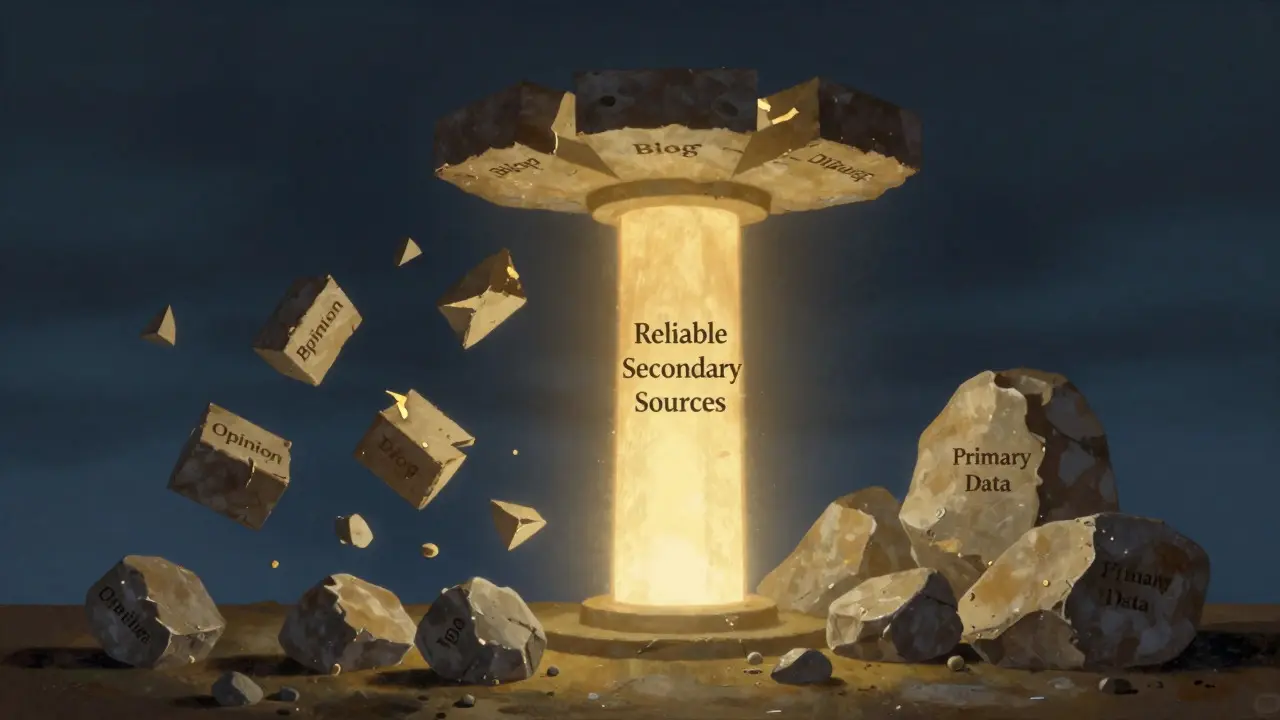
Not all sources are created equal. A blog post by a celebrity might get millions of views, but does it qualify as a reliable source for an encyclopedic entry? Usually, no. The standard generally favors secondary sources-publications that analyze and interpret primary materials rather than presenting raw data alone.
Here is a quick breakdown of how different types of sources are typically viewed:
- Academic Journals: Highly reliable due to peer review processes. Ideal for scientific, historical, or technical topics.
- Mainstream News Outlets: Good for current events and recent developments. Examples include major newspapers like The New York Times or BBC News.
- Books: Generally reliable if published by reputable houses. Self-published books require careful scrutiny.
- Government Documents: Excellent for statistics, legal facts, and official records.
- Personal Blogs/Social Media: Rarely reliable unless the author is a recognized expert in that specific field and the content is corroborated elsewhere.
The key attribute here is independence. A source should ideally be independent of the subject being covered. For instance, using a company’s own press release to describe its financial success is risky because the company has a vested interest in looking good. Using a third-party audit report or a business news outlet provides a more balanced perspective.
The Role of Citations in Editorial Workflow
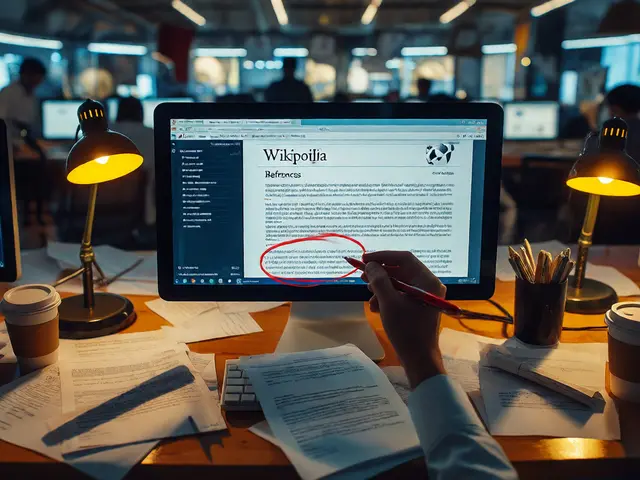
Citations are the visible fingerprints of verifiability. On Wikipedia, these appear as small superscript numbers at the end of sentences, linking to the references section at the bottom of the page. These aren’t just decorative; they are functional tools for editors and readers alike.
When you add a citation, you are essentially saying, "I checked this, and here is where I found it." This transparency allows others to dive deeper if they want to. It also helps prevent the spread of errors. If a cited source turns out to be retracted, biased, or incorrect, the error can be isolated and fixed without tearing down the entire article structure.
Effective citation practices involve matching the scope of the claim to the strength of the source. A minor detail might only need a single reference, while a contentious or central claim might require multiple sources from different angles to ensure robustness. This layering of evidence builds confidence in the overall narrative.
Challenges in Maintaining Verifiability
Maintaining high standards isn't easy, especially in fast-moving fields. One major challenge is the "link rot" problem, where URLs cited years ago stop working. When a source disappears from the internet, the claim becomes unverifiable until someone finds an archive or a new source. This requires ongoing maintenance, which is why many articles have sections dedicated to updating references.
Another hurdle is bias in sourcing. Even reliable sources can carry biases. For example, a trade magazine might favor certain industry players over competitors. Editors must learn to recognize these subtle tilts and balance them with opposing viewpoints. This doesn't mean every article needs a perfect 50/50 split, but significant perspectives should be represented fairly.
There is also the issue of original research. Wikipedia is not a place for publishing new findings. If you conducted a survey or analyzed data yourself, you need to publish those results in a peer-reviewed journal or reputable outlet first. Only then can you cite that publication on Wikipedia. This rule prevents the encyclopedia from becoming a venue for unvetted academic work.

Practical Tips for Contributors
If you plan to edit Wikipedia, keeping verifiability in mind will save you a lot of friction. Here are some practical steps to follow:
- Find Secondary Sources First: Before digging through primary documents, look for established journalism or academic papers that have already synthesized the information.
- Check Independence: Ask yourself if the source has a conflict of interest. If yes, find a neutral alternative.
- Quote Directly When Possible: If a source makes a specific claim, quoting it directly reduces the risk of misinterpretation.
- Use Stable URLs: Prefer DOI links for academic papers or stable domain names for news articles to reduce link rot.
- Tag Uncertain Claims: If you’re unsure about a source’s reliability, use templates like {{Citation needed}} to alert other editors rather than deleting the text immediately.
These habits not only improve your contributions but also help maintain the community’s trust in the platform. Remember, the goal is not to win arguments but to build a shared, verifiable record of knowledge.
Why This Matters for Readers
For the average reader, understanding verifiability changes how you consume information. You start to see Wikipedia not as a static textbook, but as a living document that reflects the consensus of available evidence. When you see a well-cited article, you know that behind each sentence is a chain of accountability.
This model has influenced other digital projects and even journalistic standards. The idea that claims must be traceable is becoming a baseline expectation for online information. As misinformation spreads rapidly on social media, the discipline of checking sources remains one of the most valuable skills for navigating the modern web.
Ultimately, reliable sources define encyclopedic content because they provide the anchor points for truth. Without them, we are left with assertions floating in a void. With them, we have a map that others can follow, verify, and improve upon. That is the power of verifiability.
Is Wikipedia considered a reliable source itself?
Generally, no. Academic institutions and professional journals usually discourage citing Wikipedia as a primary source because it is tertiary in nature. However, it is excellent for finding leads to primary and secondary sources. Always follow the citations on Wikipedia to reach the original material for formal research.
What happens if a source is retracted?
If a cited study or article is retracted, editors should remove the citation and either find a replacement source or mark the claim as disputed. In severe cases, the affected text may be removed entirely until new evidence is provided. This process ensures that outdated or invalid information does not persist.
Can primary sources be used on Wikipedia?
Yes, but with caution. Primary sources are best for factual details like dates, names, and direct quotes. They are less suitable for interpretation or analysis. For broader claims, secondary sources that have evaluated the primary data are preferred to avoid bias or misinterpretation.
How do I find reliable sources for obscure topics?
Start with library databases, academic search engines, or specialized archives. Local historical societies or niche industry publications might also hold relevant material. If no reliable source exists, the topic might not meet notability criteria for a standalone article, and the information could be better suited for a subsection of a broader topic.
Does verifiability apply to images and maps?
Yes. Images and maps must also be properly sourced and licensed. The source should explain where the image came from and under what license it is released. This ensures that visual content is as verifiable and legally sound as the text.