Ever stared at a Wikipedia article where two editors are screaming at each other in the comments? It’s frustrating. One side wants to keep a fact; the other wants it deleted. The article looks like a battlefield, not an encyclopedia. This is where dispute resolution comes in. It’s not about winning an argument. It’s about finding a solution that makes sense for everyone and keeps the article accurate.
Most people think editing Wikipedia is just typing text. But under the hood, it’s a complex social system. When things go wrong, you don’t call a manager. You follow a specific path. If you skip steps, you risk getting your edits reverted or even being blocked. Let’s walk through how this actually works so you can stop fighting and start fixing.
Why Conflicts Happen on Wikipedia
Before you fix a problem, you need to understand why it broke. Usually, it’s not malice. It’s usually a misunderstanding of rules or perspective. Here are the three big culprits:
- Neutral Point of View (NPOV): One editor thinks their source is "objective." The other thinks it’s biased. For example, describing a politician as "controversial" vs. "effective." Both might be true, but they sound different.
- Sourcing Issues: One side uses a reliable newspaper. The other uses a blog post. The blog post loses, but the editor might not know the difference between a reliable source and a fan site.
- Notability: Is this person or thing famous enough to have its own page? Sometimes, yes. Sometimes, no. This causes endless back-and-forths.
If you recognize these patterns, you’re already ahead. Most disputes aren’t about facts. They’re about interpretation.
The First Step: Talk Pages Are Your Best Friend
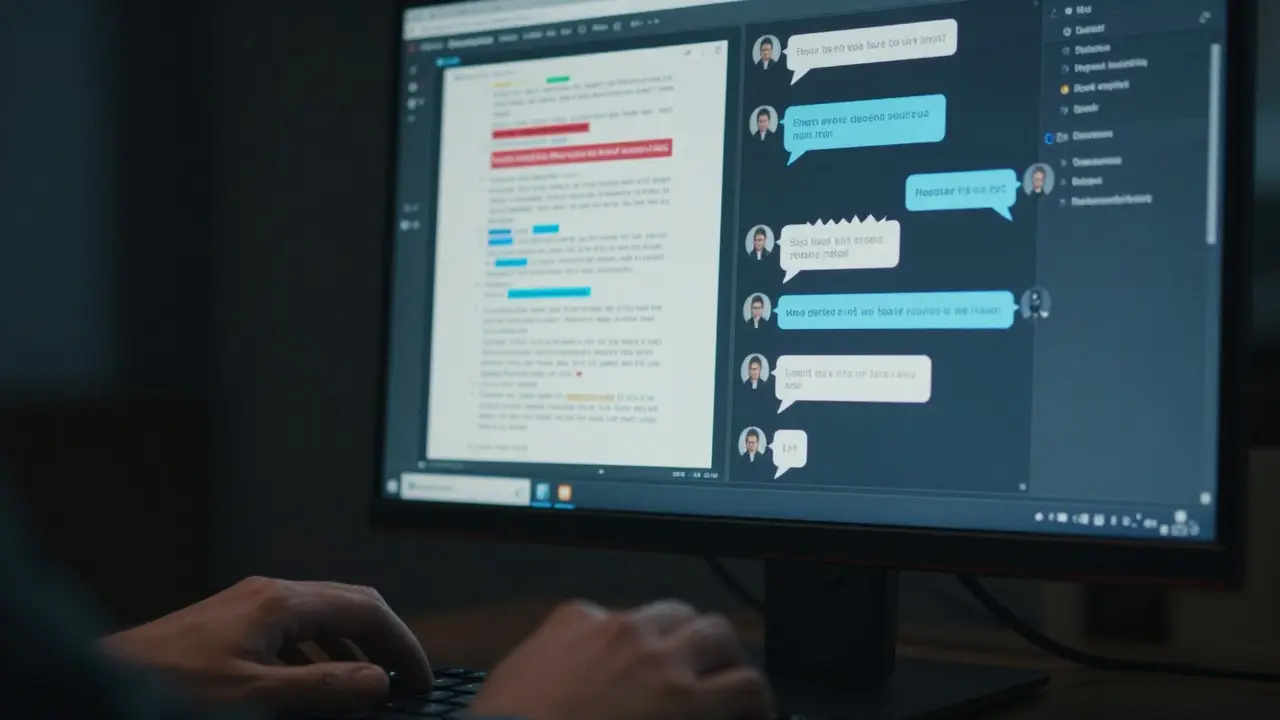
Don’t jump to drastic measures. The first place to go is the Talk Page, which is a dedicated space next to every Wikipedia article where editors discuss changes, propose edits, and resolve disagreements without touching the main article text. Think of it as a comment section, but with more structure.
Here’s the golden rule: Be polite. Wikipedia has a culture called "Civility." If you insult someone, they won’t listen to your logic. Instead, try this approach:
- State the problem clearly. "I believe this sentence lacks a citation."
- Offer a solution. "Here is a link from a major news outlet that supports this claim."
- Ask for their input. "What do you think?"
If you do this, 80% of disputes end right there. The other editor realizes you’re reasonable. They agree. You move on. No drama.
When Talk Pages Fail: Moving Up the Ladder
So, what if the other editor ignores you? Or they revert your change again? Now you have an Edit War, defined as a repetitive cycle of conflicting edits on a Wikipedia article, often involving reverts and counter-reverts, that disrupts collaborative progress. This is bad. It triggers automated bots that flag the article as unstable.
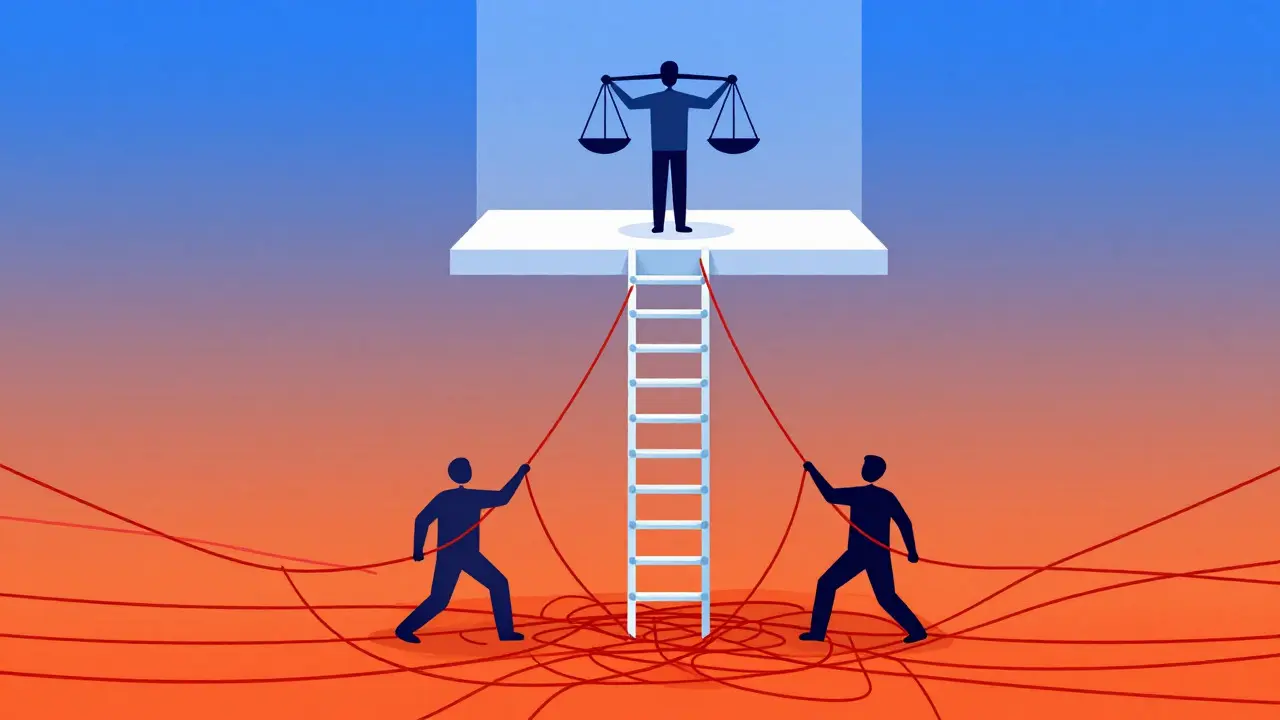
You need to escalate. But don’t panic. There is a formal ladder. Here is how it works:
| Step | Where to Go | Who Helps | Timeframe |
|---|---|---|---|
| 1 | Article Talk Page | Direct counterpart | Immediate |
| 2 | Wikipedia:Requests for Comment | Community members | 7-14 days |
| 3 | Wikipedia:Administrators' noticeboard | Administrators | Varies |
| 4 | Wikipedia:Arbitration Committee | Elected Arbitrators | Weeks to Months |
Notice the timeframes. The Arbitration Committee is the final boss. It’s slow, expensive (in terms of time), and public. Only go there if everything else failed.
The Role of Administrators and Mediators
You might wonder who these Administrators are. They are volunteers with extra tools, like the ability to protect pages or delete files. But they aren’t bosses. They are janitors. Their job is to keep the house clean, not to decide who is right about history.
For content disputes, you often want a Mediator, which is an experienced volunteer trained to facilitate discussions between disagreeing editors, helping them find common ground without imposing a decision. Mediators are great because they don’t take sides. They ask questions. "Can we both agree on this part?" "What source would satisfy both of you?"
If you hire a mediator (yes, you request one for free), bring your best sources. Don’t bring your ego. Leave your ego at the door. The mediator will help you draft a compromise that sounds neutral. That’s the goal.
Building Consensus: The Real Skill
Consensus doesn’t mean everyone agrees 100%. It means no one objects strongly. It’s a process. Here is a simple framework to use when drafting a compromise:
- Find the overlap: What do both sides agree on? Start there.
- Use neutral language: Avoid adjectives. Use verbs and nouns. Instead of "brilliant scientist," say "scientist who received the Nobel Prize."
- Cite multiple sources: If one source says X and another says Y, mention both. "Some critics argue X, while supporters note Y."
This technique is called "balanced coverage." It satisfies the NPOV policy. It shows readers that the topic is complex. And it stops the fight because neither side feels erased.
Common Pitfalls to Avoid
Even good editors make mistakes. Here are the traps that turn small disagreements into big problems:
- Revert Spamming: Reverting an edit is fine once. Doing it five times in an hour is spam. It annoys people and triggers warnings.
- Personal Attacks: Calling someone a "troll" is the fastest way to lose. Stick to the facts.
- Hiding Behind Anonymity: Just because you’re anonymous doesn’t mean you can be rude. People remember usernames.
- Ignoring Deadlines: If you request a comment, wait the full week before escalating. Rushing looks desperate.
Avoid these, and you’ll be seen as a professional. Professionals get listened to.
Practical Examples: How It Plays Out
Let’s look at a real scenario. Imagine an article about a local band. Editor A adds a paragraph saying the band is "the best in the city." Editor B removes it, citing lack of sources. Editor A puts it back, adding a link to a local radio show. Editor B removes it again, saying radio shows aren't reliable sources.
Now, what should happen? 1. Editor A goes to the Talk Page. 2. Editor A posts: "I added a citation from [Radio Station]. I believe this counts as a reliable source for local popularity. Thoughts?" 3. Editor B replies: "Good catch. Maybe we can phrase it as 'featured on [Radio Station]' instead of 'best.'" 4. Editor A agrees. The edit is updated. Conflict resolved.
See? No administrators needed. No arbitration. Just clear communication and a willingness to tweak the wording. That’s the power of the talk page.
Next Steps for New Editors
If you’re new to this, start small. Pick an article you care about. Read the talk page first. See how others handle disagreements. Notice the tone. Notice the structure. Then, try to contribute. If you get stuck, ask for help at the Village Pump or the Help Desk. The community is generally helpful, especially if you’re polite.
Remember, Wikipedia isn’t perfect. It’s a work in progress. But the dispute resolution system is robust. It’s designed to handle conflict. Use it, and you’ll become a better editor, a better writer, and a better collaborator.
What is the difference between a moderator and an administrator on Wikipedia?
An administrator has technical tools like page protection and deletion rights. A moderator (or mediator) is a volunteer who facilitates discussion. Administrators enforce rules; mediators help people agree. You usually need a mediator for content disputes, not an admin.
How long does the Arbitration Committee process take?
It varies widely. Simple cases might take a few weeks. Complex cases can drag on for months. Because it’s so slow, it’s considered the last resort. Always try lower-level resolutions first.
Can I win a dispute if I’m right but the other person is stubborn?
Usually, yes, if you have strong sources. But "winning" isn't the goal. The goal is a stable article. Sometimes, the best outcome is a compromise that reflects both views neutrally. That’s often better than forcing your exact wording.
What happens if I ignore the dispute resolution process?
You risk being tagged with "edit warring" tags. Administrators may protect the page, preventing anyone from editing it for a set time. In extreme cases, you might get a temporary block. It’s not worth the hassle.
Are all Wikipedia disputes public?
Yes. Talk pages are public. Requests for comment are public. Even Arbitration cases are public. There is no private messaging system for disputes. This transparency is a feature, not a bug. It holds editors accountable.