Ever stared at a Wikipedia page and wondered if the facts are actually true? It’s a fair question. The platform relies on volunteers to curate information, which means the quality of the content depends entirely on the sources cited in the footnotes. If you want to trust what you read-or contribute to it-you need to know how to judge those sources yourself. This isn’t about memorizing complex academic rules; it’s about developing a gut check backed by practical methods that anyone can use in under five minutes.
Source evaluation is the process of determining whether a cited reference is reliable, neutral, and suitable for supporting a factual claim in an encyclopedia context. In the world of online encyclopedias, this step separates verified knowledge from rumor. You don’t need a PhD to do this well. You just need a framework.
Quick Summary / Key Takeaways
- Not all websites are created equal; distinguish between primary, secondary, and tertiary sources before citing them.
- Check the author’s credentials and the publisher’s reputation rather than relying solely on the website's design.
- Look for corroboration: one good source is better than ten bad ones, but two independent good sources are best.
- Avoid using Wikipedia itself as a citation source unless you are referencing its own history or policies.
- Use specific tests like the "Who pays for this?" and "Is this peer-reviewed?" questions to filter out bias.
The Hierarchy of Sources: Primary vs. Secondary
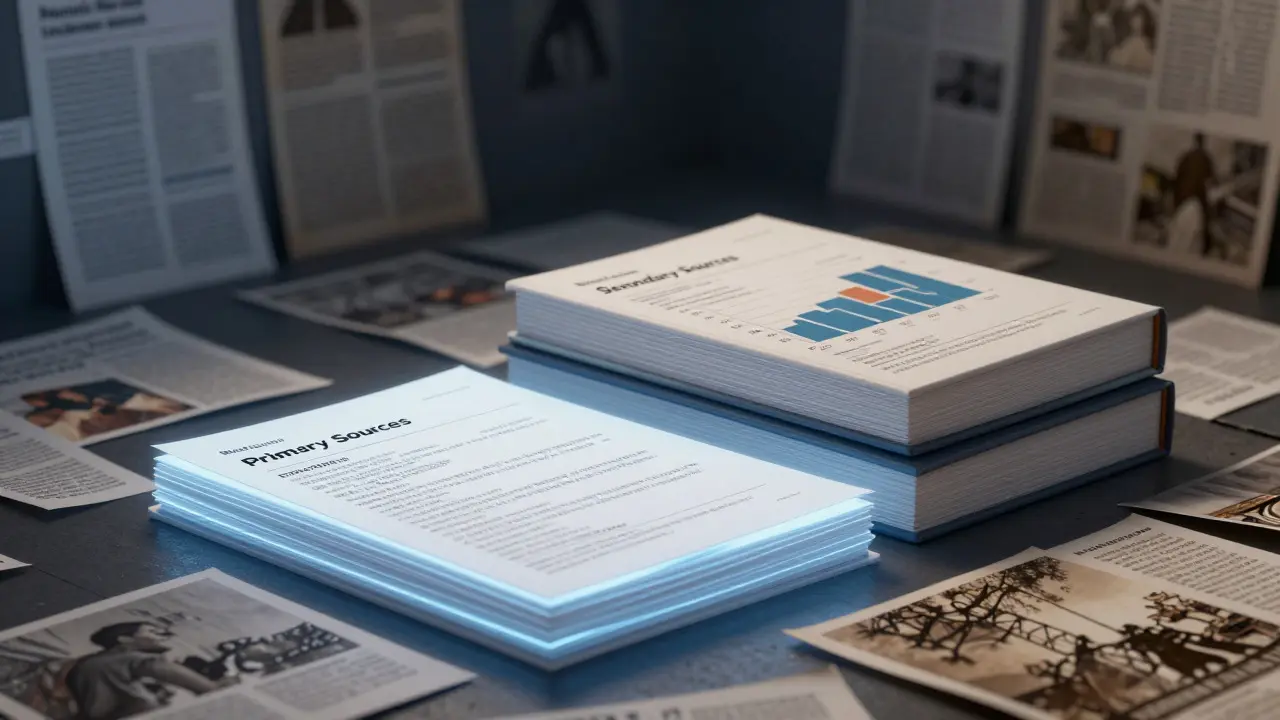
To evaluate quality, you first have to understand what kind of source you’re looking at. In academic and editorial circles, sources fall into three main buckets: primary, secondary, and tertiary. Knowing where a document fits helps you decide if it’s appropriate for the claim being made.
Primary sources are original documents or direct evidence. Think of a transcript from a congressional hearing, a raw dataset from a scientific experiment, or a photograph taken at a historical event. These are valuable because they come straight from the origin. However, they often require interpretation. A raw data set doesn’t tell you *what* it means without analysis.
Secondary sources interpret, analyze, or summarize primary sources. This is where most Wikipedia citations should live. News articles, academic journals, and biographies are typical examples. They provide context and verification. For instance, if a politician makes a statement (primary), a reputable news outlet reporting on that statement with quotes and background (secondary) is usually the better citation for a general audience.
Tertiary sources compile information from other sources. Dictionaries, almanacs, and yes, Wikipedia itself, are tertiary. While useful for quick lookups, they are generally poor choices for citations because they offer no new insight or verification trail. Citing a tertiary source is like citing a map when you could cite the surveyor who measured the land.
| Source Type | Definition | Best For | Risk Factor |
|---|---|---|---|
| Primary | Original evidence or direct record | Specific facts, dates, quotes | Lacks context or interpretation |
| Secondary | Analysis or summary of primary sources | General claims, background info | Potential bias in interpretation |
| Tertiary | Compilation of secondary/primary info | Quick reference only | High risk of error propagation |
The Five-Point Reliability Check
When you click on a citation link, you’re not just reading; you’re auditing. Here is a simple, repeatable checklist I use to vet sources quickly. You don’t need to spend hours on each one-just run through these points.
- Authorship: Who wrote this? Is their name listed? Do they have relevant expertise? A blog post about quantum physics written by a high school student is suspect, even if the math looks right. Look for bios or LinkedIn profiles that confirm professional standing.
- Publisher Reputation: Who published it? Is it a known news agency like the Associated Press, a university press, or a niche hobbyist forum? Established institutions have editorial boards that fact-check content. Independent blogs often do not.
- Date and Currency: When was it published? Medical advice from 1995 might be outdated today. Historical events need contemporary sources. Always check the publication date, not just the "last updated" stamp, which can be misleading.
- Bias and Tone: Read the language. Is it objective, or does it use loaded words like "shocking," "disgraceful," or "genius"? Neutral tone is a hallmark of reliable journalism and academic writing. Emotional language suggests opinion, not fact.
- Corroboration: Does this claim appear elsewhere? If a major news story is reported by only one small local paper, dig deeper. Reliable facts usually have multiple independent traces.

Red Flags: When to Trust Your Gut
Sometimes a source fails the technical checks but still feels "off." That intuition is usually correct. Here are common red flags that should make you hesitate before citing anything.
No Author Listed: Anonymous posts are hard to verify. Unless it’s a standard anonymous wire report from a major agency, missing authorship is a warning sign.
Pay-to-Play Journalism: Some outlets publish sponsored content or press releases without clearly labeling them. If the article reads more like an advertisement than a report, it’s likely promotional material. Check the sidebar or footer for disclosures.
Extreme Claims Without Evidence: If a source claims something extraordinary-like a cure for cancer or a hidden government conspiracy-it must provide extraordinary evidence. If the evidence is thin or anecdotal, the source is likely unreliable.
Broken Links or Dead Ends: If a citation leads to a 404 error or a generic homepage, it’s useless. A good source should take you directly to the relevant paragraph or section. If you have to hunt for the information, the citation is poorly constructed.
Handling Controversial Topics
Evaluating sources becomes trickier when the topic is polarized. Politics, religion, and culture often lack clear "right" answers, so neutrality is key. In these cases, look for consensus among experts rather than single voices.
For example, if you’re citing climate change data, a single blog post from a skeptic is weak. But a report from the Intergovernmental Panel on Climate Change (IPCC) carries weight because it represents the collective view of hundreds of scientists. Always prefer institutional consensus over individual opinion in controversial fields.
Also, watch out for cherry-picking. A source might present one data point that supports their narrative while ignoring contradictory data. Cross-reference with at least two other reputable sources to ensure the full picture is presented.
Common Mistakes to Avoid
Even experienced editors make errors. Here are the top pitfalls that undermine source quality:
- Citing Wikipedia: Unless you’re discussing Wikipedia’s own history, avoid citing it. It’s a tertiary source. Find the underlying secondary sources instead.
- Over-relying on One Source: If an entire section rests on a single citation, it’s fragile. If that source is later found to be wrong, the whole section collapses. Aim for multiple independent citations for major claims.
- Ignoring Context: A quote taken out of context can change its meaning entirely. Ensure the citation supports the specific sentence it’s attached to, not just the general topic.
- Using Outdated Sources for Current Events: A book published in 2010 won’t cover a law passed in 2025. Match the source’s date to the timeframe of the claim.
Practical Tools for Faster Evaluation
You don’t have to do this manually every time. There are tools and habits that speed up the process.
First, use browser extensions that highlight citations and show the domain’s reputation. Many readers’ toolbars now flag low-authority domains automatically. Second, keep a personal list of trusted publishers. Over time, you’ll recognize names like *The New York Times*, *Nature*, *Science*, or *Harvard Law Review* instantly. This recognition saves mental energy for harder cases.
Finally, practice active reading. Don’t just skim the headline. Click the link, find the exact sentence supporting the claim, and read the surrounding paragraphs. This takes 30 seconds but prevents 90% of citation errors.
Frequently Asked Questions
Can I cite a news blog?
Yes, but only if the blog has a strong editorial track record and the author is a recognized expert. Avoid personal blogs or opinion pieces unless you are specifically citing the opinion itself.
What is a tertiary source?
A tertiary source compiles information from primary and secondary sources. Examples include dictionaries, encyclopedias, and bibliographies. They are useful for overview but weak for specific factual claims.
How do I handle conflicting sources?
Present both viewpoints neutrally. Use phrases like "Some experts argue..." or "According to [Source A], while [Source B] suggests...". Ensure both sources are of comparable quality.
Is a PDF from a university reliable?
Generally, yes. University-hosted PDFs are often course materials or research papers. Check the author’s affiliation and the department’s reputation to confirm credibility.
Why shouldn't I cite Wikipedia?
Wikipedia is a tertiary source. It summarizes other works. To maintain transparency, you should cite the original secondary or primary sources that Wikipedia used, allowing readers to trace the information back to its origin.