Imagine you are editing an article on the Spanish version of Wikipedia about a French historical figure. You find a perfect primary source in French. Now what? Do you translate the title? The author's name? The publisher? If you get this wrong, readers might not be able to verify your claim, and editors might revert your work. Translating citations is one of the trickiest parts of maintaining multilingual encyclopedias because it sits right at the intersection of linguistics, librarianship, and community standards.
The core problem isn't just language; it's trust. A citation must point to a real, accessible document. When you cross borders, that document changes its "face" depending on who is looking at it. This guide breaks down exactly how to handle these translations so your edits stick and your sources remain verifiable for anyone, anywhere.
Key Takeaways
- Bibliographic metadata should generally remain in the original language to ensure accurate searchability.
- Use italicized translations in parentheses only when the original title is obscure or non-Latin script.
- Consistency across languages is achieved by linking to the same stable identifier (like DOI or ISBN) rather than relying on text matches.
- Always verify that the translated reference still points to the exact same edition or volume as the original.
- Community norms vary; check the specific help pages of the target language wiki before making bulk changes.
Why Translation Causes Confusion in References
Most editors assume that translating a book title makes it more helpful. In practice, it often does the opposite. If you cite a German book called Die Geschichte der Stadt but write the citation as The History of the City, a reader searching for the book in a library catalog will likely fail. Library databases index works by their original titles. By changing the string, you break the link between the article and the physical or digital object.
This issue is particularly acute with non-Latin scripts. For example, citing a Japanese academic paper requires careful handling. If you simply transliterate the title into Roman characters without providing the original Kanji/Kana, you lose precision. Conversely, if you only provide the Kanji, English-speaking readers cannot read it. The solution lies in a hybrid approach that respects both the integrity of the source and the readability for the audience.
In the context of Wikipedia, a free online encyclopedia operated by the Wikimedia Foundation, citations serve as the backbone of reliability. The platform uses standardized templates to format these references. When dealing with multilingual initiatives, the goal is to create a web of knowledge where facts can be traced back to their origins regardless of the language barrier.
Standard Rules for Translating Titles and Authors
There is no single global rulebook, but strong conventions exist within the Wikimedia Community. Here is the general hierarchy of preference:
- Keep Original Title First: Always list the title in the language of the publication first. This is the primary identifier.
- Add Translation in Parentheses: If the title is in a language unfamiliar to the majority of readers, add a literal translation in parentheses immediately after. Use italics for the original title and roman letters for the translation.
- Author Names: Do not translate author names unless they have a well-known anglicized or localized form (e.g., using "Voltaire" instead of "François-Marie Arouet"). For most authors, keep the name as it appears on the book cover or journal masthead.
- Publisher Names: Keep publisher names in the original language. Translating them adds noise without adding value, as publishers are usually identified by location and name in their native tongue.
Consider this example. You are citing a Russian novel. The correct format would look like this: War and Peace (Voina i mir). Notice that the English title comes first because the article is in English, but the Russian title is preserved for accuracy. If you were editing the Russian Wikipedia, you would reverse this order: Voina i mir (War and Peace). This symmetry helps maintain consistency across language versions.
Handling Non-Latin Scripts and Transliteration
Working with Chinese, Arabic, Cyrillic, or Hebrew texts introduces another layer of complexity. The key here is transliteration versus *translation*. Transliteration converts characters from one writing system to another (e.g., Greek letters to Latin letters). Translation changes the meaning into a different language.
For citations, transliteration is usually preferred over full translation for titles, especially if the original script is widely recognized. However, if the script is obscure to the target audience, a brief translation is helpful. Let's look at a practical scenario involving a Japanese source.
| Strategy | Best For | Risk | Example Format |
|---|---|---|---|
| Original Only | Languages with high recognition (French, German) | Readers may not understand the topic | Les Misérables |
| Original + Translation | Obscure languages or complex titles | Citation becomes long and cluttered | Das Kapital (Capital) |
| Transliteration Only | Non-Latin scripts with established romanization | Loss of original visual identity | Kokoro (Heart) |
| Translation Only | Rarely recommended | High risk of misidentification | The Heart (by Natsume Soseki) |
Notice the last row. Using only the translation is risky because many books share generic titles. "The Heart" could refer to dozens of different works. By including the author's name and ideally the original title or transliteration, you narrow down the ambiguity significantly.
Ensuring Consistency Across Language Versions
One of the biggest pain points for international editors is inconsistency. The English Wikipedia might cite a source differently than the German or French versions. How do you fix this? You don't force uniformity; you force traceability.
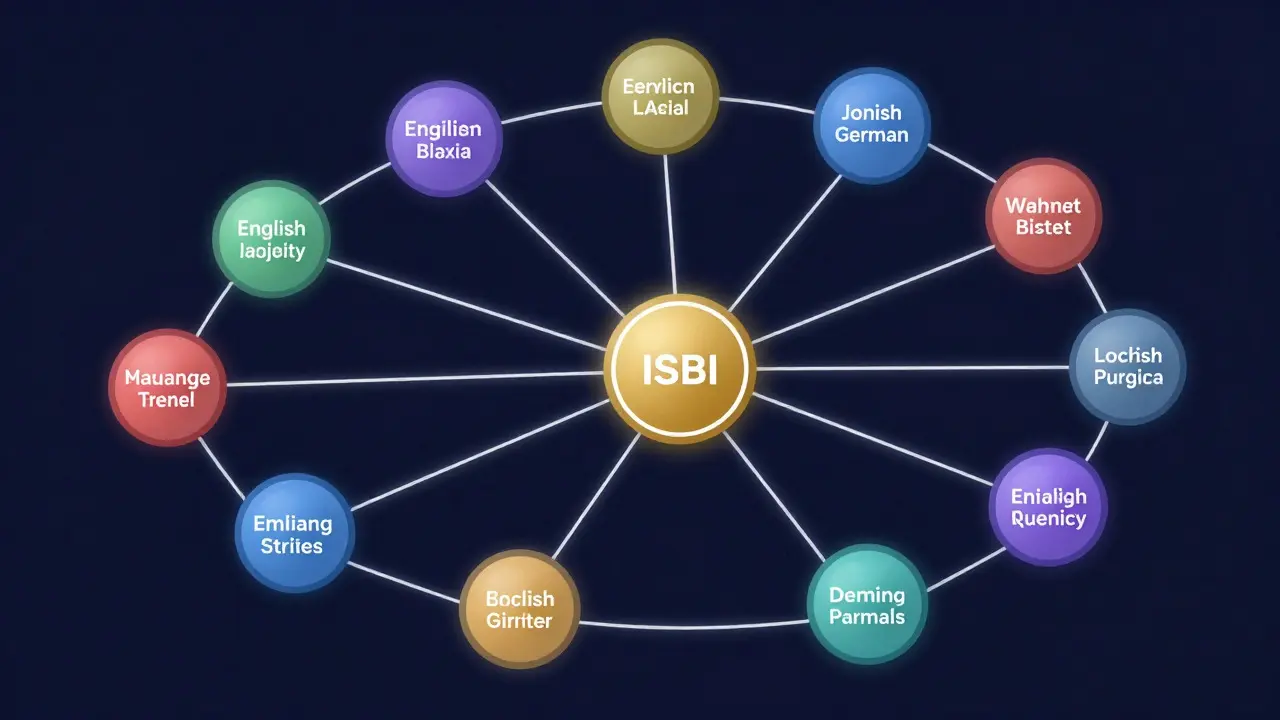
The best way to ensure consistency is to rely on unique identifiers. If a book has an ISBN (International Standard Book Number), include it in every citation, regardless of language. An ISBN is universal. It doesn't change based on translation. Similarly, for academic papers, use the DOI (Digital Object Identifier).
When you edit multiple language versions of the same article, follow these steps to maintain alignment:
- Check the citation template used in each language. Some wikis use {{Cite book}}, others use custom local templates.
- Ensure the URL points to the same resource. If you link to a PDF on the publisher's site, make sure that PDF is the same version in all languages.
- Compare the access dates. If the source is online, the date you accessed it should be consistent or updated uniformly across versions.
- Use interlanguage links to verify that the corresponding articles in other languages are citing the same primary source.
This process prevents the "citation drift" phenomenon, where different language versions end up citing different editions or even different books entirely due to translation errors.
Common Pitfalls and How to Avoid Them
Even experienced editors make mistakes. Here are the three most common traps when translating citations:
1. The Machine Translation Trap Relying on Google Translate for book titles is dangerous. Algorithms often produce literal translations that sound unnatural or miss nuances. A title like Le Petit Prince translates fine, but a poetic or idiomatic title might come out garbled. Always double-check against a known English edition or a reliable database like WorldCat.
2. Ignoring Edition Differences A book published in 1950 and reprinted in 2020 might have slightly different page numbers or prefaces. If you translate the title but forget to update the year or edition number, your page references might be wrong. Always match the specific edition cited in the body of the article.
3. Over-Translating Metadata Don't translate the journal name. Don't translate the city of publication. These fields are part of the bibliographic fingerprint. Changing them makes it harder for researchers to locate the source. Keep the metadata raw; translate only the title if necessary for clarity.
Practical Workflow for Editors
If you are working on a large-scale translation project or updating references for a multilingual initiative, adopt a systematic workflow. Start by gathering all sources in a spreadsheet. List the original title, the proposed translation, the ISBN/DOI, and the URL. Verify each entry against a library catalog. Once verified, input the data into the Wikipedia templates. Finally, review the rendered citations to ensure they display correctly and aren't too long for the sidebar.
Remember, the goal is not to make the citation pretty; it is to make it functional. A clear, accurate, and consistently formatted citation builds trust in the entire article. Whether you are editing a niche topic in Estonian or a major biography in English, these principles apply universally. By respecting the original language while providing helpful context, you bridge the gap between global knowledge and local understanding.
Frequently Asked Questions
Should I always translate book titles in Wikipedia citations?
No. You should only translate titles if the original language is not widely understood by the target audience. For major languages like French, German, or Spanish, keeping the original title is standard. For less common languages, add a parenthetical translation to aid comprehension.
How do I handle author names in foreign languages?
Keep author names in their original spelling unless there is a widely accepted localized version. For example, use "Nabokov" for Vladimir Nabokov, not a phonetic approximation. This ensures consistency with library records and other academic sources.
What is the difference between transliteration and translation in citations?
Transliteration converts characters from one alphabet to another (e.g., Cyrillic to Latin) without changing the sound. Translation changes the meaning into a different language. For citations, transliteration is preferred for preserving the original title's identity, while translation is used for clarity.
Do I need to update citations in all language versions of an article?
Ideally, yes. Consistency across language versions helps prevent confusion. Use universal identifiers like ISBNs or DOIs to ensure that all versions point to the same specific edition of the source material.
Where can I find the correct translation of a foreign book title?
Check the spine or cover of an English-language edition of the book if one exists. Alternatively, consult authoritative databases like WorldCat or the publisher's official website. Avoid relying solely on machine translation tools for formal bibliographic entries.