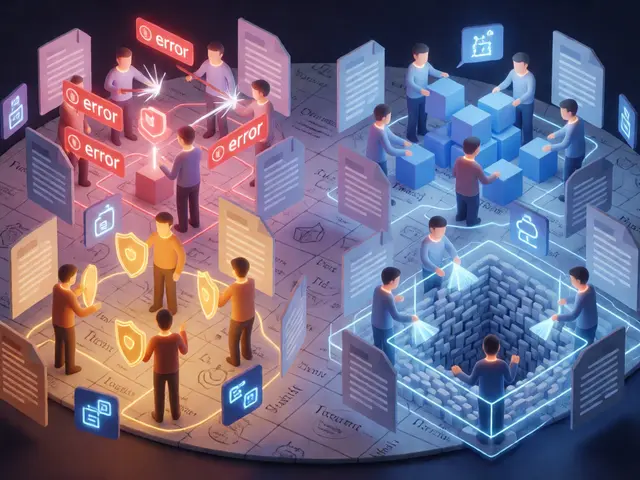
You might think Wikipedia is just a giant pile of text written by strangers. But behind every polished article on quantum physics or local history lies a hidden engine: the WikiProject. These are not formal departments with managers and paychecks. They are voluntary groups of editors who band together to fix, expand, and maintain articles within a specific topic area. If you have ever wondered how a crowd-sourced encyclopedia keeps its standards high without a central authority, the answer lies in this messy, effective form of peer collaboration.
The core problem with open editing is chaos. Anyone can hit "edit" at any time. Without structure, this leads to inconsistent tone, factual errors, and endless edit wars. WikiProjects solve this by creating micro-communities. Think of them as specialized task forces. One group focuses entirely on medical articles, another on football players, and yet another on obscure 19th-century poets. By narrowing their focus, these editors develop deep expertise in their niche. This specialization is the first step toward quality.
The Structure of Collaborative Governance
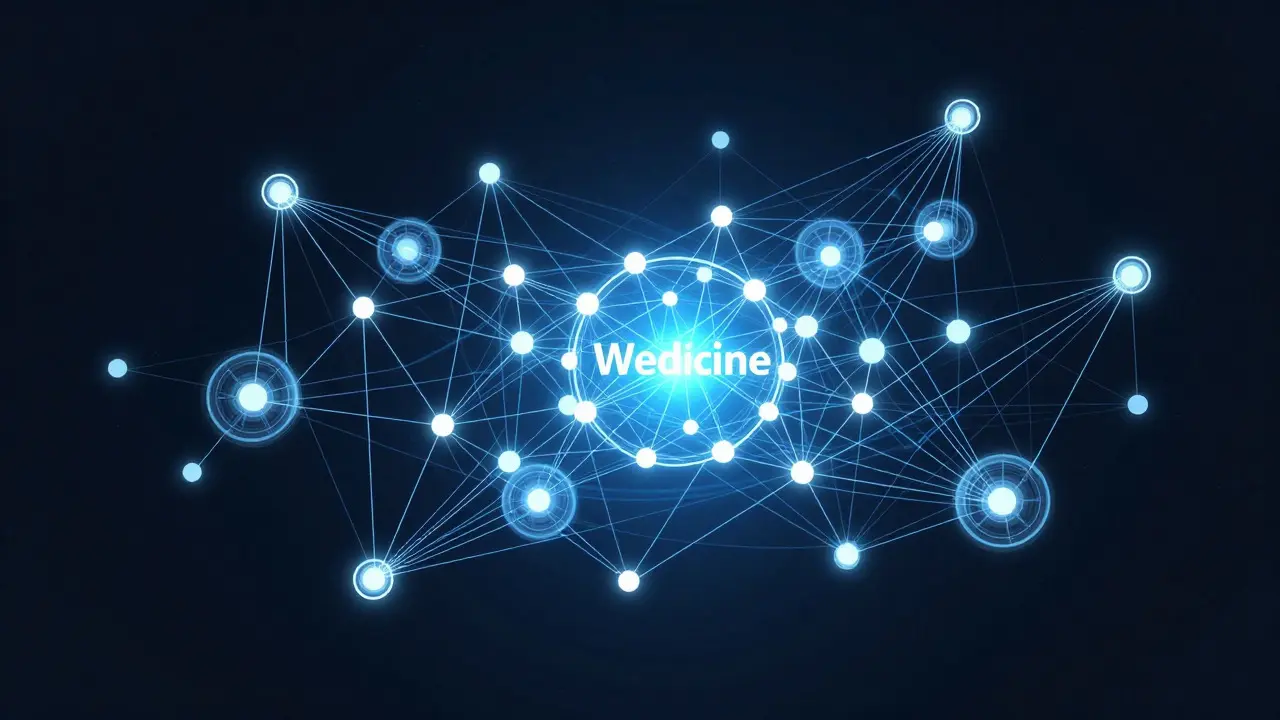
A typical WikiProject operates like a small, self-governing town. It has a talk page where members discuss strategy, a list of participants, and often a set of style guidelines specific to that topic. For instance, the WikiProject Medicine doesn't just check for typos; they ensure that health claims align with current medical consensus. They use specific templates to flag sources and categorize articles by importance and quality.
This structure allows for distributed oversight. Instead of one person trying to know everything about everything, hundreds of people know a lot about a little. When a new editor adds information about a rare bird species, they aren't shouting into the void. The WikiProject Birds watches those pages. If the addition lacks citations or contradicts established ornithology, a project member will likely spot it within hours. This rapid feedback loop prevents low-quality content from sticking around.
Standardization Through Shared Guidelines
One of the biggest threats to quality is inconsistency. One editor might write an article about a city in a dry, academic tone, while another writes about a neighboring city like a travel blog. WikiProjects mitigate this by establishing style guides. These are not arbitrary rules; they are conventions developed through debate and consensus. For example, the WikiProject Video Games might agree that all game reviews must cite professional critics rather than user scores. This creates a uniform voice across thousands of related articles.
These guidelines also help with technical formatting. Editors learn to use specific infoboxes, citation templates, and categorization tags correctly. Over time, this reduces the workload for everyone. You don't have to explain what a {{reflist}} tag does every time; the community already knows. This shared knowledge base lowers the barrier to entry for new contributors while raising the baseline for output quality.
Conflict Resolution and Consensus Building
Disagreements are inevitable. Two editors might disagree on whether a minor celebrity is notable enough for an article. In a vacuum, this could lead to an edit war-back-and-forth reverts that frustrate everyone. WikiProjects provide a forum for resolution. Members post their arguments on the project's talk page, citing policies like Notability and Verifiability.
The process is slow but deliberate. Editors present evidence. Others respond. Eventually, a rough consensus emerges. This isn't voting; it's reasoning. If the majority agrees that a source is unreliable, the claim gets removed. This method filters out bias and personal preference. It ensures that the final article reflects the weight of available sources, not the loudest voice in the room. This rigorous debate is why Wikipedia articles often feel more balanced than those written by a single author.
Quality Assessment and Rating Systems
How do you measure improvement? WikiProjects use assessment scales. Articles are rated from "Stub" (a few sentences) to "Featured Article" (the highest standard). These ratings aren't just badges; they are tools for resource allocation. Editors look at lists of unassessed or poorly rated articles to decide where to spend their time. If a WikiProject notices that many articles in their category are rated "Start," they might organize a "copy-editing drive" to polish them up.
| Feature | Solo Editing | WikiProject Collaboration |
|---|---|---|
| Error Detection | Limited to individual knowledge | Crowdsourced fact-checking |
| Consistency | Variable tone and format | Standardized via project guidelines |
| Bias Mitigation | High risk of personal bias | Reduced through consensus debate |
| Sustainability | Prone to abandonment | Maintained by active community |
This system creates a visible roadmap for quality. Readers see the rating banners at the top of articles, which sets expectations. Contributors see progress bars and stats, which motivates them. It turns abstract "quality" into concrete tasks: "Fix these five citations," "Expand this section," "Merge these duplicates." Gamification elements, like barnstar awards for helpful edits, further encourage participation.
Onboarding New Contributors
WikiProjects act as mentorship hubs. New editors often feel overwhelmed by Wikipedia's complex policies. Joining a WikiProject gives them a smaller, friendlier community to ask questions. Experienced members welcome newcomers, guide them through the interface, and review their first edits gently. This support network reduces burnout. Instead of quitting after one harsh revert, a new editor gets constructive feedback and learns how to improve.
Moreover, projects often host events like edit-a-thons. These are focused sessions where editors gather online or offline to improve articles on a specific theme, such as women scientists or local heritage sites. These events boost morale and create a sense of shared purpose. They also attract diverse voices, helping to close gaps in representation. A WikiProject dedicated to African History, for example, actively seeks editors who can contribute unique perspectives and sources.
Challenges and Limitations
It's not all smooth sailing. WikiProjects suffer from volunteer fatigue. Many rely on a handful of super-users who do most of the work. If these key members leave, the project can stagnate. There is also the issue of insularity. Sometimes, long-time members become resistant to change, preferring old ways of doing things even when better practices emerge. This can discourage new ideas.
Additionally, coordination between overlapping projects can be tricky. An article about a famous physicist might fall under WikiProject Physics, WikiProject Biography, and WikiProject Women Scientists. Who takes ownership? Usually, the article stays in multiple categories, and editors from different projects collaborate. While this usually works, it can lead to fragmented discussions if communication breaks down. Effective leadership and clear cross-project links are essential to keep things running smoothly.
The Future of Peer-Collaborated Quality
As AI tools enter the editing workflow, the role of WikiProjects may shift. Automated bots can now fix simple formatting errors and flag broken links. This frees human editors to focus on higher-level tasks: verifying nuanced claims, resolving disputes, and improving narrative flow. The human element of judgment remains irreplaceable. Machines can detect syntax errors, but only humans can determine if a paragraph is misleading or if a source is biased.
WikiProjects are adapting by integrating these tools. They create checklists for bot-assisted cleanup and train members on how to interpret algorithmic suggestions. The goal remains the same: accurate, neutral, and comprehensive information. The methods evolve, but the principle of collective intelligence holds strong. By leveraging the diverse skills of thousands of volunteers, these communities continue to raise the bar for what a free encyclopedia can achieve.
What exactly is a WikiProject?
A WikiProject is a group of Wikipedia editors who collaborate to improve articles within a specific topic area, such as medicine, sports, or geography. They coordinate efforts through talk pages, share style guidelines, and monitor changes to relevant articles.
Do WikiProjects have official authority over articles?
No, WikiProjects do not have official power. Their recommendations carry weight because they represent community consensus among experts in that field, but any editor can still make changes. Disputes are resolved through discussion and adherence to site-wide policies.
How do WikiProjects handle conflicts between editors?
Conflicts are handled through discussion on the article's talk page or the project's main talk page. Editors present evidence based on reliable sources and site policies. The goal is to reach a consensus, not to win a vote. Mediation by other project members often helps resolve deadlocks.
Can anyone join a WikiProject?
Yes, participation is open to all registered users. You simply add your username to the project's participant list. Most projects welcome new members and offer guidance to help them get started with editing tasks relevant to their interests.
How do WikiProjects improve article accuracy?
They improve accuracy by pooling specialized knowledge. Members with expertise in a subject can quickly identify errors, suggest better sources, and ensure that technical details are correct. Regular monitoring and peer review catch mistakes that a solo editor might miss.