Quick Takeaways for Resolving Translation Clashes
- Focus on the source citations rather than the translated text.
- Use the "Talk" pages of both language editions to find common ground.
- Prioritize local community guidelines over a strict one-to-one translation.
- Leverage the Content Translation tool to track specific changes.
- Distinguish between linguistic errors and ideological disagreements.
The Root of the Friction: Why Translations Clash
Most people think translation is a mechanical process, but on Wikipedia is a multilingual online encyclopedia written collaboratively by volunteers. It operates as a federation of independent language editions. This means the English Wikipedia and the French Wikipedia aren't just mirrors of each other; they are separate entities with their own cultures, styles, and standards for what constitutes a "reliable source."
Translation disputes usually happen when a contributor tries to import a perspective from a dominant language-often English-into a smaller language edition where the local editors have a different view of the subject. For example, a description of a political event might be seen as neutral in English but viewed as biased in the Arabic edition. When you try to force a direct translation, you're not just moving text; you're importing a specific worldview. This often triggers a "revert war," where editors keep undoing each other's changes in a loop of frustration.
Navigating the Technical and Social Tools
To stop the bleeding during a dispute, you need to move the conversation away from the article itself and into the metadata layers of the site. The first tool in your kit should be the Content Translation tool is an automated assistant that helps editors translate content from one language to another using machine translation and a side-by-side interface. While this tool helps with speed, it can actually worsen disputes if an editor relies too heavily on the machine output without understanding the nuance of the target language.
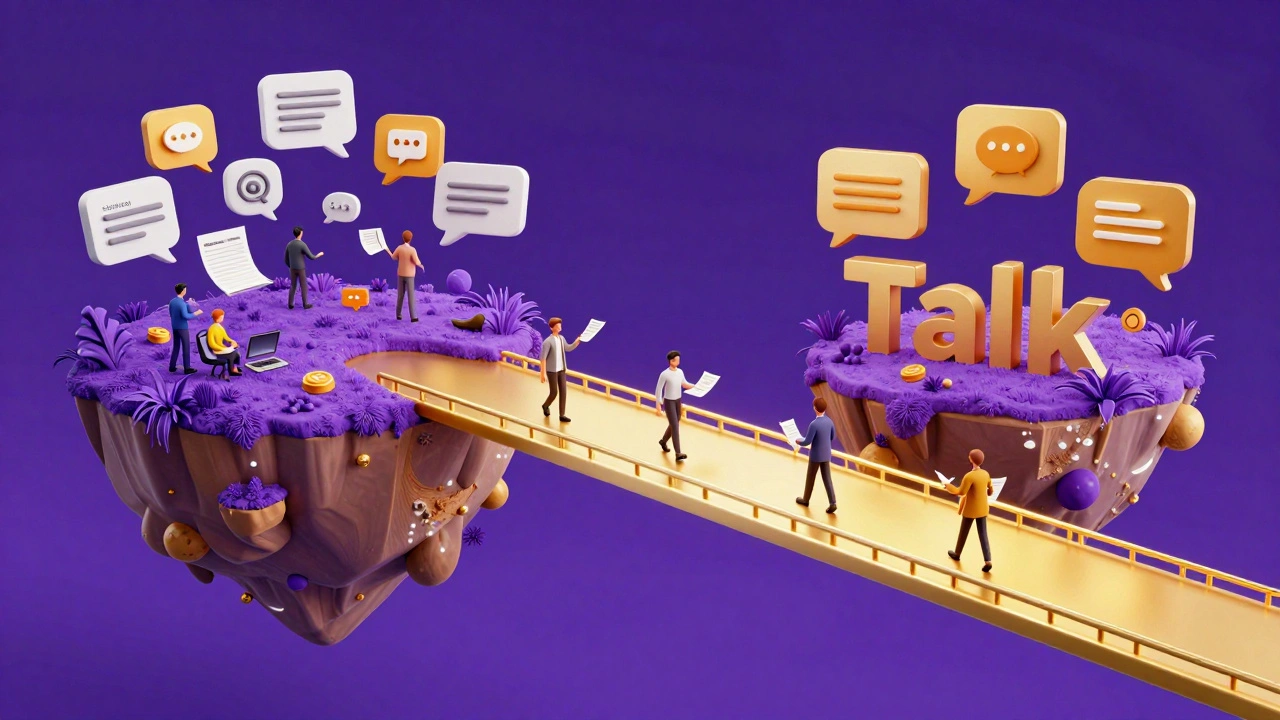
When a dispute hits a boiling point, the "Talk" page (or Discussion page) is where the real work happens. However, the mistake most translators make is arguing only on the target language's Talk page. If you're translating from English to German and the German editors are pushing back, you should also start a thread on the English Talk page. Why? Because the source of the dispute might be an inaccuracy in the original English text that the German editors have spotted. Fixing the source first makes the translation dispute vanish instantly.
Strategies for Bridging the Cultural Gap
You have to accept that a perfect 1:1 translation is often a bad goal. Instead, aim for "functional equivalence." This means the article achieves the same purpose in the target language, even if the phrasing or the emphasis differs. If you're dealing with a contentious topic, like a historical figure's legacy, a direct translation of a "balanced" English sentence might feel too clinical or too vague for a reader in Italy or Japan.
A great rule of thumb is to identify "non-negotiables." Some facts-dates, numbers, official titles-are non-negotiable. Interpretations of those facts, however, are flexible. If a dispute is about whether a person was "influential" versus "controversial," check the sources in the target language's local libraries or news archives. Often, the local sources provide a perspective that the English-language sources missed entirely. By integrating these local citations, you turn a dispute into a content improvement project.
| Approach | Goal | Risk | Best For |
|---|---|---|---|
| Strict Literalism | Exact word match | High friction with local editors | Technical or Scientific data |
| Cultural Adaptation | Local relevance | Loss of original nuance | Political or Social topics |
| Source-First Alignment | Fact consistency | Takes longer to implement | Complex historical disputes |
Handling the "Imperialism" Accusation
In the world of Wikidata is a free and open knowledge base that stores structured data used by Wikipedia and other projects. It acts as the central hub that connects different language versions of an article. When a translator pushes an English-centric view too hard, they are often accused of "English linguistic imperialism." This is a serious charge in the community and can lead to you being blocked from editing.
To avoid this, stop acting like a translator and start acting like a collaborator. Instead of saying, "The English version says X, so the Spanish version should say X," try saying, "I noticed the English version includes this specific detail about X; do you think it would be valuable for our readers here?" This shifts the power dynamic from an imposition to an invitation. It acknowledges the authority of the local editors and makes them allies in the process of improving the encyclopedia.
Escalating to Community Arbitration
Sometimes, no amount of polite conversation works. If you're stuck in a loop where an editor is repeatedly deleting your sourced translations without a valid reason, you need to escalate. But don't just report them. Use the Wikipedia:Arbitration Committee is a body of experienced editors that resolves long-standing disputes that cannot be settled through normal consensus. Before going this route, ensure you have a clear "paper trail" of your attempts to compromise on the Talk pages.
When presenting your case, focus on the Neutral Point of View (NPOV) is the core policy requiring that articles be written without bias and represent all significant views fairly. Don't argue that your translation is "better" or "more accurate." Argue that the current version of the page is failing the NPOV policy because it omits key information present in reliable sources. Frame the dispute as a matter of policy, not a matter of personal preference or linguistic superiority.
Common Pitfalls to Avoid
- Using Google Translate as an Argument: Never tell a native speaker that your translation is correct because a machine said so. This is the fastest way to lose credibility.
- Ignoring Local Style Guides: Every language edition has a Manual of Style is a set of guidelines that ensure consistency in formatting and tone across articles. If the German Wikipedia prefers a more formal tone than English, your translation must adapt, even if it feels less "natural" to you.
- Avoiding the "Cross-Wiki" Dialogue: Don't assume that if something is settled in English, it's settled globally. Each edition is a sovereign state in the Wikipedia ecosystem.
What should I do if a local editor deletes my translation without explanation?
Do not immediately revert the change. This often triggers a revert war. Instead, go to the article's Talk page and politely ask the editor for the reason behind the deletion. Ask if there is a specific local policy or a conflicting source they are relying on. If you can show that your addition was based on a reliable source, they are more likely to restore it or help you rephrase it.
How do I handle a dispute where the source article is fundamentally wrong?
The best approach is to fix the source article first. If the English version has an error, start a discussion on the English Talk page. Once the community there agrees on a correction, the translation dispute in other languages usually resolves itself because the "truth" has been aligned across editions.
Is it better to translate a whole page or just a few sections?
Translating a few sections at a time is generally better. This allows local editors to review the content in smaller chunks and provide feedback on style and tone. It prevents the "shock" of a massive content dump and allows you to adjust your translation style based on the community's preferences before you commit hours of work.
What is the role of Wikidata in solving these disputes?
Wikidata provides the structured data (like birth dates or official heights) that should be identical across all languages. If a dispute is about a specific data point, check the corresponding Wikidata item. If the data is correct there, you can use that as a factual anchor to justify the translation in the article.
How do I deal with a dispute over "cultural nuance"?
Acknowledge that cultural nuance is valid. Instead of fighting for a literal translation, suggest a compromise where both perspectives are mentioned. For example, "While English sources describe this event as X, local sources in [Country] often characterize it as Y." This adheres to the Neutral Point of View policy and satisfies both sets of editors.
Next Steps for Resolving Conflict
If you're currently in a dispute, your first move should be to stop editing the article for 48 hours. This "cooling-off period" prevents an emotional escalate. During this time, browse the Talk pages of the involved language editions to see if similar disputes have happened before and how they were solved. If you are a new translator, consider reaching out to a "WikiProject" coordinator-these are groups of editors dedicated to specific topics (like medicine or history) who can act as mediators between different language communities.