Reproducibility in Wikipedia: How Accuracy and Transparency Keep Knowledge Reliable
When you read something on Wikipedia, you should be able to reproducibility it—find the same fact in a trusted source, trace how it got there, and see who changed it and why. This isn’t magic. It’s a system built on open records, clear rules, and millions of small checks. Reproducibility, the ability to verify information through independent, transparent means. Also known as verifiability, it’s what separates Wikipedia from every other website that claims to know everything. If a fact can’t be checked, it doesn’t stay. That’s not opinion—it’s policy.
This system relies on three things: reliable sources, published materials like books, journals, and official reports that have editorial oversight, edit verification, the process of reviewing changes using diff tools and edit history to spot errors or bias, and Wikipedia policies, community-written rules that demand evidence, neutrality, and transparency in every edit. These aren’t abstract ideas. They’re tools used daily by editors who fix typos, update election results, or remove fake claims from breaking news stories. You don’t need to be an expert to help—just follow the trail. Click the citation. Check the edit history. See if someone else added the same fact from the same source. That’s reproducibility in action.
It’s why Wikipedia survives attacks from bots, governments, and misinformation campaigns. It’s why librarians, teachers, and researchers trust it. And it’s why a student in Lagos, a scientist in Berlin, or a retiree in Toronto can all look up the same fact and find the same answer—not because it’s perfect, but because they can prove it’s true. Below, you’ll find real examples of how this system works: how editors verify facts during crises, how tools help spot bad edits, how policies stop conflicts of interest, and how small changes keep the whole thing running. This isn’t theory. It’s practice. And it’s open for anyone to see, test, and improve.
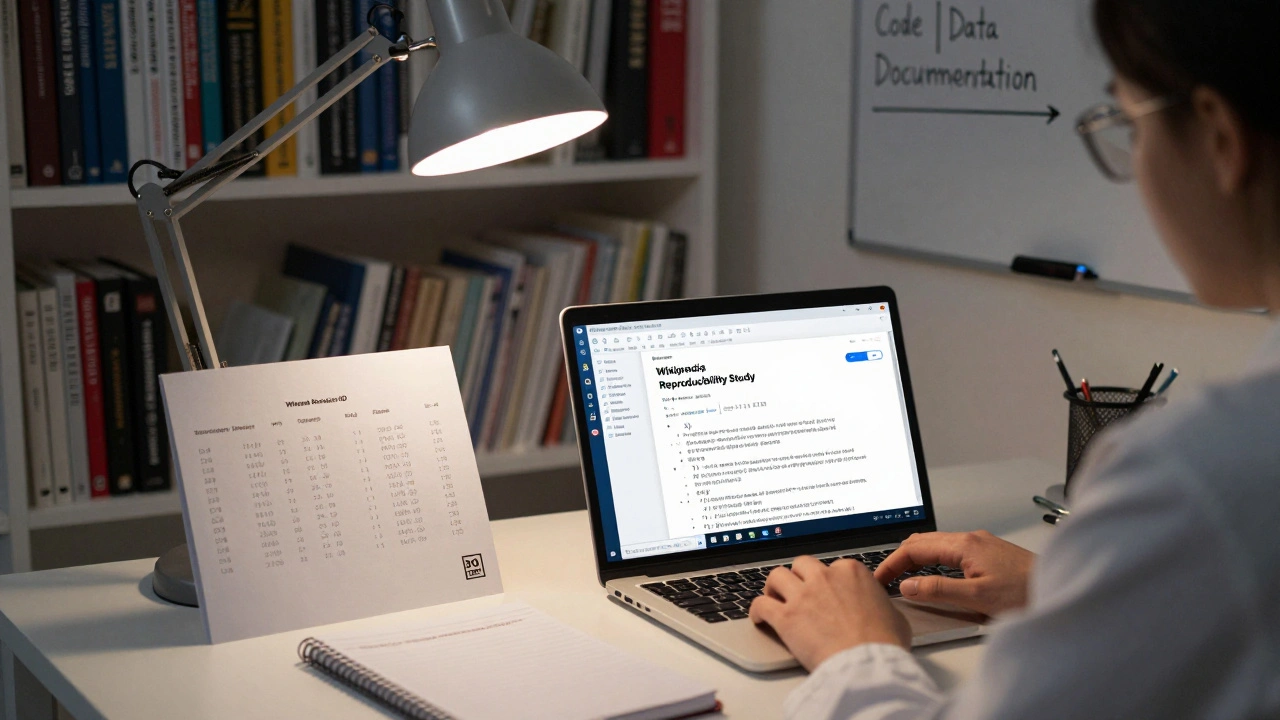
Reproducibility in Wikipedia Research: How to Share Code and Data Effectively
Wikipedia research often fails reproducibility because code and data aren't shared. Learn how to properly document, archive, and share your analysis to make your work verifiable and trustworthy.
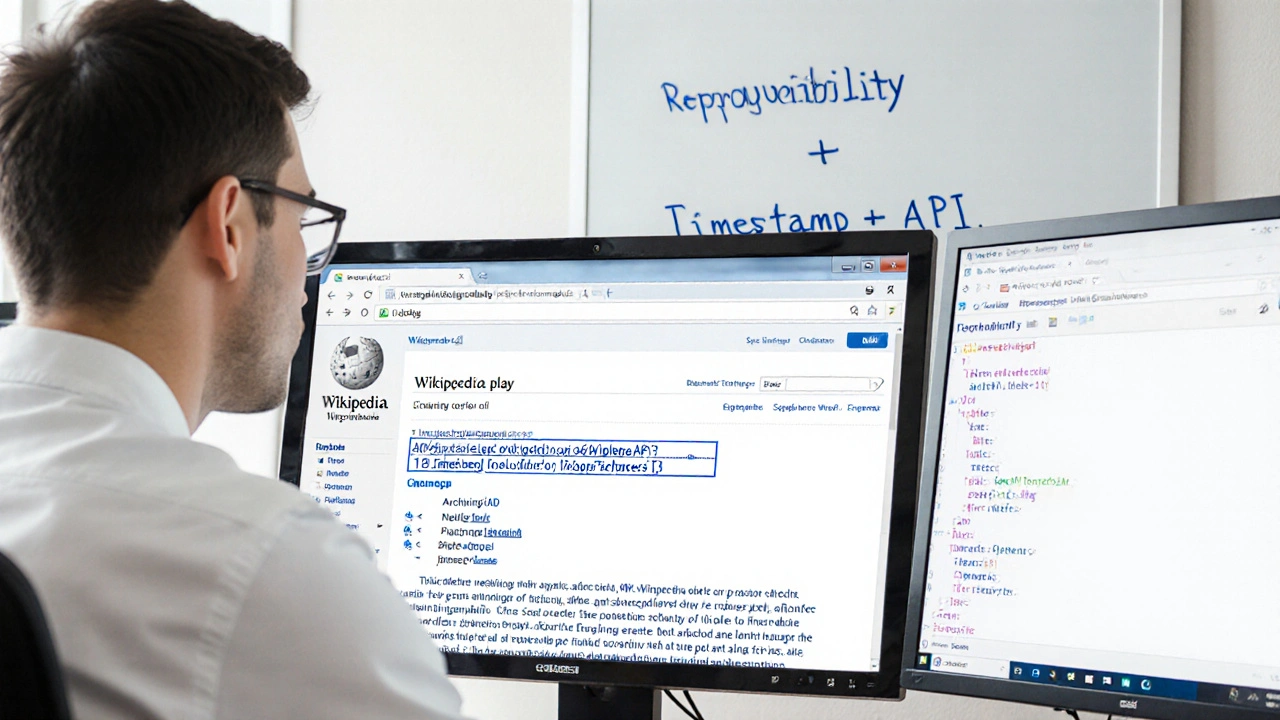
Reproducibility in Wikipedia Research: How to Avoid Common Mistakes and Follow Best Practices
Learn how to make Wikipedia-based research reproducible by saving page versions, using revision IDs, and avoiding common pitfalls that invalidate academic studies. Essential for students and researchers.