Wikipedia for students: How learners use and improve the world's largest encyclopedia
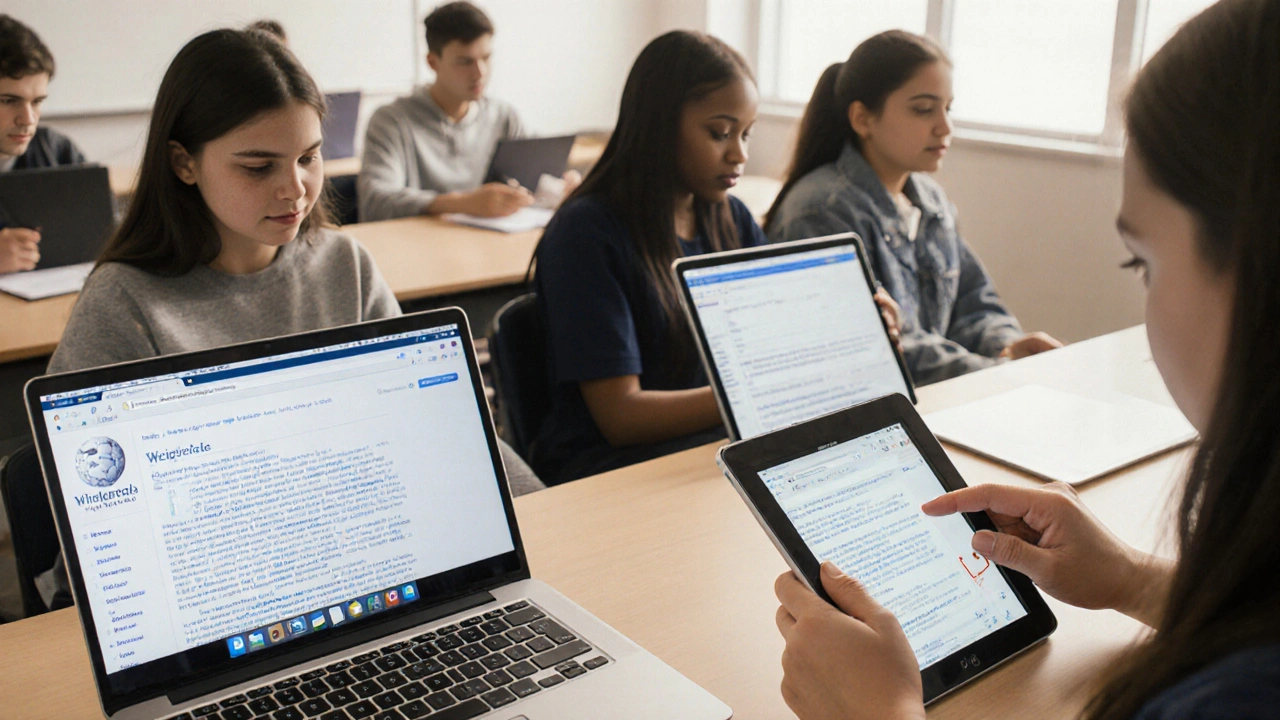
When students use Wikipedia for students, a free, open-access encyclopedia edited by volunteers worldwide. Also known as the go-to starting point for research, it’s not just a source—it’s a classroom where you learn how to check facts, cite sources, and write clearly. Unlike textbooks that sit still, Wikipedia changes every minute. That’s why smart students don’t just copy from it—they edit it.
Wikipedia’s reliability comes from its rules: every claim needs a citation, every edit can be reviewed, and every article has a talk page where people debate what’s true. Wikipedia talk pages, the discussion spaces behind every article. Also known as the hidden classroom, it’s where students learn to argue with evidence, not opinions. Professors at universities from Harvard to Nairobi assign Wikipedia editing because it teaches critical thinking better than any essay. You don’t need to be an expert to help—fixing a typo, adding a missing date, or citing a reliable source counts. And when you turn a stub article into a B-Class article, you’re not just improving a page—you’re helping future students.
Tools like TemplateWizard, a simple form that helps you add citations and infoboxes without learning wikitext. Also known as the beginner’s helper, it reduces errors by 80% and makes editing on your phone just as easy as on a laptop. Students in Nairobi, Mexico City, and Manila are joining edit-a-thons to fix gaps in coverage—adding information about local history, science, and culture that’s missing from English Wikipedia. This isn’t charity—it’s ownership. When you edit Wikipedia, you’re not just consuming knowledge, you’re shaping it.
Wikipedia for students isn’t about avoiding libraries—it’s about learning how knowledge gets made. You’ll see how editors verify breaking news, how bots catch spam, and why a single citation can change how a whole topic is understood. The posts below show you exactly how to start: from checking sources to fixing stubs, from using mobile editing to understanding why some articles are trusted and others aren’t. You’re not just reading about Wikipedia—you’re learning how to be part of it.
Accessibility Considerations for Educational Use of Wikipedia
Wikipedia is widely used in education, but its accessibility issues can exclude students with disabilities. Learn how teachers and students can make Wikipedia work for everyone through simple fixes, tools, and teaching strategies.