Wikipedia methodology: How the world’s largest encyclopedia really works
When you use Wikipedia, you’re not just reading facts—you’re interacting with a living system built on Wikipedia methodology, a set of community-driven practices that prioritize verifiable information, neutral tone, and open collaboration. Also known as Wikipedia’s editorial framework, it’s what keeps over 60 million articles accurate, even without paid editors. This isn’t a top-down system. No corporate team decides what goes in. Instead, thousands of volunteers follow shared norms: cite your sources, write from a neutral point of view, and don’t push personal opinions. These aren’t suggestions—they’re the backbone of everything Wikipedia does.
Behind every article is a process. Wikipedia policies, formal guidelines created and refined by editors through open discussion guide how content is added, reviewed, and fixed. These include rules like no original research and verifiability, which mean every claim needs a reliable source. You’ll find these policies in action when editors debate changes on talk pages, revert vandalism, or upgrade articles from stubs to B-Class. And it’s not just about rules—it’s about trust. The Wikipedia quality ratings, a system that labels articles as Stub, B-Class, or A-Class based on depth and sourcing, help readers know what they’re reading. A Stub might be a single paragraph; an A-Class article reads like a published reference work. These ratings aren’t just for editors—they help students, researchers, and curious readers judge reliability at a glance.
Then there’s the Wikipedia community, the network of volunteers who monitor edits, run outreach programs, and defend the site against censorship. They’re librarians, teachers, engineers, and retirees. They don’t get paid. They do it because they care about knowledge being free and accurate. This community runs the tools, fights spam, trains new editors, and even tests new interfaces with A/B tests—all to make sure Wikipedia stays usable for everyone. You don’t need to be an expert to help. Fixing a typo, adding a citation, or translating a sentence counts. The methodology works because it’s simple, transparent, and open to anyone.
What you’ll find below is a collection of real stories from inside this system. From how editors respond during breaking news, to how tools like TemplateWizard cut down errors, to how geographic bias still shapes what gets written—these posts show the human side of Wikipedia’s methodology. No theory. No fluff. Just how it actually works.
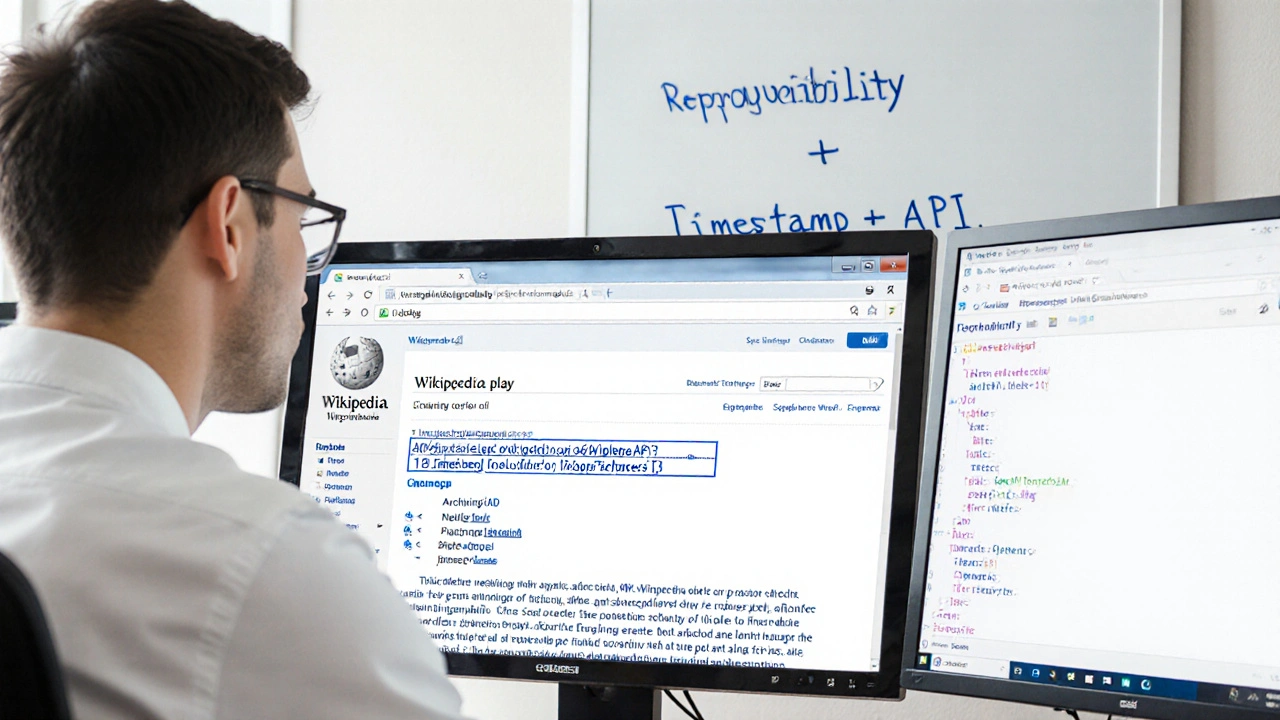
Reproducibility in Wikipedia Research: How to Avoid Common Mistakes and Follow Best Practices
Learn how to make Wikipedia-based research reproducible by saving page versions, using revision IDs, and avoiding common pitfalls that invalidate academic studies. Essential for students and researchers.